











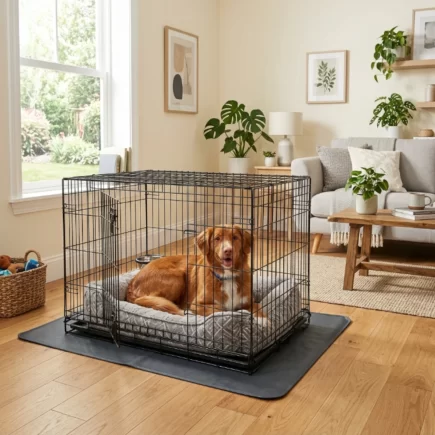
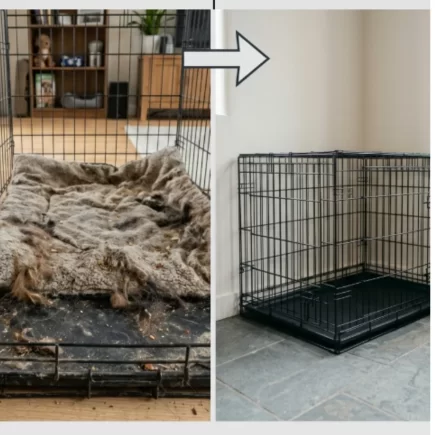









Placing a dog crate directly on the floor can cause scratches, trap moisture, and leave lingering odours. A suitable base layer helps protect your flooring, absorbs spills, and keeps your dog’s space cleaner. This blog covers the best materials, sizing tips, and the most effective options for odour control.
Why Your Dog Crate Needs Something Underneath
Placing the crate directly on a finished floor leaves it exposed to constant wear. Nails scratch hardwood and vinyl, accidents seep into grout and carpet fibers, and the metal or plastic base can rattle every time your dog shifts. A dedicated liner solves all three problems at once, and the right choice depends on your dog’s size, age, and habits.
Consider these factors before choosing a material:
- How house-trained your dog currently is.
- The flooring type underneath the crate (hardwood, tile, or carpet).
- Whether the crate stays in one spot or travels with you.
- Your climate, since summer and winter needs differ.
1. Waterproof Crate Mats
Waterproof mats are the gold standard for crate flooring because they seal out liquid before it reaches your floor. Most are made from silicone, rubber, or coated polyester with raised edges that contain spills, urine, or water bowl splashes. They wipe clean in seconds and hold up to daily use for years.
- Look for a non-slip backing to keep the crate from sliding.
- Choose a raised-lip design if your dog is prone to accidents.
- Pick machine-washable options to save time on deep cleaning.
2. Crate Trays and Pans
Plastic or metal trays sit beneath the crate, catching debris and liquid that falls through wire flooring or bedding. Unlike soft mats, trays create a rigid barrier that won’t bunch or shift when a dog paces or digs at the surface. Many are designed to slide out for quick cleanup without moving the entire crate, which makes them ideal for puppies or multi-dog households.
3. Puppy Training Pads
Puppy training pads are a practical option to place under a dog crate while your puppy is still learning bladder control. Disposable and washable pads help absorb urine before it reaches your flooring, reducing stains, moisture, and odours. They work especially well during the early stages of house training or when using a travel crate.
- Place the training pad directly under the crate to catch leaks and spills.
- Choose disposable pads for short-term use or travel.
- Use washable pads for a reusable, cost-effective solution.
- Add a waterproof mat beneath the pad for extra floor protection if accidents are frequent.
4. Outdoor Rugs and Yoga Mats
Outdoor rugs and yoga mats are budget-friendly alternatives many pet owners already have at home. Outdoor rugs are woven to resist moisture and mildew, making them surprisingly durable under a crate. Yoga mats offer cushioning and grip but suit smaller crates or calmer dogs better, since aggressive scratchers can wear through them quickly.
Both options are easy to trim to size and inexpensive to replace, which makes them a good starting point while you figure out what your dog actually needs.
5. Vinyl Flooring Remnants and Foam Tiles
Vinyl flooring remnants create a smooth, waterproof surface that resists scratches better than soft mats, without the cost of installing permanent flooring. Foam interlocking tiles offer similar coverage with added cushioning, though they hold up less well against sharp claws over time.
- Vinyl remnants work best for dogs who scratch or dig at bedding.
- Foam tiles suit older dogs who need joint cushioning.
- Combine a vinyl base with a washable mat on top for durability and comfort.
6. Old Towels, Blankets, and Shower Curtains
Repurposing household items is the most cost-effective option, especially for temporary setups or travel crates. Old towels and blankets add softness, while a folded shower curtain underneath acts as a makeshift waterproof barrier. This combination works in a pinch but needs more frequent washing than purpose-built products, since fabric holds onto odor.
- Layer a shower curtain under fabric for basic water resistance.
- Fold towels for extra cushioning in wire crates.
- Wash weekly, or sooner if your dog has accidents.
7. Cooling Mats for Summer
During warmer months, gel-infused or self-cooling mats help regulate body temperature for dogs prone to overheating, including flat-faced breeds and thick-coated dogs. These mats activate through body pressure, drawing heat away without electricity or refrigeration.
Place one under a thin layer of bedding for maximum skin contact and effectiveness, especially in crates near windows or in rooms without strong airflow.
8. Insulated Mats for Winter
In colder climates or drafty rooms, insulated mats with foam or thermal layers keep body heat from escaping into the floor below. This matters most for crates placed on tile, concrete, or uninsulated flooring, where cold can seep upward overnight.
Pairing an insulated base with soft bedding on top creates a warmer space that encourages dogs to settle in without resistance.
How to Measure and Fit a Mat to Your Crate
A protective mat works best when it fully supports the crate while extending slightly beyond the base. This extra coverage catches water drips, food spills, and dirt while helping protect your flooring from scratches caused by the crate moving.
Steps to Size an Under-Crate Mat:
- Measure the outside length and width of the dog crate.
- Add 1–2 inches (2.5–5 cm) on each side for extra floor protection.
- Choose a mat large enough for the entire crate to sit on comfortably.
- Place the mat on a clean, dry floor before positioning the crate.
- Check that the crate sits evenly without any corners hanging off the mat.
| Crate Size | Typical Outside Dimensions | Recommended Mat Size |
| Small (24″) | 24″ × 18″ | 28-30″ × 22-26″ |
| Medium (30″) | 30″ × 19″ | 34-40″ × 24-30″ |
| Large (36″) | 36″ × 23″ | 40-44″ × 28-32″ |
| X-Large (42″+) | 42″ × 28″ | 48-55″ × 34-40″ |
Materials That Control Odor Best
Not all crate liners handle odor equally. Porous materials like uncoated fabric absorb liquid and bacteria, leading to lingering smells even after washing, while sealed, non-porous surfaces prevent moisture from soaking in at all. For the best results, use a sealed material as the base layer and a washable fabric layer on top.
| Material | Odor Control | Ease of Cleaning |
| Silicone/rubber mats | Excellent | Wipe clean |
| Vinyl flooring | Excellent | Wipe clean |
| Washable fabric pads | Moderate | Machine wash |
| Towels/blankets | Poor | Frequent washing needed. |
| Foam tiles | Moderate | Spot clean |
Quick Tips for Choosing the Right Base
- Rotate two mats so one is always clean while the other dries.
- Avoid loose fabric for dogs who chew or dig at bedding.
- Check mats monthly for tears that could become choking hazards.
- Match the material to the season rather than using one liner year-round.
Whether you’re setting up a puppy’s first dog crate or upgrading an adult dog’s long-term space, a quality crate from PawHut combined with the right base layer can make daily maintenance easier and help keep your dog comfortable in every season. Match the material to your dog’s habits, your climate, and the level of upkeep you’re willing to do to keep the dog crate clean, fresh, and comfortable between deep cleans.
FAQs
Yes. Dogs naturally avoid soiling the area where they sleep, making crates a useful tool during house training. The crate should be appropriately sized so your dog has enough room to stand, turn around, and lie down comfortably.
The ideal time depends on your dog’s age, energy level, and bladder control. Puppies need more frequent breaks, while healthy adult dogs can generally stay in a crate for a few hours with regular opportunities for exercise and bathroom breaks.
A quiet area where your dog can still feel part of the household is usually best. Avoid placing the crate in direct sunlight, next to heating vents, or in areas with constant foot traffic that may disturb your dog’s rest.