











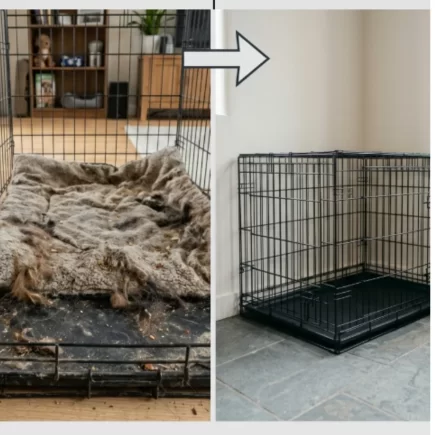












Your dog’s crate is more than just a confinement tool, it’s their den, and a dirty one can harbor bacteria, odors, and allergens that affect their health and comfort. How to clean a dog crate properly doesn’t require dismantling, special equipment, or even outdoor access, but it does require the right approach.

Whether you’re cleaning a wire crate, plastic carrier, or heavy-duty pen, the process is straightforward and takes about 20–30 minutes. This guide walks you through the exact steps veterinarians recommend, so your dog gets a truly sanitary space every time.
What You’ll Need Before You Start
Here’s the complete supply list:
- Bowl or bucket (deep enough to submerge your brush).
- Soft-bristled brush (a dog brush works fine, but a handheld floor brush is equally effective).
- Mild dish soap (fragrance-free preferred for your dog’s respiratory safety).
- Water (tap water is fine).
- Chlorhexidine solution (optional but recommended; follow dilution instructions on the product).
- Clean rags or microfiber towels (you’ll need at least 2–3 for drying).
Why these items? Mild soap cuts through organic buildup and bacteria, chlorhexidine is the disinfectant veterinarians use for wounds, and the bowl lets you soak your brush for better scrubbing action. Avoid heavy-duty cleaners, bleach, or strongly scented products, your dog’s respiratory system is sensitive to chemical fumes.
How to Clean a Dog Crate: The Complete 5-Step Process
Step 1: Remove All Bedding and Prep the Crate
Clear the crate completely: remove all bedding, blankets, toys, and the removable tray. This exposes all surfaces that need cleaning and lets you wash fabric separately.
Start by emptying everything. If your dog uses a bed, blanket, or cushion inside the crate, set those aside to wash separately in your washing machine using pet-friendly, fragrance-free detergent. (Use half the fabric softener you normally would, too much fragrance can irritate your dog’s airways.) Once the crate is empty, you can see exactly what needs attention and ensure no debris hides under edges.
Remove the bottom tray if your crate has one. This is where urine, hair, and dirt accumulate most heavily, so it needs special attention.
Step 2: Make Your Cleaning Solution
Mix warm water, a small amount of mild dish soap, and chlorhexidine (if using) in your bowl. Follow the chlorhexidine product’s dilution instructions, typically a gentle concentration is sufficient for crate cleaning.
Here’s why this combination works:
- Water is the base and helps dissolve debris
- Mild soap breaks down oils and organic matter (the stuff bacteria feeds on)
- Chlorhexidine is a veterinary-grade antimicrobial that kills bacteria without harming your dog’s skin or lungs
The solution should be cloudy and slightly soapy, not sudsy. If you don’t have chlorhexidine, plain water with mild soap is still effective and safe. However, chlorhexidine is what most veterinarians recommend because it’s gentle enough for wounds yet strong enough to eliminate pathogens. You can ask your vet for a recommendation or purchase diluted chlorhexidine solution from pet supply retailers.
Step 3: Scrub All Surfaces in the Right Order
Soak your brush, then scrub in this order: door and outer bars, inner bars, floor, and finally the top. Save the top for last because dirty water drips down onto already-cleaned surfaces.
The Scrubbing Sequence
1. Door and outer bars first
Dip your brush fully into the solution. Tap it lightly so excess drips back into the bowl, then brush the crate door and exterior bars using the same motion you’d use brushing your teeth, firm, circular strokes that contact each bar thoroughly. Work systematically from top to bottom so dirty water runs downward.
2. Inner bars
Move inside the crate and repeat the same circular scrubbing motion on all interior bars. Pay special attention to corners where hair and saliva accumulate. Your dog likely presses their face and body against these bars, so bacteria concentration is higher here.
3. Floor of the crate
This is where the most debris collects. Use small, circular motions to scrub the entire floor surface. You’ll see hair, dirt, and organic matter loosen and come free. Don’t rush this step, spend at least 2–3 minutes on the floor alone.
4. Top of the crate (last)
Finish by scrubbing the top bars and any roof section. Because you’ve already cleaned the lower parts, the dirty water dripping down isn’t a problem.
The key is soaking your brush fully each time so the cleaning solution actually contacts the surface, not just wiping with a partially wet brush.
Step 4: Rinse Thoroughly
Rinse all surfaces with clean water twice to remove all soap and disinfectant residue. Leftover chemicals can irritate your dog’s skin and respiratory system.
After scrubbing, refill your bowl with plain water. Using the same brush, go back through the crate with fresh water, starting with the bars and ending with the floor. Then, dump any remaining water over the bottom of the crate as a final rinse. The water should run clear, with no visible soapsuds.
Pro tip: If your crate is in a shower stall or you have access to low water pressure from an outdoor hose (without using high pressure that damages the crate), a light rinse from water works even better. However, the bowl method is equally effective and requires no special setup.
Step 5: Dry Completely Before Your Dog Returns
Use clean towels to absorb excess moisture, then air-dry the crate for at least 10–15 minutes before your dog uses it again. This prevents rust and eliminates the damp smell.
Take one of your clean rags and wipe down all bars methodically. Then use a second rag to soak up water pooling on the bottom tray. A wet crate is a slipping hazard for your dog’s paws and can cause rust on metal crates or mold on plastic ones. After towel drying, place the crate in a well-ventilated area, ideally near a window with indirect sunlight, since sunlight naturally eliminates odors and any remaining bacteria.
If the crate is plastic and doesn’t rust, leaving it in direct sunlight for 30 minutes provides extra disinfection at no cost.
Alternative: Using Vinegar Instead of Chlorhexidine
If you don’t have chlorhexidine, mix equal parts white vinegar and water as a natural disinfectant. Vinegar has antimicrobial properties and is safe for dogs when diluted.
Some dog owners prefer vinegar because it’s already in most homes, costs less, and has no chemical smell. Use a 1:1 ratio, one cup vinegar to one cup water, and let the solution sit on surfaces for 5–10 minutes before scrubbing, as vinegar works best with contact time. The smell fades as the crate dries. This method is slightly less powerful than chlorhexidine but still effective for regular maintenance cleaning.
How Often Should You Clean Your Dog’s Crate?
Clean your dog’s crate weekly if your dog spends 6+ hours daily inside it, or every two weeks for occasional use. Spot-clean visible messes daily.
For dogs in crates during work hours or overnight, weekly deep cleaning prevents bacterial and odor buildup. If your dog only uses the crate occasionally (for car travel or training), bi-weekly cleaning is sufficient. Always spot-clean immediately if your dog has an accident, vomits, or gets muddy, don’t wait for the scheduled deep clean.
Pro Tips From Veterinarians and Dog Care Experts
- Use fragrance-free dish soap: Heavily scented products irritate dogs’ sensitive noses. Mild, gentle formulas are best for regular use on crates.
- Wash bedding separately: Remove all fabric bedding and wash it in the washing machine separately with fragrance-free detergent and half the normal fabric softener. Dry completely before returning to the crate.
- Dry your crate fully: Moisture in crevices causes rust on wire crates and promotes mold on plastic ones. Use multiple towels and allow at least 10–15 minutes of air-drying.
- Check for rust: While cleaning won’t fix existing rust, it does slow its progression. If rust is severe, consider replacing the affected sections or the crate entirely.
- Let chlorhexidine sit if time allows: For extra disinfection, let your cleaning solution sit on the bars and floor for 5 minutes before scrubbing. This gives the antimicrobial time to work.
To clean a dog crate properly takes just 20–30 minutes and requires only basic supplies you likely already have. By following this step-by-step method, removing bedding, scrubbing with a soapy solution, rinsing thoroughly, and drying completely, you ensure your dog has a sanitary, odor-free space that supports their health.
Start with this method this week, and you’ll notice the difference immediately, fresher smell, cleaner appearance, and a happier dog. Your veterinarian will thank you, and your dog will too.
Keep Your Crate Fresh Between Cleanings
After investing time in a thorough crate cleaning, maintain freshness with quality replacement bedding and washable liners from PawHut. Easy-to-wash bedding means less bacteria buildup between your regular deep cleans and more comfort for your dog.
If you’re also considering a new crate or different size, Aosom offers a wide range of Dog Crates in multiple styles and sizes.
FAQs
No. Bleach is not recommended for cleaning dog crates because its fumes and residue can be harmful to pets. Instead, use mild soap, diluted white vinegar, or a pet-safe disinfectant, then rinse thoroughly and let the crate dry completely.
Clean the crate thoroughly, then let it dry in direct sunlight for 30–60 minutes to help remove lingering odors. For extra freshness, sprinkle baking soda over the dry surface, leave it for 1–2 hours, then wipe or vacuum it away before use.
Yes. Pet-safe cleaning sprays are a convenient option, but they work best after removing dirt, hair, and debris with soap and water. Scrub and rinse the crate first, then apply the spray as a final step to help disinfect the surface.
Yes. Hot water helps loosen dirt, grease, and dried-on messes more effectively than warm water. Just make sure the crate has cooled completely and is fully dry before allowing your dog back inside to ensure comfort and safety.
Prevent mold by drying the crate completely after every cleaning and keeping it in a well-ventilated, dry location. Wash bedding regularly and avoid storing the crate in damp areas, as trapped moisture encourages mold and mildew growth.