





















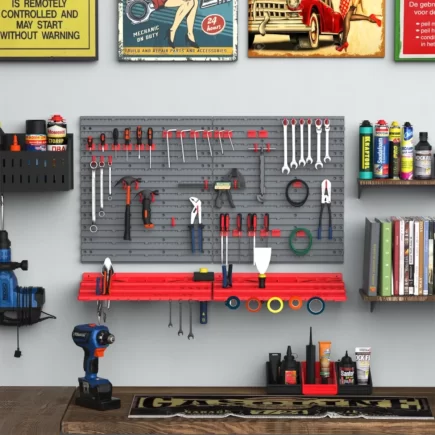





Pegboard is one of the most practical wall storage solutions available today. From garages and workshops to craft rooms, it keeps tools and supplies organized and within reach. But a pegboard that is not properly secured leads to falling hooks, wobbly boards, and damaged walls. This blog covers everything you need to know about securing a pegboard the right way.
Board Mounting and Hook Retention in Pegboard
Pegboard security comes down to two separate problems. The first is board mounting, which is how the pegboard attaches to the wall. The second is hook retention, which is how well hooks stay locked inside the pegboard holes.
Most people focus only on getting the board up and ignore hook stability entirely. Both problems require different solutions, and a complete pegboard setup must address both.
Pegboard Material Types: Wood, Metal, MDF, and PP Plastic
The material you choose directly affects durability, load capacity, and how well your pegboard holds up over time. Each type suits a different environment.
| Material | Best For | Weight Capacity | Moisture Resistance |
| Hardboard | Craft rooms, light tools | Low to medium | Low |
| MDF | Indoor light use | Low | Very low |
| Plywood | Garages, workshops | Medium to high | Moderate |
| Metal | Heavy tools, commercial use | Very high | High |
| PP Plastic | Garages, workshops, home use | Medium to high | High |
PP plastic pegboard has become increasingly popular for garage and workshop environments. It is lightweight, moisture resistant, and holds up well over time. It does not warp, crack, or absorb humidity the way wood-based materials do.
Pre-built PP plastic pegboard kits typically come with hooks and shelves already included, making them a practical ready-to-mount solution for most households.
Tip: For garages and workshops, PP plastic or metal pegboard is the smarter long-term investment over hardboard or MDF.
Wall Types and Their Mounting Considerations
The wall surface behind your pegboard determines the entire mounting approach. Using the wrong method for your wall type is one of the most common reasons pegboard installs fail.
- Drywall: Use a stud finder to locate framing. Drive screws directly into studs for the strongest hold.
- Concrete or Brick: Requires a masonry drill bit and expansion anchors before any screws go in.
- Tile: Use a tile-specific drill bit at slow speed to avoid cracking the surface.
- Wood Paneling: Screws can go directly into the panel if the wood is thick enough to hold load.
Tip: Always identify your wall type before purchasing any mounting hardware. The wrong anchor on the wrong wall will fail under load.
Wall Stud Location and Its Importance
Wall studs are the vertical wooden framing members inside your wall, typically spaced 16 inches apart in most homes. Mounting directly into studs gives your pegboard the strongest and most reliable hold possible.
Use a stud finder to locate them before drilling. Mark each stud position lightly with a pencil. When studs are not positioned where you need them, wall anchors become the alternative.
Wall Anchor Types and Their Load Ratings
When studs are not available at your mounting points, wall anchors carry the load. Choosing the right anchor for your wall type and load is critical.
| Anchor Type | Best Wall Type | Load Rating | Notes |
| Plastic Sleeve Anchor | Drywall | Light loads | Best for small boards |
| Toggle Bolt | Drywall | Medium to heavy | Strongest drywall option |
| Molly Bolt | Drywall | Medium | Easy to install |
| Masonry Anchor | Concrete, Brick | Heavy | Requires masonry bit |
| Expansion Anchor | Concrete | Very heavy | Best for large boards |
Tip: Always choose an anchor rated for more weight than you plan to hang. Overloading an anchor is one of the leading causes of pegboard wall damage.
Spacers and Furring Strips for Pegboard Gaps
One of the most misunderstood requirements in pegboard installation is the wall gap. Pegboard hooks need space behind the board to clip in and stay secure. Without that gap, no hook will function properly.
The two most common ways to create this gap are:
- Furring Strips: Thin strips of wood screwed into the wall studs, with the pegboard then screwed onto them.
- Spacers or Standoffs: Small cylindrical pieces placed at each mounting point. They hold the board away from the wall while keeping it flush and stable.
A gap of at least 3/4 inch is the standard recommendation for most pegboard hook sizes.
Tip: Most pre-built PP plastic pegboard kits already include built-in standoffs or mounting hardware that creates the correct gap automatically, removing this step entirely.
Pilot Holes and Screw Depth in Pegboard Setup
Drilling pilot holes before driving screws prevents the pegboard from splitting and makes the installation cleaner and more secure. A 1/8 inch bit is the standard size for most pegboard and furring strip combinations.
The screw should pass through the pegboard, through the spacer or furring strip, and at least 1 inch into the stud or anchor behind it. Screws that are too short will not hold under load, especially in a heavily stocked workshop or garage setup.
Tip: If you have two drills available, set one up with a drill bit and the other with a screwdriver bit. It speeds up the process significantly.
Modular and Multi-Panel Pegboard Systems
Single-panel pegboard works well for small spaces, but modular multi-panel systems offer significantly more flexibility. Two or more panels can be mounted side by side to cover a full wall, or used separately in different areas of the same room.
Modular systems also allow you to mix pegboard panels with shelves and storage bins in the same framework. This combination gives you both hanging storage for tools and flat surface storage for smaller items like screws, bolts, and accessories.
Pre-built modular kits make this setup straightforward since the panels, shelves, and hooks are all designed to work together from the start.
Locking Hooks, Clips, and Baseplate Systems
Standard pegboard hooks are simple metal prongs that sit loosely in the holes. Every time you grab a tool, there is a chance the hook comes with it. This is the single biggest complaint among pegboard users.
The most effective solutions available are:
- Plastic Locking Clips: Snap onto the peg horizontally and prevent the hook from pulling out.
- Grip Clips: Small metal arms that hold tools by pressure and stay in place better than standard hooks.
- Quarter-Turn Baseplate Systems: The hook twists into a baseplate that is permanently mounted to the pegboard. Once locked, it does not move regardless of how often you grab tools from it.
- Multi-Type Hook Kits: Pre-built pegboard kits that include multiple hook sizes and types designed specifically for the board they come with. These hooks are sized and shaped to fit the hole pattern precisely, which significantly reduces the chance of them falling out during regular use.
Tip: Kits that include five or more hook types give you the most flexibility for organizing different tool sizes without needing to source additional hardware separately.
Pegboard Weight Capacity and Load Ratings
Understanding how much weight your pegboard setup can safely handle prevents wall damage and keeps your space safe. Weight capacity depends on three factors working together.
| Factor | Impact on Capacity |
| Pegboard Material | Metal holds the most, hardboard the least |
| Anchor or Stud Mounting | Studs offer the strongest hold, drywall anchors have set limits |
| Load Distribution | Spreading weight across multiple hooks is always safer |
General weight guidelines for pegboard setups:
- Light use (craft supplies, small tools): Hardboard or MDF with standard anchors
- Medium use (hand tools): Plywood or PP plastic with stud mounting
- Heavy use (power tools, heavy equipment): Metal or PP plastic with stud mounting and locking hooks
PP plastic pegboard panels typically support up to 66 lbs per panel. When combined with a built-in shelf that adds another 18 lbs of capacity, the total storage potential of a two-panel modular kit reaches well over 100 lbs of organized tool storage.
Pegboard Applications by Space Type
Pegboard performs differently depending on where it is installed. The space type determines the right material, mounting method, and hook system to use.
| Space | Recommended Material | Mounting Method | Primary Use |
| Garage | PP Plastic or Metal | Stud mounting | Heavy tools, equipment |
| Workshop | PP Plastic or Plywood | Stud mounting | Hand tools, power tools |
| Craft Room | Hardboard | Anchors | Supplies, scissors, light items |
| Workstation | PP Plastic | Stud mounting or Anchors | Accessories, small tools |
Storage Bins and Accessory Compatibility on Pegboard
Beyond hooks, pegboard systems can also support storage bins, small containers, and parts organizers mounted directly onto the panel. This makes the pegboard useful not just for hanging tools but also for storing small hardware like screws, bolts, nuts, and nails in one accessible location.
Bin-compatible pegboard kits include both hooks and bin holders designed to clip directly into the same hole pattern. This eliminates the need for separate shelf units and keeps everything consolidated on one wall surface.
For workshops and garages where small parts tend to get lost, this combination of hooks and bins on a single pegboard panel is one of the most efficient storage setups available.
Tip: Look for kits that include both hook types and bin holders together. Setting up both on the same panel from the start saves time and keeps your wall storage consistent.
Common Causes of Loose Pegboard Installs
A pegboard that starts shifting or pulling away from the wall is usually the result of one of the following:
- Screws driven into drywall without studs or proper anchors
- Spacers that are too small, causing hooks to press the board against the wall
- Overloading one section of the board with too much weight
- Using hardboard or MDF in a humid environment like a garage
Addressing these issues early prevents larger wall damage and keeps the pegboard functional long term.
Securing a Pegboard is ultimately about building trust in the setup over time. When every component holds firm under daily use, the system becomes dependable without second thought. Stability removes hesitation when placing or removing tools. That confidence is what turns a basic setup into a reliable workspace feature.
FAQs
Pegboards can damage walls if they are not installed with proper spacing and support. Direct mounting without spacers restricts airflow and traps moisture, leading to wall marks or mold. Using furring strips and secure anchors prevents long-term damage.
Yes, pegboards work well in garages and semi-outdoor areas when made from metal or plastic. Moisture-resistant materials prevent warping, which is common with standard wood boards. Proper mounting and weather protection improve durability.
Pegboards are better for visibility and quick access, especially for tools and frequently used items. Shelves, however, handle heavier loads and bulk storage more effectively. The best setup often combines both for balanced organization.