












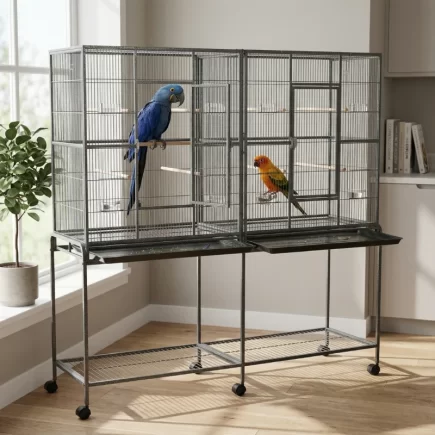













Setting up a bird cage goes beyond placing food and water inside. The items you add directly affect your bird’s physical health, mental stimulation, and daily comfort. Whether you’re using a PawHut bird cage or another quality enclosure, this guide covers everything that belongs in a bird cage and a few things that don’t.
1. Perches: The First Thing to Put in a Bird Cage
Perches are non-negotiable. Birds spend the majority of their lives standing, so the quality and variety of perches you provide directly affects foot health and joint comfort. A cage with only one dowel-style perch is one of the most common setup mistakes owners make. Start here before adding anything else.
Best Perch Types for Small Cages
| Perch Type | Material | Benefit |
| Natural wood | Manzanita, apple wood | Irregular texture promotes foot health. |
| Rope perch | Cotton or sisal | Soft, flexible, good for resting. |
| Cement/sandy perch | Textured mineral | Naturally trims nails over time. |
| Plastic dowel | PVC | Durable but least beneficial use sparingly. |
Avoid using only uniform plastic dowels. Birds gripping the same diameter surface all day develop pressure sores and arthritis over time. Mix at least two different materials and diameters for a healthier setup.
How to Layer Perches Without Crowding the Space
- Place perches at different heights one near the top for roosting, one mid-level for activity, and one lower near food and water.
- Keep spacing wide enough that a bird moving between perches won’t brush its tail on a lower one.
- In small cages, two to three perches is the right number more than that creates clutter without adding value.
2. A Small Swing: A Simple Addition That Birds Love
A swing gives birds a moving surface to rest and play on, which engages balance and coordination passively. Most small birds, budgies, cockatiels, canaries take to swings quickly. Mount it near the top of the cage so it has room to move, and position it away from food dishes to prevent contamination. One swing is enough; two in a small cage just gets in the way.
Tips For Placing A Swing Correctly:
- Hang it at the highest point with clearance on all sides.
- Keep it away from food and water dishes.
- Choose cotton rope or natural wood and avoid plastic chains with small links.
- Check attachment hooks weekly for wear or bending.
3. Tiny Ladders and Climbing Bars: Vertical Additions for Small Cages
Ladders and climbing bars give birds a way to move vertically inside the cage, which supports natural behavior and light exercise. Wooden ladders work best they offer grip and are easy to clean. Position them between perch levels rather than flat against a wall, so the bird actually uses them as a bridge between heights. Skip oversized options; a ladder that takes up a third of the cage floor space is too big.
What To Look For When Choosing A Ladder Or Climbing Bar:
- Rungs spaced appropriately for your bird’s foot size.
- Untreated, bird-safe wood only.
- Secure attachment points at both ends.
- No sharp edges or splinters on cut ends.
4. Toys: Small and Lightweight Items That Fit Without Crowding
Toys serve a functional purpose they prevent boredom and reduce stress-related behaviors like feather plucking. The key is keeping them appropriately sized and limiting the number inside the cage at one time.
Good Toy Options For Small Cages:
- Small foraging toys with hidden treats.
- Bells made from bird-safe stainless steel.
- Shreddable toys made from palm leaf or paper.
- Small mirrors use cautiously, as some birds become obsessive.
Avoid toys with long rope strands that can tangle around feet or necks. Check toy sizing against your bird species before purchasing.
Rotation: How to Swap Items to Keep the Cage Fresh
Rotating toys every one to two weeks prevents habituation birds stop engaging with items they see constantly. Keep a small reserve of two or three toys outside the cage and swap them on a schedule. This also gives you a chance to inspect toys for wear, fraying, or damage before putting them back in rotation.
5. A Small Bird Bath or Water Dish: A Functional Item Every Cage Needs
Most birds bathe regularly, and providing a dish for this is both practical and enriching. A shallow ceramic or stainless steel dish works well deep dishes are a drowning risk for small birds. Place it away from perches to reduce contamination from droppings. Change the water daily, and remove the dish after bathing if the bird is not drinking from it, to keep the cage interior dry.
Choosing the Right Dish Size
| Bird Size | Dish Depth | Dish Diameter |
| Very small (finch, canary) | 0.5 – 1 inch | 3 – 4 inches |
| Small (budgie, lovebird) | 1 – 1.5 inches | 4 – 5 inches |
| Medium (cockatiel, conure) | 1.5 – 2 inches | 5 – 6 inches |
6. Mineral Blocks and Cuttlebone: Small Additions That Fit Any Cage Size
Cuttlebone provides calcium, supports beak conditioning, and is one of the most space-efficient additions you can make. Mineral blocks serve a similar purpose and also give birds something to peck at, which satisfies natural foraging behavior.
How To Install Cuttlebone Correctly:
- Clip it to the cage bars at perch height not on the floor.
- Position the soft side facing outward so the bird can access it easily.
- Replace it when worn down to a thin backing layer.
- Avoid soaking or washing cuttlebone; it loses its mineral content.
7. Hide Spots and Nest Covers: Cozy Additions That Complete the Setup
Birds are prey animals by instinct, and having a space to retreat to reduces chronic stress. Small tent-style hides, woven grass huts, or a simple wooden box with an entry hole give birds a sense of security. Position the hide at a mid-to-high level rather than on the cage floor. Avoid placing it directly under a perch where droppings will accumulate on top.
DIY option: A small folded piece of natural burlap or untreated cotton cloth clipped loosely to one corner of the cage gives small birds a simple curtain-style retreat at zero cost.
What NOT to Put in a Bird Cage
Knowing what to leave out is as important as knowing what to include. A cage stuffed with items leaves no room to fly, move, or behave naturally.
Never Place These Inside A Bird Cage:
- Painted or galvanized metal toys zinc and lead toxicity is a genuine risk.
- Aromatic wood shavings cedar and pine are respiratory irritants.
- Multiple mirrors one is tolerable; more causes obsessive, stress-linked behavior.
- Human food dishes ceramic glazes may contain lead; use bird-specific feeders only.
- Overcrowded accessories empty space is functional, not wasted.
- Essential oil diffusers nearby airborne compounds are toxic to birds even at low concentrations.
Creating a comfortable bird cage is about balancing enrichment, safety, and space. Regularly updating accessories helps keep your bird active and engaged. With thoughtful placement and careful choosing, you can create an environment that supports long-term wellbeing.
FAQs
A bird cage should have food and water areas cleaned daily, while a full cage clean is usually recommended once a week. Regular cleaning helps prevent bacteria, mould growth, and unpleasant odours. The exact schedule may vary depending on the size of the bird and cage.
Many birds benefit from having their cage covered at bedtime because it helps create a darker, quieter environment for sleep. A breathable cover is best, and the cage should still have proper airflow throughout the night.
Paper-based cage liners are generally considered one of the safest options because they are easy to replace and allow owners to monitor droppings. Avoid scented materials or aromatic wood products that may irritate a bird’s respiratory system.