
























Reupholstering your dining chairs can be a rewarding project, offering a fresh look without the cost of buying new furniture. Whether you’re looking to breathe new life into old chairs or simply want to update the look of your dining room, this guide will walk you through every step of the process. You can transform your chairs with just a few materials and tools.

Materials & Tools You’ll Need
Before starting, gather the following materials and tools:
- Upholstery fabric (choose a fabric that suits your style and the durability requirements of your chairs)
- Dust cover fabric (optional)
- Polyester upholstery batting
- 2-inch upholstery foam (if you’re replacing the cushion)
- Upholstery staple gun
- Scissors or rotary cutter
- Serrated or electric knife (for cutting foam)
- Upholstery Staple Remover or Tack Puller
- Measuring tape or ruler
- Marker or pencil
Reupholstering Dining Chairs: A Complete Step-by-Step Guide
Follow the steps below to get started:
Step 1: Removing the Old Cushion
- Remove the existing cushion from the chair, many are screwed into place, so remove any screws first.
- Once detached, flip the cushion over to expose the underside.
- You will likely find a dust cover attached with staples or tacks.
- Use an upholstery staple remover or tack puller to carefully remove the staples and tacks securing the dust cover and upholstery fabric.
Tip:
If your chair is relatively new, you might not need to replace the cushion. However, for older chairs with worn-out padding, this is an essential step.
Step 2: Removing Old Layers and Preparing the Frame
- Once the fabric and dust cover are removed, check for any additional layers of fabric or padding underneath.
- Remove all of these layers, taking out any extra staples or tacks as you go.
- If your chair contains straw and batting (common in vintage chairs), strip everything down completely to the bare wooden frame.
This is the base onto which you will attach your new cushion and fabric.
Step 3: Adding New Foam Padding
For a more comfortable seating experience, it’s best to replace the old padding with fresh foam. If your chair has webbing or a solid plywood base, you will need to measure the foam according to the size of the seat frame.
- Place the wooden seat frame on the foam.
- Trace around the frame with a pencil to get the exact size.
- Cut the foam using a serrated or electric knife.
Tip:
Make sure to cut the foam with precision so that it fits perfectly on the wooden seat frame. A sharp, clean cut will ensure the best results.
Step 4: Attaching the Polyester Batting
Polyester Batting is used to provide extra comfort and ensure the foam doesn’t sag over time. Place the foam and frame face down on the Polyester Batting, then cut the padding so it wraps around the foam by about 2 inches on all sides.
- Start by stapling the padding to the middle of all four sides of the frame.
- Continue working your way out from the center, leaving a little space at the corners.
- For the corners, pull the padding towards the center of the frame and staple it securely.
- Repeat this process for all corners and trim off any excess padding once it’s stapled down.
Tip:
When stapling, be sure to pull the padding taut to avoid sagging. The tighter the padding is, the longer the cushion will last.
Step 5: Laying Out and Cutting the Upholstery Fabric
Next, lay your chosen upholstery fabric face down on a clean surface. Make sure that the fabric’s pattern is aligned properly and running straight. Place the prepared cushion face down on the fabric.
Cut the fabric, leaving about 3-4 inches of extra fabric around the edges. This excess fabric will be wrapped around the cushion’s back and stapled into place.
Tip:
Use fabric that suits both your style and the expected wear and tear. A medium-weight drapery fabric can be a good choice for less frequently used chairs, while more durable upholstery fabric is recommended for heavily used chairs.
Step 6: Attaching the Upholstery Fabric
Once the fabric is cut to size, begin attaching it to the cushion.
- Start by stapling the fabric in the middle of all four sides.
- Work your way out from the center, ensuring the fabric is taut as you go. Run your hand over the front of the fabric to smooth it out and remove any wrinkles.
- For the corners, fold the fabric neatly and staple it in place, forming pleats. Repeat this process on all four corners.
Tip: If your first staple is too loose or the fabric is not tight enough, simply remove it and staple again.
Step 7: Adding the Dust Cover Fabric (Optional)
Although this step is not necessary, adding a dust cover gives the cushion a professional finish.
- Cut the fabric to match the size of the seat frame.
- Fold the edges of the Dust cover fabric under to create clean edges and staple it securely to the underside of the seat frame.
This dust cover hides any raw edges and ensures the cushion stays in place.
Step 8: Reattaching the Cushion to the Chair Frame
Once the cushion is fully reupholstered, it’s time to reattach it to the chair frame. Align the cushion with the seat frame and secure it in place with screws or other fasteners, depending on how the original cushion was attached.
Ensure that the cushion is centered properly and securely fastened to avoid it shifting or coming loose over time.
Final Look: Reupholstered Dining Chair
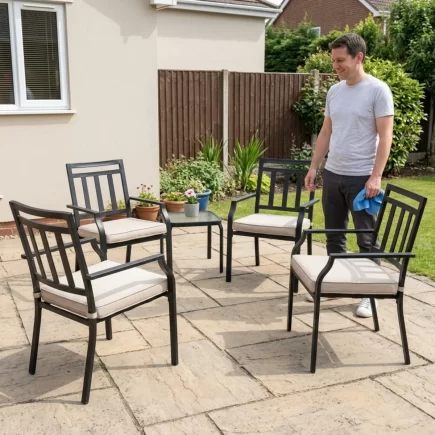
After following these steps, your Dining Chair should now look fresh and modern. The reupholstered cushion not only adds comfort but also revives the appearance of your chair, giving it a brand-new feel.
Maintenance Tip:
If the fabric starts to wear over time, consider reupholstering it again with a new pattern or material. Reupholstering can be done as many times as needed to keep your chairs looking stylish and comfortable.
Reupholstering dining chairs is a practical way to refresh the look of your dining space while extending the life of your existing furniture. By carefully removing the old layers, adding new foam and padding, and securing fresh upholstery fabric, even worn chairs can regain comfort and style. With the right tools, patience, and attention to detail, this DIY project can deliver professional-looking results. Whether you choose a classic fabric or a bold new pattern, reupholstering allows you to customize your chairs and give them a renewed appearance that fits perfectly with your home décor.
FAQs
While it’s not always necessary, reupholstering without removing the old cushion is possible if the cushion is still in good condition. If the cushion is worn out or damaged, replacing it with fresh foam is recommended for added comfort and durability.
For dining chairs, medium-weight upholstery fabrics such as cotton, linen, or polyester blends are ideal. They offer durability for regular use while also allowing for easy maintenance. For a more luxurious feel, velvet or chenille fabrics can be used.
Adding padding under the upholstery fabric isn’t necessary, but it improves the chair’s comfort and longevity. It also helps to smooth out the upholstery fabric, ensuring there are no wrinkles or lumps that might appear over time.
Yes, you can use different fabric patterns to create a unique and eclectic look for your chairs. Just ensure that the patterns align correctly when upholstering, especially at the corners, to maintain a consistent design throughout the chair.