




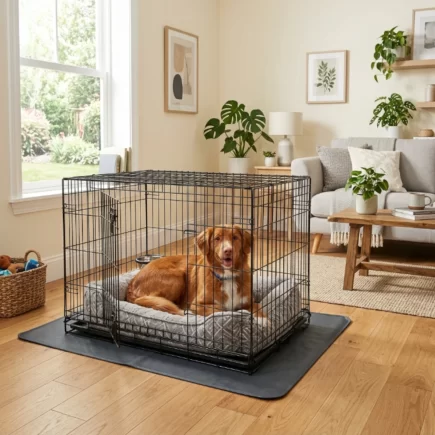






After picking the right dog crate, now comes the part that actually matters: what goes inside it. The right items turn a plain wire box into a space your dog feels safe, calm, and comfortable in. The wrong ones create safety hazards or make your dog resistant to being crated at all.

This guide covers every item worth putting in a dog crate, what each one does, and exactly what to keep out, so your dog’s crate works the way it should from day one.
Choose the Right Dog Bed for Your Dog’s Crate
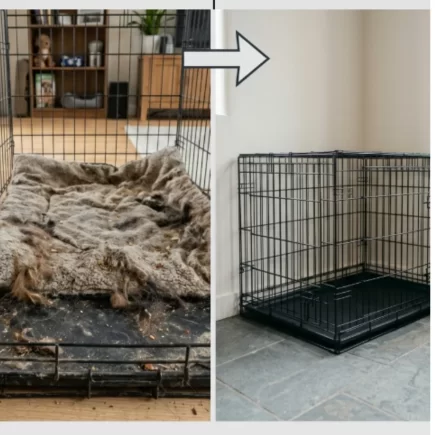
A properly fitted crate bed is the single most important item in any dog crate. It should lie flat and cover the entire crate floor with no gaps and no bunching.
Choose your Dog Bed based on your dog’s age and habits:
- Thin waterproof mat: Best for puppies in potty training; handles accidents without damage.
- Standard crate pad: Suitable for adult dogs with mild or no chewing habits.
- Chew-resistant mat: Made from tough materials like ballistic nylon; built for dogs that chew or scratch at bedding.
- Orthopedic or memory foam pad: Essential for senior dogs with joint stiffness or arthritis.
- Cooling mat: Useful for flat-faced breeds like bulldogs and pugs, or during summer months across warmer US states.
Avoid piling blankets or loose pillows inside the crate. They reduce your dog’s room to move, make the space harder to keep clean, and create a swallowing risk for dogs that chew fabric.
Water Access Inside the Crate
Your dog needs fresh water available in their crate. Dogs dehydrate faster than most owners realize, especially in warm weather or when they are anxious and panting.
The issue most owners run into is not the water itself but a tipped bowl. The solution is straightforward:
- Clip-on spill-proof bowl: Attaches directly to the crate bars and cannot be knocked over.
- Crate water bottle: Mounts on the front bars; your dog drinks on demand with zero spill risk.
- Heavy ceramic bowl: The weight alone prevents tipping; works well in larger crates.
Safe Toys and Enrichment Items
Toys inside the crate keep your dog mentally occupied and prevent the boredom that leads to whining, scratching, and restless behavior. The priority is choosing items that are genuinely safe without supervision.
Frozen Kong-Style Rubber Toys
Fill a hard rubber with peanut butter, wet dog food, or plain yogurt and freeze it overnight. A frozen Kong keeps most dogs engaged for 20 to 40 minutes, satisfies the natural urge to chew, and is completely safe for unsupervised crate time. It is the most reliable enrichment item for dogs of any age.
Frozen Lick Mats
Spread peanut butter or yogurt across a lick mat and freeze it before crate time. Repetitive licking activates the body’s calming response, making lick mats especially effective for dogs that are anxious or struggle to settle when first placed in the crate.
Treat-Dispensing Puzzle Feeders
Puzzle feeders turn a snack into a mental challenge. Your dog works to access the treats, which keeps them engaged and burns mental energy. These work particularly well for high-energy adult dogs that need more than a standard chew toy to stay calm during longer crate sessions.
Rotate two to three toys weekly to maintain your dog’s interest without overcrowding the crate.
Crate Cover for a Den-Like Environment
A crate cover turns a wire crate into a darker, enclosed space that feels like a den. Dogs naturally seek out this kind of environment when they need to rest or decompress. A cover reduces visual distraction from household activity and signals to your dog that it is time to settle.
Use a purpose-made crate cover or drape a breathable blanket over the top and three sides. Always leave the front panel open for airflow. Not every dog needs a cover, some prefer seeing their surroundings. Watch how your dog responds and adjust accordingly.
Comfort Items for Puppies and Anxious Dogs
Some dogs need extra reassurance in their crate, particularly puppies adjusting to being alone for the first time and adult dogs with separation anxiety.
- Heartbeat toy: Products like this mimic the warmth and heartbeat of a littermate. For puppies sleeping alone for the first time, this is one of the most effective calming tools available. It reduces nighttime crying and helps puppies settle into a sleep routine faster.
- Owner-scented item: A worn t-shirt placed inside the crate gives anxious dogs a familiar scent that signals safety and your presence nearby.
Only use fabric items if your dog does not chew. Swallowed synthetic fibers and stringy material cause intestinal blockages that often require emergency veterinary care.
What to Put in the Crate at Night
Nighttime setup differs slightly from daytime, especially for puppies.
Leave in at night:
- Waterproof crate mat or thin washable pad.
- Heartbeat toy for puppies adjusting to sleeping alone.
- Puppy pads in the far corner, completely away from the sleeping area.
Remove at night:
- Toys: They stimulate play rather than rest.
- Food bowl: Remove after every meal, day or night.
- Water for puppies only: Remove one to two hours before bedtime during potty training.
- Collar and tags: Tags snag on bars; removing the collar also becomes a consistent sleep signal for your dog.
What Should Never Go in a Dog Crate
| Item | Risk |
| Collar and tags | Catch on crate bars, strangulation hazard |
| Plush toys for heavy chewers | Ingested stuffing causes intestinal blockage |
| Bones and hard chews | Choking risk when unsupervised |
| Loose blankets or clothing for chewers | Swallowed fabric causes dangerous blockages |
| Leashes and tethers | Entanglement and strangulation hazard |
| Toys with small detachable parts | Broken pieces become choking hazards |
How Crate Contents Change as Your Dog Ages
Your dog’s crate setup should evolve as they grow. What is right for a puppy is often wrong for an adult dog, and wrong again for a senior.
Puppies
Keep things minimal. You do not yet know your dog’s chewing habits or how they behave alone, so starting simple and adding items gradually is the safest approach. Use a thin waterproof mat, one frozen Kong, and a heartbeat toy at night. Place puppy pads in the far corner. Introduce new items one at a time once you know how your puppy responds.
Adult Dogs
Adult dogs past the teething and potty-training stage can handle a fuller setup. Upgrade to a full-coverage crate pad that matches their chewing habits. Rotate two to three rubber toys or frozen enrichment items to keep crate time engaging. Add a crate cover if your dog is easily overstimulated by household noise and movement.
Senior Dogs
Senior dogs prioritize comfort over play. An orthopedic or memory foam pad is essential, joint support makes a real difference in sleep quality for older dogs. Water must always be accessible since seniors dehydrate faster than younger dogs. A soft comfort toy and a crate cover to reduce light and noise complete the senior setup well.
A well-set-up dog crate should feel safe, comfortable, and calming, not restrictive. The right combination of crate bedding, water access, enrichment toys, and comfort items helps your dog relax, sleep better, and build a positive association with crate time. As your dog grows from puppyhood into adulthood and eventually the senior years, their crate setup should evolve with their needs. Focus on safety, comfort, and simplicity, and your dog’s crate can become one of the most secure and stress-free spaces in your home.
FAQs
For puppies and newly adopted dogs, keeping the crate in your bedroom often helps them settle faster and reduces nighttime anxiety. Adult dogs that are already crate trained may do well in quieter areas of the house like the living room or home office.
Most dogs should have their own crate, even if they get along well. Sharing a crate can create territorial behavior, stress, overheating, and safety issues during feeding or rest time.
During warmer months, prioritize airflow and cooling. Use breathable crate covers, cooling mats, elevated crate placement away from direct sunlight, and always provide fresh water.
Common signs include constant panting, repeated barking, excessive drooling, pacing, biting crate bars, or refusing to enter the crate. These behaviors may signal stress, overheating, poor crate setup, or lack of crate training.
The ideal location is quiet but not isolated. Dogs usually feel safest when the crate is near normal household activity without being placed in loud, high-traffic areas like busy hallways or near speakers.