




















Choosing a dog crate feels straightforward until you’re staring at multiple options and realising you don’t know whether to go wire, wooden, or heavy duty. The wrong choice means a dog that won’t use it, a crate that doesn’t fit your space, or one that a determined chewer dismantles in a week.

This guide covers every factor that actually matters, size, type, material, and your dog’s specific needs, so by the end, you know exactly what to look for before you buy.
Step 1: Get the Size Right First
Size is the single most important factor, and it’s also where most people go wrong. Too small and your dog is uncomfortable. Too large and a puppy will use the far corner as a bathroom.
Your dog should be able to do three things inside the crate without restriction: stand up fully, turn around, and lie down on their side. That’s the rule. Everything else is secondary.
How to measure your dog:
- Length: Tip of nose to base of tail, then add 2–4 inches
- Height: Floor to top of head (or ears if they stand up), then add 2–4 inches
Use those numbers to match against the crate’s interior dimensions, not the exterior. Manufacturers list both, and the difference matters more than you’d think.
| Dog Size | Typical Crate Size | Common Breeds |
| Small | 24–26 inches | Chihuahua, Shih Tzu, Pomeranian |
| Medium | 30–36 inches | Beagle, Cocker Spaniel, Bulldog |
| Large | 42–48 inches | Labrador, Golden Retriever, Boxer |
| XL | 48–54 inches | German Shepherd, Rottweiler, Great Dane |
Step 2: Match the Crate Type to Your Situation
Once you have the right size, the next decision is type. Each one solves a different problem, and picking the wrong type is just as costly as picking the wrong size.
Wire Crates
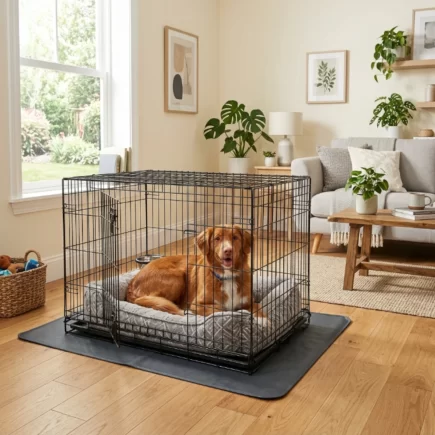
Wire crates offer maximum ventilation and visibility. Your dog can see everything happening around them, which suits confident, social dogs that settle better when they feel part of the household. They fold flat for storage and travel, and most come with a slide-out tray for easy cleaning.
- Best for: Puppies in training, dogs that run hot, owners who need portability.
- Not ideal for: Strong chewers, or living rooms where appearance matters.
Furniture Style Crates
These are wooden crates built to look like end tables or side tables. They sit naturally in a living room or bedroom without drawing attention as pet products. Most include a cushion, a flat top surface, and some have built-in storage drawers.
- Best for: Small to medium dogs, style-conscious homes, apartments where the crate lives in a main room.
- Not ideal for: Large powerful breeds, dogs that chew wood, or anyone who needs to move the crate regularly.
Heavy Duty Crates
Built from welded steel rather than wire clips, heavy duty crates are designed specifically for dogs that escape, chew, or push against their enclosure. The structural difference matters, welded bars resist pressure at every joint rather than relying on connecting clips that a determined dog can work loose over time.
- Best for: Powerful breeds, escape artists, dogs with high anxiety that destroy lighter crates.
Wooden Dog Houses
Separate from furniture crates, these are built for indoor and outdoor use. An elevated floor keeps dogs off cold or damp ground, and air vents handle warm weather circulation. The natural wood construction handles outdoor exposure far better than wire or fabric alternatives.
- Best for: Dogs that split time between yard and indoors, covered outdoor spaces, mild climates.
- Not ideal for: Harsh winters without additional insulation, or dogs that chew wood aggressively.
Step 3: Consider Your Dog’s Temperament
Size and type narrow your choices significantly, but your dog’s personality closes the decision. Two dogs the same size and breed can need completely different crates depending on how they behave.
Anxious or Nervous Dogs
Anxious dogs settle faster in darker, more enclosed spaces. Solid wooden walls reduce visual stimulation, the dog sees less of what’s happening around them, which lowers stress compared to an open wire crate where every movement in the room is visible. If your dog barks constantly in a wire crate, a solid-panel furniture crate is worth trying before assuming crate training won’t work.
Social or Confident Dogs
Social, confident dogs often do perfectly well in wire crates. The visibility that stresses anxious dogs actually helps settled dogs feel connected to the household rather than isolated.
Step 4: Think About Your Daily Routine
The best crate on paper becomes a frustration in practice if it doesn’t fit how you actually use it every day. Before buying, run through these questions honestly.
Do you clean it daily?
A slide-out tray is worth prioritising. It pulls out without opening the crate door, so you clean without disturbing the dog or managing an open door while handling a mess.
Does the crate need to move between rooms?
Lockable wheels save significant effort over time. Lifting and carrying a heavy duty metal crate multiple times a week adds up fast. Look for independently lockable wheels, they provide more reliable floor security than a single central lock when a large dog shifts their weight against the sides.
Is the crate going in your living room?
Appearance matters more than most buying guides admit. A wire crate in a well-decorated living room is a constant eyesore. A furniture-style crate in the same spot looks deliberate.
Do you have multiple dogs?
A modular crate with a removable divider gives you flexibility, two separate spaces or one large one, depending on the day.
Does your dog travel with you?
Wooden furniture crates are not safe for vehicle travel and cannot absorb impact. For car journeys, a secured wire crate is the practical choice. For air travel, an airline-approved hard plastic crate is required by most US carriers.
Step 5: Know What Features Are Worth Paying For
Not every crate feature justifies the price difference. Some genuinely improve daily life. Others are marketing.
Worth it:
- Removable divider panel: lets one crate serve your dog from puppyhood to adulthood.
- Slide-out tray: makes cleaning faster and less disruptive every single day.
- Lockable wheels: essential if the crate moves between rooms regularly.
- Washable cushion cover: a fixed cushion that can’t be removed becomes unhygienic quickly.
- Double doors: front and side access removes the need to plan carefully around wall and corner placement.
Not worth paying extra for:
- Decorative hardware on furniture crates: adds cost with no functional benefit.
- Oversized crates for small dogs: more space is not more comfortable at this scale.
What to Avoid
- Buying a furniture crate for a chewer: Wood and particleboard are no match for a determined large breed. If your dog has chewed through anything structural before, go heavy duty from the start.
- Skipping the interior dimensions: Exterior measurements tell you how much floor space the crate takes up. Interior measurements tell you whether your dog actually fits. Always check both.
Every dog is different, and so is every home. The right crate is simply the one that fits your dog’s size, suits their temperament, works within your daily routine, and sits comfortably in your space. Work through each step in this guide and that decision becomes straightforward rather than overwhelming. Once you know what you need, the rest is just finding it.
FAQs
Start by leaving the crate door open with a treat or familiar toy inside. Let your dog explore it voluntarily for a few days before closing the door. Forcing them in early creates a negative association that takes much longer to undo than a slow introduction does.
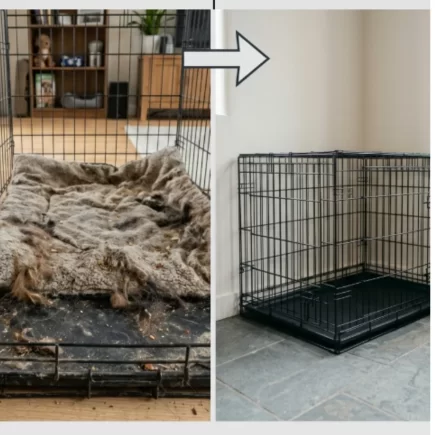
Heavy duty metal crates are the easiest to maintain. The frame wipes down in seconds and doesn’t absorb odours. Wooden furniture crates require more attention, the cushion cover needs regular washing and the wood itself should be wiped down to prevent moisture build-up over time.
Yes. A crate is an indoor enclosure used for training, rest, and security. A kennel typically refers to an outdoor or larger run-style structure designed for extended outdoor housing. The two serve different purposes and are not interchangeable for indoor crate training.