









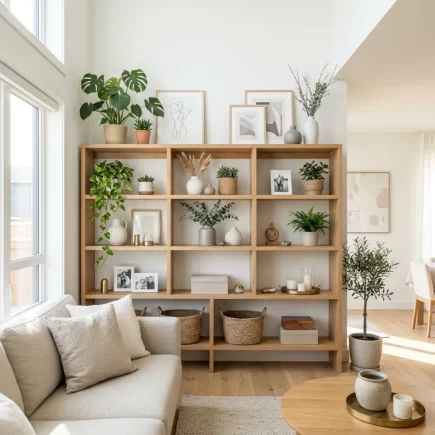


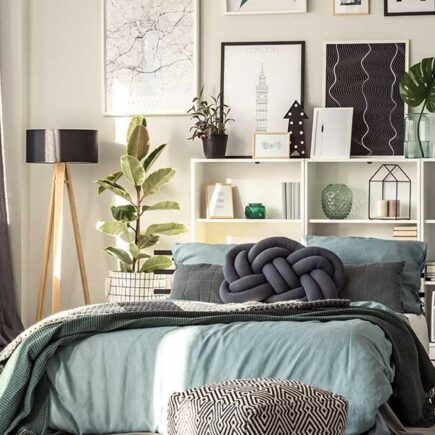











A bookshelf can be much more than a place to store books. By mixing decorative accents, practical storage, and personal items, you can create a display that feels balanced, functional, and full of character. This blog explores what to put on bookshelves besides books, with simple styling ideas that help transform any shelf into an attractive and well-organized focal point.
Quick-Glance Guide to Bookshelf Styling
| Category | Purpose | Best Placement |
| Decorative objects | Visual interest. | Eye level, small clusters. |
| Plants | Color and texture. | Upper or middle shelves. |
| Baskets and bins | Hidden storage. | Lower shelves. |
| Trays and bookends | Organization. | Shelf edges and corners. |
| Photos and keepsakes | Personal touch. | Middle shelves. |
| Souvenirs and collectibles | Conversation starters. | Scattered throughout. |
| Candles and lamps | Ambient lighting. | The shelf ends. |
| Storage boxes | Everyday items. | Lower or hidden shelves. |
| Bowls and trinket dishes | Small item catchall. | Front edges. |
| Small artwork | Layered decor. | Leaning against the back wall. |
1. Decorative Objects Like Vases, Sculptures, and Art Pieces
Small decorative accents add texture and dimension that books alone cannot provide. A ceramic vase, a marble sculpture, or a piece of abstract art instantly elevates a shelf’s overall look. These objects work best when grouped in odd numbers, since asymmetry tends to feel more natural than perfectly matched pairs.
- Choose one statement piece per shelf section rather than scattering many small items.
- Mix matte and glossy finishes to create subtle contrast.
- Vary heights so the arrangement has a visible rhythm.
2. Plants and Greenery for Adding Life to Shelves
Nothing softens a shelf full of hard edges quite like greenery. A trailing pothos or a small succulent introduces color and organic movement that contrasts nicely with straight book spines. Faux plants work just as well for low-light shelves or low-maintenance households.
Plants also help fill awkward gaps between books without looking like filler. A single potted plant on each shelf level creates a cohesive, layered feel throughout the entire bookcase.
Real vs. Faux Plants for Shelves
| Factor | Real Plants | Faux Plants |
| Maintenance | Requires watering and light. | None required. |
| Best for | Bright rooms. | Low-light or windowless rooms. |
| Longevity | Varies by species and care. | Long-lasting with no upkeep. |
| Cost over time | Ongoing, but low. | One-time purchase. |
3. Baskets and Bins for Hidden Storage
Not everything on a shelf needs to be on display. Woven baskets and fabric bins are ideal for tucking away remote controls, chargers, or mail that would otherwise clutter a room. They also add natural texture that pairs well with wood and metal shelving.
- Use uniform baskets across a shelf for a clean, cohesive look.
- Label bins if the shelf doubles as a family organization station.
- Reserve lower shelves for baskets, since they are easier to reach at floor level.
4. Trays and Bookends That Blend Function and Style
Trays are an underrated shelf styling tool. A simple tray can corral small objects like keys, coasters, or jewelry into one tidy zone instead of letting them spread across the surface. This keeps the shelf looking intentional rather than randomly filled.
Bookends serve a similar dual purpose, holding books upright while adding a design element of their own. Metal, stone, or geometric bookends can act almost like sculptures when paired with a shorter stack of books. Matching bookends to the room’s existing hardware finishes helps tie the whole space together.
5. Framed Photos and Personal Keepsakes
A shelf that feels truly personal usually includes a few framed photos or sentimental objects. These pieces break up the more formal look of books and decor with something warmer and more familiar. Family photos, wedding portraits, or childhood mementos all work well in small doses.
Two or three frames of different sizes tend to look more curated than a row of matching ones. Leaning a frame against the back of the shelf, instead of standing it upright, adds a relaxed, more natural look.
6. Travel Souvenirs and Collectibles as Conversation Pieces
Souvenirs from trips or a collection built over the years give a shelf real personality. A piece of pottery from an overseas market or a small carved figurine tells a story that generic decor cannot replicate. These items naturally draw curiosity from guests and spark conversation.
- Group souvenirs by theme, such as by country or trip.
- Display fragile items on higher shelves, away from foot traffic.
- Keep fragile or valuable pieces out of reach of children and pets.
7. Candles and Small Lamps for Warm Lighting
Lighting changes the entire mood of a bookshelf display, especially in the evening. A small table lamp on one end of the shelf adds a warm glow that makes the whole unit feel inviting. Candles, whether real or flameless, offer the same effect on a smaller scale.
Placing a light source at one end rather than the center creates a more natural, asymmetrical balance. This also draws attention to a specific vignette on the shelf instead of lighting everything evenly. A dimmable lamp gives extra flexibility for different times of day.
8. Storage Boxes and Containers for Everyday Items
Decorative boxes serve the same hidden-storage purpose as baskets but suit a more formal or modern shelf style. Lacquered, leather, or lidded wooden boxes can hold small items like batteries, cables, or paperwork out of sight. They also stack neatly, which helps maximize vertical space.
Choosing boxes in a consistent color palette keeps a busy shelf looking pulled together. Labeling is optional, but useful for shelves that double as household command centers. It helps to reserve at least one box for miscellaneous items that do not have another home.
9. Decorative Bowls and Trinket Dishes
Small bowls and trinket dishes are perfect catchalls for items like keys, coins, or jewelry that would otherwise clutter a surface. They also work purely as decor, especially when made from interesting materials like stone, brass, or hand-painted ceramic. A shallow dish near the front edge of a shelf is both practical and visually grounding.
These pieces are especially useful near an entryway bookshelf, where small daily-use items tend to accumulate. A dish with texture or pattern adds interest without requiring much shelf space. One or two per shelf section is usually enough.
10. Small Artwork and Framed Prints
Leaning small artwork against the back of a shelf, instead of hanging it on the wall, adds an unexpected layered effect. This works especially well behind a stack of books or a decorative object, creating depth. Prints, postcards, or even small canvases all work well for this purpose.
- Choose artwork with colors that complement, not match, nearby decor.
- Mix frame styles for a more collected, less matchy look.
- Keep larger pieces toward the back so smaller items stay visible in front.
A thoughtfully styled bookshelf blends storage with personality, making it both practical and visually appealing. Mixing decorative accents, functional organizers, and personal items creates a balanced display that suits any room. HOMCOM bookshelves provide a versatile foundation for organizing and showcasing your favourite pieces with style.
FAQs
Neutral colours create a timeless, calming look, while accent colours can add personality and contrast. Choosing a consistent colour palette across decorative items, books, and storage baskets helps the bookshelf feel unified rather than busy.
There is no fixed schedule, but many people refresh their bookshelves seasonally or whenever they redecorate a room. Swapping artwork, plants, or decorative accessories keeps the display looking fresh without requiring a complete redesign.
The best organisation method depends on your needs. Books can be arranged by colour, size, genre, or author, while decorative items should be spaced evenly throughout the shelves to create visual balance and keep frequently used items accessible.