














That wire crate sitting in your living room does not have to be an eyesore. With the right dog crate decorating ideas, you can turn your dog’s space into something that looks like it actually belongs in your home, without spending a fortune or sacrificing your dog’s comfort.

Whether you prefer a modern farmhouse look, a mid-century aesthetic, a built-in cabinet style, or a house-shaped indoor design, there is a dog crate decor approach that fits your space. This guide walks you through 12 practical, stylish ideas, from quick weekend upgrades to full furniture-style solutions, so your dog gets a cozy retreat and your home keeps its look.
Before You Decorate: Two Rules That Always Apply
Before choosing any dog crate decoration approach, keep these two things front and center.
- Safety first: Use non-toxic paints and pet-safe finishes on any surface your dog can reach. Avoid loose fabric edges, small decorative hardware pieces, and anything that could break off and be swallowed.
- Airflow always: No matter how you cover or enclose the crate, proper ventilation is non-negotiable. Every enclosure needs open slats, mesh panels, or uncovered sections so your dog breathes comfortably at all times.
With those two rules in place, here are 12 dog crate decor ideas that actually work in real US homes.
12 Dog Crate Decorating Ideas for Every Home Style and Budget
1. Choose a Furniture-Style Wooden Crate From the Start
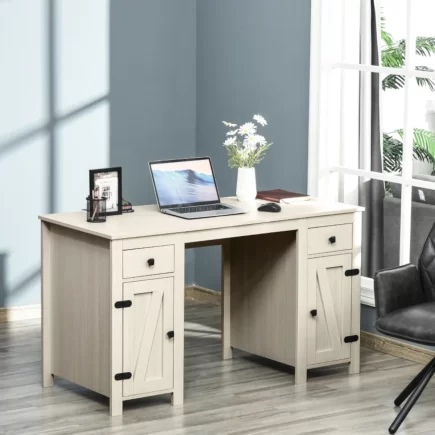
The cleanest way to decorate a dog crate is to start with one that already looks like furniture. Furniture-style wooden crates, finished with solid panels, decorative door hardware, and a flat top surface, blend into living rooms, bedrooms, and entryways without any extra work.
Place a small lamp, a vase, or a framed photo on top and the crate becomes part of your room, not an interruption to it. These come in a wide range of finishes and wood tones, from white-painted MDF to dark walnut and two-tone combinations, so there is an option to match virtually every interior style, farmhouse, mid-century, Scandinavian, or transitional. This is the most popular starting point for homeowners who want style without a DIY project.
2. Go Wide With a Credenza or Sideboard Style Crate
For larger dogs or open-plan living spaces, a wide credenza-style crate works beautifully as a room anchor. These wide-format enclosures function as a sideboard or console table while giving your dog a spacious, well-ventilated interior.
Style the top surface with books, a diffuser, and a plant arrangement. The result looks like intentional furniture rather than a pet accommodation. This style works especially well in dining rooms, living rooms, and open entryways where a long, low surface already makes sense in the layout.
3. Add a Wooden Topper to an Existing Wire Crate
If you already own a standard wire crate and want to upgrade its look without replacing it, a wooden topper is the most cost-effective option available. Cut a piece of sanded plywood or butcher block to fit the exact dimensions of the top, secure it with L-brackets or edge trim, and stain it to match your existing furniture.
Style the surface with a small lamp, a tray, or decorative objects and the wire crate disappears visually into the room. This weekend project typically costs under $50 and makes a significant difference in how the crate reads in your space.
4. Use Fabric Covers & Dress the Interior Too
Hanging café curtains on tension rods over the wire sides of a standard crate is one of the quickest budget-friendly upgrades available. Choose fabric that coordinates with your room’s color palette, linen for a natural look, patterned cotton for a playful feel, or outdoor fabric for durability and easy cleaning. The front stays open for access while the sides and back are fully concealed.
Take it a step further by lining the back wall and sides of a wooden enclosure with peel-and-stick wallpaper in a botanical print, a geometric pattern, or a design that coordinates with the room’s palette. Choose a moisture-resistant option for durability. When the crate is positioned where the interior stays visible throughout the day, a finished interior wall creates the impression of a thoughtfully decorated space rather than a bare enclosure. Both upgrades can be swapped out seasonally or whenever you redecorate.
5. Build a Bookshelf and Crate Combination
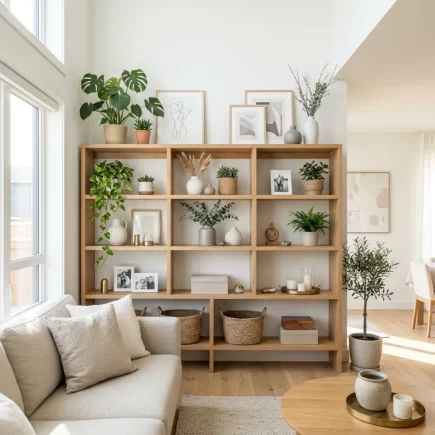
A bookshelf with a crate integrated at the base is one of the smartest solutions for homes where floor space is valuable. You get storage, display area, and a dog den all in one footprint. Modify an existing bookshelf by removing the bottom shelf and fitting the crate inside, or purchase a purpose-built unit. Style the upper shelves with books, plants, and decorative objects while your dog settles comfortably in the compartment below.
6. Try the House-Shaped Indoor Crate Design
The house-shaped dog crate, featuring a pitched roof, paneled sides, and a sliding or hinged door, is one of the most charming styles gaining popularity in US homes. Positioned near a staircase, in a living room corner, or in a bedroom, it reads as a decorative architectural element rather than a utilitarian enclosure.
This style suits farmhouse, transitional, and cottage interiors particularly well. The pitched roof adds vertical interest to the space, and the structure is substantial enough to serve as a room accent on its own without any additional styling on top.
7. Style Around a Heavy-Duty or Utilitarian Crate
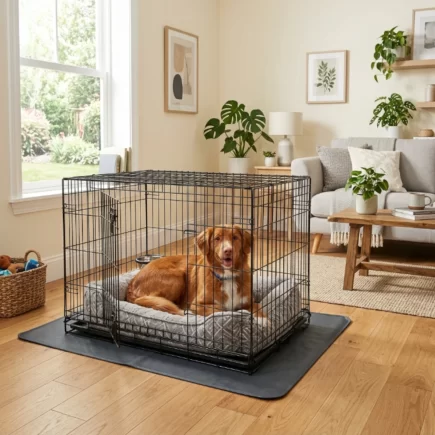
For dogs that need a stronger, more secure enclosure, decoration shifts to the surrounding space rather than the crate itself. Place the crate on a high-quality Area Rug with a bold geometric or textured pattern to anchor it visually. Add a large potted plant nearby and a piece of wall art above to frame the corner intentionally. Finish with a small lamp on a nearby surface so the overall vignette feels warm and deliberate.
When the surrounding space is well-styled, even a utilitarian metal crate reads as a design choice rather than something functional sitting in the corner by default.
8. Create a Crate Nook Under the Stairs
The space beneath a staircase is one of the most natural locations for a dog crate in any US home. Dogs instinctively gravitate toward enclosed, den-like spaces, so the geometry of an under-stair nook suits them well. Slide an existing crate into the space and frame the opening with decorative trim and wainscoting, or commission a custom built-in enclosure.
The result keeps the main living areas completely clear while giving your dog a tucked-away retreat that feels purpose-built. Add a small battery-powered light inside so the space feels warm rather than dark.
9. Design a Farmhouse Chic Crate Station
Start with a wooden crate enclosure in white or a weathered gray finish. Add black metal hardware, hinges, latches, and handles, that echoes the style found throughout farmhouse-inspired spaces. Stencil your dog’s name on the front panel in a vintage-inspired font, or mount a small custom nameplate above the door in brass, reclaimed wood, or hand-lettered ceramic.
Place a galvanized metal water bowl beside it and layer a textured natural fiber rug underneath. Every element ties the crate into the room’s overall aesthetic so it feels like a considered, permanent part of the space rather than an afterthought.
10. Incorporate the Crate Into Built-In Cabinetry
If you are renovating a mudroom, laundry room, or living room wall, building a crate space directly into the cabinetry is the most seamless solution available. The finished result looks like the crate was always part of the home’s original architecture.
Work with a contractor or use prefabricated cabinet components to create an enclosure with a ventilated door, a finished interior, and surrounding storage for leashes, food, and supplies. Hooks above the crate, drawers below, and open shelving beside it make the entire setup functional and polished.
11. Use a Large Playpen Crate as a Defined Room Zone
An open-top playpen-style crate works differently from enclosed crates and calls for a different decorating approach. Rather than concealing it, lean into its footprint by treating it as a defined zone within the room.
Place it on a large area rug that clearly delineates the space. Add a round donut bed inside, scatter toys that coordinate with the room’s palette, and position a plant nearby to soften the metal structure. When styled with intention, a playpen crate reads as a designated pet corner rather than something that clashes with the rest of the room.
12. Finish With Ambient Lighting
Strategic lighting is the detail that elevates a decorated crate from good to genuinely impressive. Battery-operated LED strip lights along the interior top edge of a wooden enclosure create a warm glow that makes the space feel welcoming, always choose warm white tones, never cool or harsh light near a dog’s resting area.
Place a small lamp on top of the crate if it doubles as a side table, or install a wall sconce directly above to create a lit, intentional vignette in that corner of the room. Smart LED strips that respond to voice commands or an app add convenience for nighttime use without disturbing your dog.
There is no single right answer when it comes to dog crate decorating, the best approach is the one that fits your space, your dog’s needs, and how much effort you want to put in. A furniture-style wooden dog crate does the work on its own. A wire crate with a wooden topper and fabric cover gets you 80% of the way there for under $50. And if you are doing a full renovation, a built-in cabinetry solution turns the crate into a permanent, polished feature of the room.
Whatever direction you choose, the goal is the same: a crate your dog actually wants to use and a space that still looks like your home. Browse dog kennels and crates at Aosom to find furniture-style options that make decorating easy from day one.
FAQs
The best location depends on your dog’s temperament. Social dogs do well in living rooms or family rooms where they can see household activity. Dogs with anxiety often settle better in quieter spaces like a bedroom or a dedicated corner of a home office. Avoid garages and laundry rooms where temperature swings and loud appliance noise can cause stress.
The key is integration rather than isolation. Position the crate against a wall, anchor it with a rug underneath, and style the immediate surrounding area, a plant beside it, a piece of art above it, a lamp on top if it doubles as a table. The crate should feel like it occupies a defined zone, not like it was placed wherever space was available.
A low-pile, washable rug in a flat weave or indoor-outdoor material works best. It holds up to paw traffic, resists moisture, and vacuums easily. Size-wise, the rug should extend at least six to eight inches beyond each side of the crate so it visually grounds the piece in the space without looking undersized.
It depends on how long you plan to use it and how important the room’s aesthetic is to you. A furniture-style crate from aosom.com is a one-time purchase that requires zero additional decorating effort and holds its look over time. Decorating a wire crate costs less upfront but requires ongoing maintenance of covers, toppers, and accessories.
Place the crates side by side and treat them as a matched set. Use identical or coordinating covers, the same style of nameplate for each dog, and a single long rug underneath both crates to unify the arrangement. A built-in cabinetry solution with two integrated crate spaces is the most polished option for multi-dog households and looks entirely intentional.