





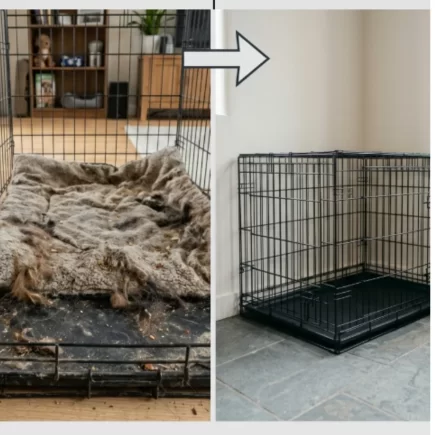






Most dog owners spend hours researching the right crate. They compare sizes, materials, and prices. Then they bring it home, drop it somewhere that feels convenient, and wonder why their dog wants nothing to do with it. The crate itself is rarely the problem. Where you put it is.

A dog that resists the crate in one spot will often walk into it willingly once it’s moved to the right location. That’s how much placement matters, and it’s the one thing most crate guides skip right over.
Two Rules That Apply in Every Room
Every good crate location follows the same two rules.
- Keep it social, not isolated: Dogs are pack animals. A crate in the basement or a spare bedroom feels like a punishment. Your dog doesn’t need to be the center of attention, but they should be able to hear normal household sounds and catch occasional movement. That small connection is what makes the crate feel safe.
- Keep it calm, not chaotic: Right next to the front door, in a busy hallway, or directly beside the TV is too much. Every sound and movement keeps your dog on alert. A dog that can’t relax in the crate is a dog that learns to hate it.
The sweet spot is quiet without being cut off.
Where to Put a Dog Crate in the Living Room
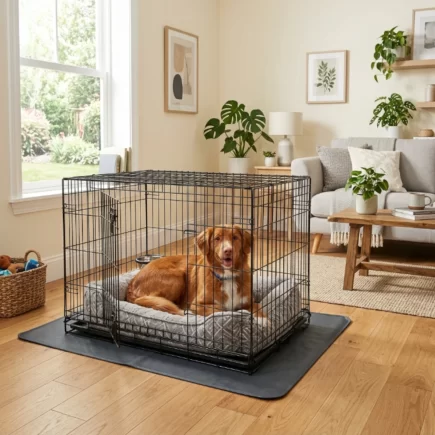
The living room is the best permanent spot for most households. Your dog can watch daily family life without being in the thick of it, which is exactly the balance that makes crate training work.
Put It in a Corner
A corner is almost always the right call. Two solid walls give your dog a natural sense of enclosure. It stops feeling like an exposed box in the middle of the room and starts feeling like a den.
It also makes it easy to drape a cover over the top and sides without blocking the front, which helps most dogs settle faster in the early weeks.
What to Avoid in the Living Room
- In front of the TV: Shifting light and sound keep your dog’s brain engaged when it should be winding down.
- Next to vents or radiators: The air right beside a vent runs much hotter or colder than the rest of the room, making it hard for your dog to get comfortable.
- In a high-traffic walkway: Every person who walks past is something to react to. Dogs in busy pathways stay on edge constantly.
- Beside exterior doors or street-facing windows: Delivery trucks, neighbors, dogs on the sidewalk, all of it becomes stimulation your dog can’t tune out.
Where to Put a Dog Crate in the Bedroom
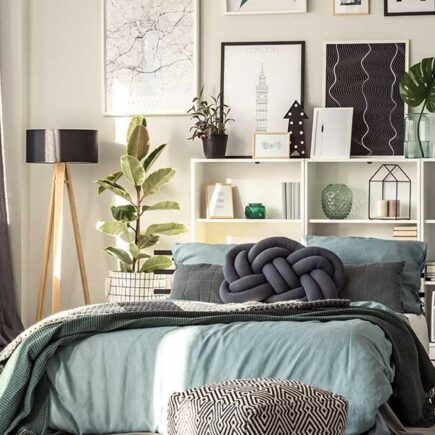
Bedroom placement is one of the most effective options, especially for puppies and newly adopted dogs.
When your dog can hear you sleeping, their stress response drops significantly. Nighttime crying, one of the biggest frustrations in early crate training, gets much better when the crate is nearby. Your dog isn’t lying there wondering where you went. They know exactly where you are.
For puppies, there’s a practical benefit too. You’ll hear them when they need to go outside during the night, which is essential during the potty training window.
Where in the Bedroom
Place the crate beside the bed, not across the room. Some owners find that resting a hand on the crate during the first couple of nights helps a new puppy settle, especially one used to sleeping in a pile with littermates.
You don’t have to keep it in the bedroom forever. Once your dog sleeps through the night reliably, you can slowly move it toward its permanent spot, a few feet at a time over several days, not all at once.
Where to Put a Dog Crate at Night
Nighttime placement has slightly different priorities than daytime. The focus shifts to three things: darkness, quiet, and closeness to you.
Corner Placement With a Cover
The same corner logic applies at night. Add a cover over the top and three sides, front left open, and you’ve created a darker, den-like space that naturally signals rest. If your room has light coming in from streetlamps or electronics, the cover makes a real difference in how fast your dog settles and how long they stay asleep.
Away From Windows
Windows are a problem at night. Passing headlights sweep across the room. Neighborhood sounds are louder and less predictable. Nocturnal animals can send a dog into full alert mode at 2am.
If the bedroom doesn’t work long-term, a quiet hallway just outside the door is a solid middle ground. You can both hear each other without sharing the same space.
Where to Put a Dog Crate for a Puppy
Getting puppy placement right from the start makes crate training go much faster.
Bedroom at Night, Living Room During the Day
At night, the bedroom cuts down on separation anxiety and keeps potty training manageable, you’ll hear your puppy when they need to go out instead of waking up to an accident.
During the day, the living room keeps your puppy connected to normal household rhythm. Hearing people move around, cook, and talk helps puppies grow into calmer adult dogs. It’s passive socialization happening while they rest.
Away From Exterior Doors and Street-Facing Windows
Puppies overstimulate fast. A delivery truck, a dog on the sidewalk, or a car pulling into the driveway can set off a barking spiral that makes it really hard to build calm crate habits early on.
Don’t Move It Around Too Much
Part of your puppy’s comfort with the crate is tied to that specific spot, the smells, the light, the familiar sounds from that corner. Moving it too often means constant readjusting instead of building real confidence in one place.
Where to Put a Dog Crate in a Small Apartment
The options are narrower, but the same principles apply.
Living Room Corner
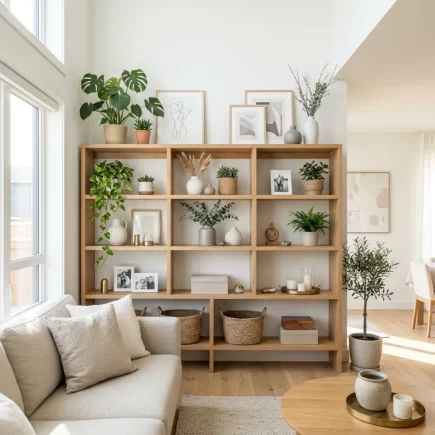
A corner of the living room keeps your dog connected to daily activity, gives the crate natural support on two sides, and keeps your floor clear. In a studio or open-plan apartment, a bookshelf or room divider beside the crate can help define the space without cutting your dog off from everything.
What to Avoid in Apartments
- Bathrooms and closets: Isolated, often poorly ventilated, and they amplify sounds in ways that increase anxiety rather than reduce it.
- Street-level windows in busy areas: A crate beside a window facing a sidewalk or road means your dog is reacting to foot traffic and noise all day. They never get real rest.
If you can’t move the crate away from a window entirely, face the door toward a quieter wall. That small adjustment makes a real difference in how much your dog actually rests while you’re gone.
Where to Put a Dog Crate for an Anxious Dog
Anxious dogs need fewer triggers, but they still need to feel connected to the household.
The Setup That Works
Low-traffic corner. Crate partially covered. Door facing a quieter part of the room.
The cover cuts visual input from the sides. The corner provides enclosure. The direction the door faces controls what your dog is watching while inside. Together, those three things create a much calmer environment than an open wire crate sitting in the middle of a busy room.
If your anxious dog has been refusing to settle, try this setup before changing anything else. Location alone solves this more often than people expect.
Stay Present Early On
During the first sessions in a new location, keep the crate in a room where someone is home. Leaving an anxious dog alone too early, especially somewhere they haven’t gotten comfortable yet, is one of the most common ways to create training stalls. Let them build positive associations with the spot first.
Crate Placement by Situation
| Situation | Best Placement |
| Puppy in early training | Bedroom at night; living room during the day |
| Adult dog, daytime crating | Living room corner, away from TV and vents |
| Anxious or reactive dog | Enclosed corner, partially covered, near family |
| Small apartment | Living room corner, door facing away from windows |
| Dog alone during work hours | Quiet area, away from street-facing windows |
| Senior dog | Stable temperature zone, easy floor access, near family |
| Multiple dogs | Separate crates, same room, non-adjacent positions |
The right crate placement does more for training than any premium crate ever will. Almost every situation in this guide comes back to the same two rules: keep the crate social but not isolated, and calm but not chaotic.
A quiet corner near the people, away from windows, doors, and vents, gives your dog the den-like security that makes the crate feel like a refuge instead of a punishment. If your dog has been resisting their crate, don’t rush to replace it or change your routine. Move it first. More often than not, the spot is the problem, and the right location is the simplest fix there is.
FAQs
Wherever your family spends the most time. If evenings happen downstairs, keep the crate there. If you work from a home office upstairs all day, bring it up during working hours. The floor matters less than being near the people.
For most dogs, yes. Two solid sides help them feel enclosed and secure. It also keeps the crate from becoming a hazard in the middle of the room and makes a cover easier to use. Just make sure the door opens fully and there’s decent airflow on the open sides.
It can. For confident dogs, a door facing the room keeps them connected to household activity. For anxious dogs, facing it toward a quieter wall cuts down on visual triggers. Start with whatever helps your dog settle and adjust from there.
Far enough that arrivals and departures don’t set off repeated barking. For dogs working through separation anxiety, a direct sightline to the front door reinforces exactly what you’re trying to reduce.
No, not for a training crate. Outdoor kennels are a different thing entirely. Crate training only works when the crate is part of your dog’s everyday indoor environment. That’s where the comfort and routine get built.