











Choosing where to place your dog’s food and water bowls is one of those small decisions that quietly shapes your daily routine. The right spot keeps your floors clean, your dog relaxed, and your home free of spills and lingering odors. Below are the best locations to consider, each with a clear strategy and the trade-offs to weigh, so you can match the placement to your home and your dog.
A few universal rules apply no matter where you land:
| Principle | Why It Matters |
| Keep water and food slightly apart | Splashed water near the kibble turns into a sticky mess. |
| Use a flat, washable surface | Tile, vinyl, or a mat cleans far more easily than carpet. |
| Avoid high-traffic walkways | Prevents tripping and lets your dog eat undisturbed. |
| Match bowl height to your dog’s size | Reduces neck strain, especially for large breeds. |
| Stay near a water source if possible | Makes refilling and cleanup effortless. |
Best Place to Place Dog Bowl
1. Kitchen Corner: A Clean, Low-Traffic Place for Dog Bowls
The kitchen is a natural choice because it’s already built for food and easy cleanup, and a quiet corner makes the most of that. Tucking bowls into a low-traffic corner keeps them off the main path while staying close to the sink for quick refills and rinsing.
Benefits:
- Sits close to a water source for effortless refills.
- Hard flooring wipes clean in seconds after spills.
- A corner stays clear of cooking traffic and foot paths.
- Easy to fold into a kitchen routine you’re already in.
Ideal for: Most households, from small apartments to busy family kitchens, particularly homes where the kitchen is the dog’s natural gathering spot.
2. Laundry Room: An Easy-to-Clean Spot Away from Foot Traffic
The laundry room is one of the most underrated feeding spots in the house. The flooring is usually waterproof, the room sees little foot traffic, and a nearby utility sink makes rinsing bowls simple, giving your dog a calm space to call their own.
Placement Strategy: Set the bowls against a wall away from the washer and dryer to avoid vibration and noise. If you keep the door closed during cycles, add a door stop or pet door so water stays accessible.
Benefits:
- Waterproof flooring handles spills and splashes with ease.
- Low traffic lets nervous or slow eaters relax.
- A utility sink right there makes cleanup quick.
- Contains feeding mess to one out-of-the-way room.
Ideal for: Homes with a dedicated laundry space, especially those wanting a quiet, contained area separate from the main living zones.
3. Mudroom or Entryway: A Practical Spot for a Feeding Station
A mudroom blends storage and feeding into one neat zone, streamlining the whole routine. You can keep a food bin, leash, towels, and bowls together, and the durable flooring most mudrooms have shrugs off muddy paws and water splashes.
Benefits:
- Combines feeding, storage, and supplies in one tidy spot.
- Tough flooring resists mud, water, and daily wear.
- Keeps the rest of the home free of feeding clutter.
- Pairs naturally with the leash-up and walk routine.
Ideal for: Homes with a defined entry or mudroom, particularly active households where dogs come and go frequently.
4. Near the Back Door: Handy for Outdoor Potty and Water Breaks
Placing water near the back door creates a smart rhythm: drink, then head outside. This is especially useful for dogs that spend time in the yard, since they can rehydrate the moment they come back in while muddy traffic stays concentrated in one area.
Benefits:
- Encourages drinking right after outdoor activity.
- Keeps wet, muddy zones limited to one entry point.
- Makes water easy to access on the way in and out.
- Works well alongside an outdoor feeding setup.
Ideal for: Homes with a yard or frequent outdoor access, particularly energetic dogs that play outside often.
6. Pantry or Closet: A Hidden Spot to Keep Feeding Out of Sight
For homeowners who want bowls completely out of view, a pantry or wide closet works well. Feeding stays discreet, and food storage sits right alongside the bowls for one-stop convenience, keeping your main living areas looking uncluttered.
Placement Strategy: Set the bowls on the floor of a ventilated pantry with food stored on a shelf above. Prop the door open or fit a small pet door so your dog always has access to water, and add a low light if the nook is dark.
Benefits:
- Keeps feeding fully hidden from living spaces.
- Stores food and bowls together for convenience.
- Maintains a clean, minimal look in the main rooms.
- Gives shy dogs an enclosed, low-pressure space.
Ideal for: Homeowners who value a tidy aesthetic, particularly in homes where the pantry sits close to the kitchen.
8. Living Room Corner: Keeping Bowls Close in Open Floor Plans
In open-concept homes, a living room corner keeps bowls near your dog’s favorite hangout. Dogs are social eaters, and many feel calmer being close to the family, so a defined corner setup keeps the area functional without looking messy.
Placement Strategy: Use a decorative mat or tray that complements your decor and place bowls away from rugs and upholstered furniture. An elevated stand contains splashes better and looks more intentional in a living space.
Benefits:
- Keep bowls near where the family relaxes.
- Helps social dogs feel calm and included.
- A coordinated mat blends with your decor.
- Elevated stands reduce mess on living room floors.
Ideal for: Open-concept layouts and social dogs that prefer eating close to their people rather than tucked away.
9. Garage Feeding: A Mess-Friendly Option for Big or Messy Dogs
For large breeds or enthusiastic eaters who fling food and water everywhere, the garage offers a forgiving surface. Concrete hoses down easily, and the mess stays out of your living space, making it a practical pick for working dogs and multi-dog households.
Benefits:
- Contains heavy spills and scattered food.
- Concrete flooring rinses clean in moments.
- Keeps mess entirely out of living areas.
- Suits large or multi-dog feeding setups.
Ideal for: Large breeds, messy eaters, and multi-dog households, particularly homes with an attached, temperature-stable garage.
10. Patio or Porch: Outdoor Feeding That Works in Mild Weather
Feeding outdoors keeps every crumb and splash outside, which is ideal during pleasant seasons. A covered porch shields bowls from rain and direct sun while letting your dog enjoy fresh air, pairing especially well with active, outdoorsy dogs.
| Weather Condition | Outdoor Feeding Advice |
| Mild and dry | Ideal; refresh water twice daily |
| Hot sun | Use shade; water heats and evaporates fast |
| Cold or freezing | Move indoors; water can freeze |
| Rainy or humid | Cover bowls; food spoils quickly |
Benefits:
- Keeps all mess and crumbs outdoors.
- Let dogs eat in fresh air during nice weather.
- Covered spots protect bowls from rain and sun.
- Easy to hose down the area after meals.
Ideal for: Mild climates and active outdoor dogs, particularly homes with a covered, shaded porch or patio.
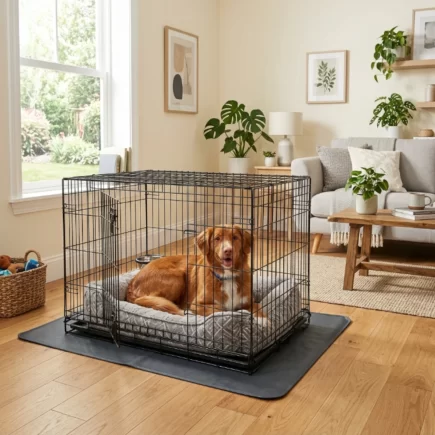
11. Near the Crate: A Calm, Familiar Place for a Nervous Eater
Anxious or newly adopted dogs often eat better in a space that already feels safe. Setting bowls near the crate gives a shy dog a low-pressure spot to relax and refuel, and the familiarity encourages consistent, stress-free eating.
Placement Strategy: Place bowls just beside the crate, not inside, unless your dog clearly prefers eating in it. Keep the area quiet and away from loud appliances, and use the same spot daily to build a comforting routine.
Benefits:
- Offers a safe, familiar feeding environment.
- Reduces stress for nervous or new dogs.
- Encourages steady, consistent eating habits.
- Reinforces the crate as a positive space.
Ideal for: Shy, anxious, or recently adopted dogs that feel most secure in a quiet, familiar corner of the home.
12. Away from the Litter Box: Smart Bowl Spots in a Cat Household
In homes with both cats and dogs, the golden rule is separation. Food and water should never sit near a litter box for hygiene reasons, and curious dogs often raid litter trays, so keeping these zones apart protects everyone’s health.
Benefits:
- Protects hygiene by separating food from waste.
- Stops dogs from raiding the litter box.
- Prevents tension and resource guarding between pets.
- Gives each animal a defined, peaceful space.
Ideal for: Multi-pet households with both cats and dogs, particularly homes where curious dogs tend to investigate the litter box.
The best feeding spot is the one that fits both your dog’s habits and your household routine. A well-chosen location can improve daily convenience, reduce mess, and support a more consistent feeding schedule. Choosing a spot that aligns with your dog’s personality and lifestyle can make mealtimes more comfortable and stress-free. As your dog’s needs change over time, revisiting the placement can ensure it continues to work effectively.
FAQs
Dog bowls should be replaced when they show cracks, deep scratches, rust, or signs of wear. Damaged surfaces can trap bacteria and become difficult to clean. Regular inspection helps maintain a hygienic feeding area.
Stainless steel is often preferred because it is durable, easy to clean, and resistant to bacteria. Ceramic bowls can also work well if they are free from chips and cracks. Choosing a quality material supports better pet hygiene.
Yes, slow-feeder bowls are designed with patterns and ridges that encourage dogs to eat more slowly. This can help reduce gulping, improve digestion, and make mealtime more engaging. They are especially useful for dogs that eat too quickly.