











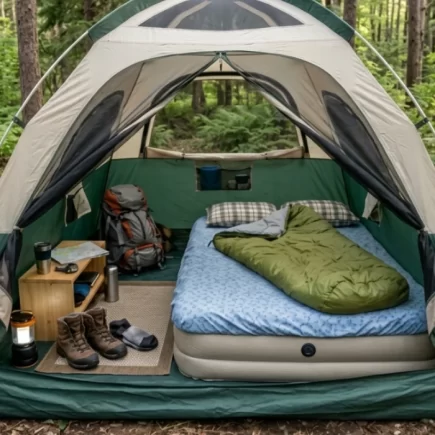
















Setting up a tent the right way makes the difference between a comfortable night outdoors and waking up in a puddle. Whether you’re camping for the first time or need a refresher, this guide walks you through the complete process from choosing your spot to securing the final stake.

The entire setup takes just 10-15 minutes when you follow the correct order, and you’ll avoid the most common mistakes that lead to water leaks, broken poles, and sleepless nights.
What You Need to Set Up a Tent
Before you start, make sure you have:
Essential items:
- Your tent (body, rainfly, poles, stakes)
- Groundsheet or Tarp (optional but recommended)
- Tent stakes (usually included with tent)
- Guy lines (usually attached to tent)
Helpful items:
- Small rock or Mallet (for hammering stakes)
- Flashlight or Headlamp (if setting up at dusk)
- Tent repair kit (for emergencies)
Most tents come with everything you need. Check your tent bag before heading to the campsite.
Main Steps for Setting Up Your Tent
Follow these steps in order for the best results. Each step prepares the ground for the next one, so skipping ahead can create problems later.
Step 1: Choose the Right Location
Where you place your tent matters more than anything else. The location affects your sleep comfort, water drainage, and tent stability. Choosing wisely, moving later is difficult once everything is set up.
What to look for:
- Naturally flat ground (walk across to check for dips)
- Higher ground, not low spots where water collects
- Soft soil with short grass
- No rocks, roots, or sharp objects underneath
What to avoid:
- Slopes (you’ll slide while sleeping)
- Low areas and dry stream beds (flood risk)
- Under dead branches or leaning trees
Position for wind:
- Stand still and feel the wind direction (or watch grass and leaves move)
- Point the narrow end of your tent toward the wind
- Keep doors and mesh panels facing away from wind
Quick tip: Look at the ground from different angles. Small slopes are hard to spot from just one position.
Step 2: Prepare the Ground Surface
Even small sticks or rocks under your tent can create pressure points or puncture the fabric. This two-minute task prevents most floor damage and keeps you comfortable all night.
Remove these items:
- Sticks and branches
- Stones and rocks
- Pinecones
- Any sharp debris
Quick fix: Step gently on small bumps to flatten them. Don’t dig or damage the site.
Step 3: Use a Tarp or Groundsheet
A protective layer blocks moisture and shields against sharp objects you might have missed. It adds durability and keeps you drier, especially on damp ground or during rain.
How to place it:
- Lay the tarp flat on cleaned ground
- Make sure it’s slightly smaller than your tent floor
- If the tarp sticks out, water will collect underneath
When to use ground protection:
| Ground Type | Use Protection? | Why |
| Rough or rocky | Yes | Prevents floor damage |
| Damp or wet | Yes | Blocks moisture |
| Dry, soft grass | Optional | Tent floor may be enough |
Step 4: Read Your Tent Instructions
Every tent uses slightly different setup systems. Some Camping Tents rely on pole sleeves, others use clip designs, and many combine both. When learning how to set up a tent, a quick look at the instructions helps avoid incorrect assembly and damage.
Quick check:
- How do poles connect?
- Where do poles attach to fabric?
- Any special setup notes?
Step 5: Lay Out the Tent Body
Spreading your tent correctly sets up everything that follows. This is your easiest chance to adjust door placement before the structure goes up.
What to do:
- Unfold completely
- Find all four corners
- Position doors where you want them
- Make sure fabric isn’t twisted
- Form a rectangle or square shape
Step 6: Connect the Tent Poles
Tent poles snap together using elastic cord inside, but forcing them damages the joints. Let the cord guide the pieces together naturally for a strong frame that lasts.
How to connect:
- Lay all pole sections on the ground
- Sort by length and shape
- Gently slide sections together (let the cord guide them)
- Never snap or force connections
Check: Make sure each section clicks fully into place.
Step 7: Attach Poles to the Tent
This step gives your tent its shape and structure. Different designs use different methods, but the goal is creating even tension across the fabric.
For sleeve systems:
- Slide the pole slowly through the fabric tunnel
- Support it with your hand as you go
For clip systems:
- Lay poles over the tent body
- Attach clips from bottom to top
- This keeps tension even
Mixed systems: Follow the order in your instructions.
Step 8: Raise the Tent Structure
Lift the tent gradually, not all at once. A slow raise lets each part settle naturally and helps you catch assembly mistakes before they become problems.
The process:
- Insert pole ends into corner grommets one at a time
- Lift gradually
- Walk around as you raise it
- Let fabric settle naturally
If you feel resistance: Stop and check alignment. A pole may not be seated correctly.
Step 9: Adjust the Tent Shape
A tent with uneven tension collects water and creates noise in the wind. Squaring everything up now improves ventilation, stability, and weather resistance.
What to adjust:
- Pull each corner gently to create even tension
- Make sure the floor lies flat
- Check that walls and roof look smooth
Result: Balanced tension improves airflow and prevents water pooling.
Step 10: Stake the Tent Down
Stakes anchor your tent and keep it from moving in the wind. The angle matters, angled stakes hold much better than straight ones. Different ground types need different staking techniques.
How to stake correctly:
- Push stakes at a 45-degree angle, leaning away from the tent
- Start with the four corners
- Then attach and tighten guy lines
- Tighten evenly (don’t over-tighten)
Staking for different ground types:
| Soil Type | Best Method | Extra Tip |
| Soft soil or sand | Use longer stakes at deeper angle | Pack soil around stake |
| Hard-packed dirt | Tap gently with rock | Don’t bend stakes |
| Rocky ground | Use gaps between rocks | Tie guy lines to heavy rocks |
Step 11: Attach the Rain Fly
The rain fly is your tent’s waterproof outer layer that keeps rain out and adds insulation. Most tents need it for full weather protection, even on clear nights.
How to attach it:
- Drape the rain fly over the tent with the correct side facing out
- Match corners and attachment points to the tent body
- Secure clips, hooks, or buckles according to your tent design
- Make sure vents align properly for airflow
Note: The rain fly should cover the tent walls but not touch the ground. Leave a small gap at the bottom for air circulation.
Step 12: Do a Final Check
Small problems are easiest to fix before you settle in for the night. A quick walk around the tent catches issues that could worsen overnight.
Check these items:
- All pole connections secure
- Zippers working smoothly
- Guy lines tight and even
- Groundsheet not sticking out
- Vents clear
Test it: Sit or lie inside briefly to confirm it feels level and comfortable.
Common Mistakes That Cause Problems
Avoid these errors:
- Mistake 1: Setting up in low spots
Result: Water pools under your tent during rain - Mistake 2: Ignoring wind direction
Result: Noisy, flapping fabric all night - Mistake 3: Snapping poles together forcefully
Result: Broken or weakened pole joints - Mistake 4: Loose or missing stakes
Result: Tent moves, fabric tears at stress points
Tips for Faster Setup Next Time
Before your trip
- Practice setup at home once
- Pack tent parts in order of use
- Keep poles, stakes, and fabric clean
At the campsite
- Work methodically, don’t rush
- Use daylight for first-time setups
- Get help for larger tents
Quick Setup Checklist
✅ Find flat, high ground
✅ Position narrow end toward wind
✅ Clear sticks, rocks, and debris
✅ Lay groundsheet (if needed)
✅ Connect poles gently
✅ Attach poles to tent body
✅ Raise tent gradually
✅ Adjust for even tension
✅ Stake at 45-degree angle
✅ Check everything before use
Setting up a camping tent the right way doesn’t take much time, but it has a big impact on comfort and weather protection. By choosing a good spot, following each step in order, and making small adjustments at the end, most common issues can be avoided. With this guide, setting up camping tents becomes simple and stress-free, helping you enjoy a dry, stable, and comfortable night outdoors every time.
FAQs
Staying warm in a tent starts with insulation rather than heat. Use a thick sleeping pad, wear dry layers, and keep the tent fully zipped to block cold air. Vent slightly to reduce moisture, which can make the inside feel colder.
Bring essentials that improve comfort and safety, such as proper sleeping gear, lighting, weather protection, and basic tools. Packing extra layers and a repair kit helps handle unexpected conditions. Keep items organized so they are easy to reach at night.
Not all tents leak in heavy rain, but poor-quality tents are more likely to let water in. Tents with thin fabric, weak seams, or worn coatings may leak under steady rainfall. Well-made tents with sealed seams and proper setup usually keep water out even during heavy rain.