








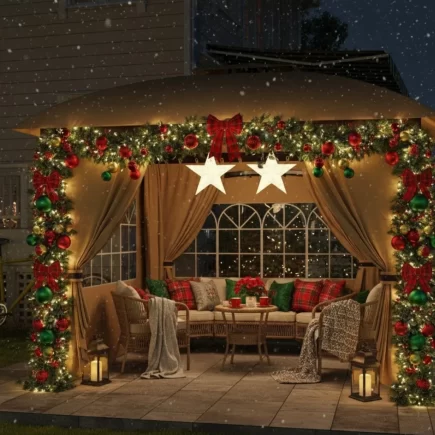
There are five main types of patio umbrellas: market (center pole), cantilever (offset), beach, cabana, and double-sided. Each design serves a distinct structural purpose and shade configuration suited to different outdoor layouts.

Patio Umbrella Types at a Glance
This comparison table summarizes the key features, size range, pole structure, and ideal use case for each umbrella type.
| Umbrella Type | Typical Application | Typical Diameter | Pole Position | Coverage Area | Space Requirement |
| Market (Center Pole) | Dining tables | 7–11 ft | Center | Moderate | Medium |
| Cantilever (Offset) | Lounge sets, pools | 9–13 ft | Side | Large | Large |
| Beach | Portable shade | 5–7 ft | Center | Small | Compact |
| Cabana | Privacy setups | 8–10 ft | Center | Large | Medium–Large |
| Double-Sided | Long dining tables | 12–15 ft | Center | Extra-wide | Large |
Structural Features of Each Patio Umbrella Type
1. Market Umbrellas
Market umbrellas are the most traditional and widely used patio umbrella style. They feature a straight center pole that passes through a table or sits in a weighted base.
Key Features
- Central vertical support pole positioned through a table or secured in a freestanding weighted base
- Symmetrical canopy design available in round, square, or rectangular formats for balanced shade distribution
- Manual push-lift or crank lift system that raises and lowers the canopy along the main pole
- Integrated tilt mechanism allowing angular canopy adjustment as sunlight shifts
Typical Sizes
| Diameter | Ideal Table Size |
| 7 ft | 30–36 inch table |
| 8–9 ft | 40–48 inch table |
| 10–11 ft | 60 inch table |
Typical Applications
- Patio dining tables
- Deck seating areas
- Medium-sized backyards
- Everyday residential use
Performance Benefits
- Simple, reliable construction
- Easy to operate
- Simpler structural design compared to offset models
- Wide availability of replacement canopies
Limitations
- Center pole may obstruct seating
- Less flexible shade repositioning
2. Cantilever (Offset) Umbrellas
Cantilever umbrellas eliminate the central pole by shifting support to the side. The canopy is suspended from a horizontal arm, allowing unobstructed space underneath.
Key Features
- Offset support arm design that suspends the canopy from the side rather than the center
- Heavy cross-base or weight-plate foundation system engineered to counterbalance extended canopy load
- Multi-directional tilt capability enabling side-to-side and forward angle adjustment
- Rotational canopy frame (in many models) allowing 360-degree shade repositioning without moving the base
Typical Sizes
| Diameter | Ideal Use |
| 9 ft | Sectional seating |
| 10–11 ft | Poolside lounges |
| 12–13 ft | Large patio sets |
Typical Applications
- Lounge seating
- Pool decks
- Outdoor sofas
- Open seating areas
Performance Benefits
- No center pole obstruction
- Adjustable shade positioning
- Modern, clean appearance
Limitations
- Requires heavy base system
- Higher initial investment
- More complex setup
3. Beach Umbrellas
Beach umbrellas prioritize portability and quick setup. They are lighter and designed for temporary shade solutions.
Key Features
- Lightweight pole construction typically made from aluminum or fiberglass for portability
- Pointed ground spike base designed for insertion into sand or soft soil
- Compact canopy span engineered for short-term, small-area coverage
- Flexible rib structure (often fiberglass) that bends slightly under wind pressure
Typical Sizes
| Diameter | Coverage |
| 5 ft | 1–2 people |
| 6–7 ft | Small family setup |
Typical Applications
- Travel
- Compact patios
- Temporary shade
- Park outings
Performance Benefits
- Lightweight
- Easy to carry
- Quick installation
Limitations
- Less stable in high winds
- Smaller shade coverage
- Shorter lifespan compared to heavy-duty patio models
4. Cabana Umbrellas
Cabana umbrellas offer extended canopy coverage and often include side panels for increased privacy and sun blocking.
Key Features
- Extended canopy coverage with deeper fabric drop for broader overhead shade
- Optional side panels or curtain attachments for added sun blocking and privacy
- Reinforced frame structure to support additional fabric weight
- Defined perimeter coverage zone creating a semi-enclosed shaded area
Typical Sizes
| Diameter | Coverage Area |
| 8–9 ft | Standard lounge set |
| 10 ft | Multi-chair layout |
Typical Applications
- Private backyard retreats
- Poolside relaxation
- Sun-sensitive environments
Performance Benefits
- Blocks side sunlight
- Enhanced privacy
- Creates defined outdoor space
Limitations
- Requires more setup space
- Bulkier appearance
5. Double-Sided Umbrellas
Double-sided umbrellas feature two canopies supported by one central pole, offering extended horizontal coverage.
Key Features
- Dual canopy configuration extending shade horizontally from a single central pole
- Reinforced central mast system designed to support expanded width
- Symmetrical shade projection across long rectangular seating layouts
- Wide-span coverage range typically exceeding 12 feet in total width
Typical Sizes
| Width Span | Ideal Table Length |
| 12 ft | 6–8 ft table |
| 15 ft | 8–10 ft table |
Typical Applications
- Long rectangular dining tables
- Commercial patios
- Large gatherings
Performance Benefits
- Maximum shade coverage
- Ideal for long seating arrangements
- Efficient single-pole support
Limitations
- Requires heavy base weight
- Not suitable for small patios
Understanding Umbrella Shapes
Shape influences shade distribution and layout compatibility.
| Shape | Typical Layout |
| Round | Traditional tables |
| Square | Modern layouts |
| Rectangular | Long dining tables |
Square and rectangular canopies often provide more usable shade per square foot.
Frame Materials Compared
Frame material determines strength, maintenance needs, and resistance to weather exposure.
| Material | Durability | Maintenance | Weight | Suitable Environment |
| Aluminum | High | Low | Lightweight | Coastal areas |
| Steel | Strong | Moderate | Heavy | Wind-prone areas |
| Wood | Durable | High | Medium | Traditional aesthetics |
| Fiberglass | Flexible | Low | Lightweight | High wind areas |
Aluminum remains the most popular choice due to rust resistance and low maintenance.
Canopy Fabric Comparison
| Fabric Type | Fade Resistance | Water Resistance | Cost Level |
| Polyester | Moderate | Light | Budget |
| Olefin | High | Moderate | Mid-range |
| Acrylic (Solution-Dyed) | Very High | High | Premium |
Many high-performance canopy fabrics carry a UPF 50+ rating for enhanced UV resistance.
Ventilation and Wind Resistance
Many patio umbrellas are designed with a vented canopy at the top. This structural feature allows air to pass through the canopy instead of building pressure underneath it.
Functional Benefits of Vented Canopies:
- Reduces wind lift by allowing airflow through the top opening
- Improves overall air circulation beneath the canopy
- Minimizes fabric tension during breezy conditions
Wind resistance is further influenced by rib material, frame construction, and base stability. Fiberglass ribs, reinforced joints, and properly weighted support systems contribute to improved structural performance in exposed outdoor settings.
Operation and Adjustment Features
Patio umbrellas differ in how they open, close, and adjust. These mechanisms affect ease of operation and positioning flexibility.
Lift Systems
- Push-Lift System: A manual sliding mechanism that locks into place once extended
- Crank Lift System: A rotating handle system that raises and lowers the canopy smoothly
Tilt Systems
- Push-Button Tilt: Allows fixed-angle adjustment in one direction
- Collar Tilt: Enables multiple preset tilt positions
- Infinite Tilt: Provides continuous angle adjustment for precise shade positioning
These adjustment systems vary by umbrella type and influence how shade coverage can be repositioned throughout the day.
Patio umbrellas are not just about shade, they are about choosing the right structure for your outdoor layout. Whether it’s the simplicity of a market umbrella, the flexibility of a cantilever design, the portability of a beach model, the privacy of a cabana style, or the extended reach of a double-sided option, each type is built for a specific purpose. Understanding these differences helps you select an umbrella that fits your space naturally and performs exactly as your setup requires.
FAQs
A patio umbrella is structured with ribs, a central or offset pole, and a weighted base for stability. A sunshade is usually fabric-only and tension-mounted between anchor points. Umbrellas are better for movable shade, while sunshades are more permanent installations.
No, most patio umbrellas are designed for straightforward home assembly. Standard market models usually require minimal setup, while cantilever umbrellas may take longer due to base plate configuration and weight placement.
Yes. A well-positioned umbrella creates visual structure and defined zones in an outdoor space. Coordinated color and placement can enhance curb appeal and make patios feel intentional rather than temporary.
Yes. Many patio umbrellas, especially cantilever and freestanding market styles, are designed to function independently of a table. As long as the base is properly weighted, the umbrella can provide effective overhead shade for lounge seating or standalone seating areas.