























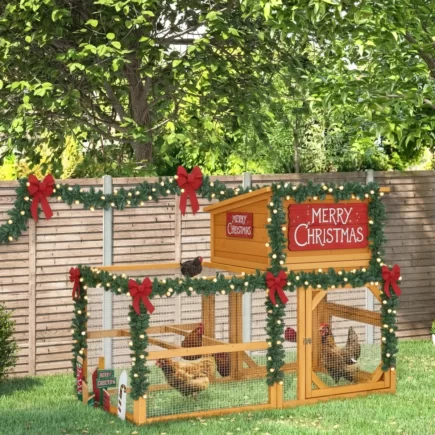



If you’re looking to create a comfortable, safe, and affordable resting space for your chickens, building a DIY chicken roost is the perfect project. A roost allows your chickens to rest off the ground, promoting better health and comfort. With a few basic materials and simple tools, you can build a sturdy chicken roost that suits your coop. This guide will walk you through each step of the process.
Materials and Tools Needed (Beginner-Friendly)
You can build a professional-quality chicken roost with just a few basic materials from your local hardware store.
Basic Materials
| Material | Purpose | Notes |
| Four 2×4 boards (8 feet long) | Main frame and roost bars | Choose straight, untreated lumber |
| 3-inch wood screws | Securing all connections | Galvanized screws resist rust |
| Table saw or circular saw | Cutting boards to size | Needed for ripping lumber lengthwise |
| Power drill | Creating holes and driving screws | Cordless models offer mobility |
| Angle finder or protractor | Measuring correct angles | Ensures proper wall lean |
| Carpenter’s square | Marking straight lines | Keeps measurements accurate |
| Measuring tape | Precise measurements | 25-foot tape recommended |
| Pencil | Marking cut lines | Sharp pencil for visibility |
| Optional: Sandpaper | Smoothing rough spots | 80-grit removes splinters |
| Optional: 10-inch blocks | Wall spacing | Scrap 2×4 pieces work well |
This project is perfect for beginners because it uses standard lumber sizes, requires no complex joinery, and offers flexibility in design.
Ideal Roost Specifications
| Specification | Recommended Size | Benefit |
| Bar width | 2 inches | Proper foot grip without strain |
| Height from floor | 2-4 feet | Balances safety with accessibility |
| Space per chicken | 8-10 inches | Eliminates territorial disputes |
| Distance from wall | 10-12 inches | Protects tail feathers |
Capacity Planning
| Flock Size | Recommended Setup | Best For |
| 5-10 chickens | Single 4-foot bar | Small backyard flocks |
| 10-25 chickens | Two 8-foot bars | Standard home coops |
| 25-50 chickens | Three to four bars | Growing operations |
| 50-75 chickens | Five-bar full design | Maximum capacity build |
How to Build a Freestanding Chicken Roost (DIY Step-by-Step Guide)
Step 1: Convert Lumber to Proper Sizes
Transform standard boards into the specific components needed for construction.
Split Boards Lengthwise:
- Position two 2×4 boards on your saw table.
- Set the blade height to cut completely through the thickness.
- Rip each board down the center to create two narrow pieces. This produces four of 2×2 lumber.
- Reserve remaining two 2x4s untouched for the frame.
Create Roosting Bars:
- Measure and mark 4-foot lengths on each 2×2 piece.
- Cut at marks to produce eight individual bars. Inspect each piece for dangerous splinters or cracks.
Safety Tip: Always use push sticks when operating table saws to keep hands away from spinning blades. Wear eye protection and hearing protection during all cutting operations.
Step 2: Shape the Support Frame
Creating angled ends allows the structure to lean securely against vertical walls.
Calculate Frame Angles:
- Take both remaining full-length 2×4 boards.
- Measure from one end and mark 30 degrees on the first side.
- Flip the board and mark 60 degrees on the opposite face. These complementary angles total 90 degrees for proper geometry.
- Use an angle finder tool for precision measurements.
Execute Angled Cuts:
- Secure the board firmly before cutting.
- Follow marked lines with circular or miter saw. The top angle creates flush wall contact, and the bottom angle provides stable floor contact.
Step 3: Plan Bar Placement
Strategic positioning maximizes comfort and minimizes conflict.
Determine Vertical Spacing:
- Space bars 12-15 inches apart measured vertically.
- Position the lowest bar 18-24 inches above floor level for smaller chickens, and higher bars for dominant flock members.
Step 4: Install Roosting Bars
Secure attachment creates a wobble-free structure.
Prepare Connection Points:
- Select a drill bit slightly smaller than the screw shaft diameter.
- Drill through the frame into the bar end at marked locations.
- Pre-drilling splits wood when driving screws.
Orient Bar Surfaces:
- Identify the smooth factory-rounded edge on each bar and position this facing upward.
Step 5: Adjust Bar Angles
Level positioning ensures chickens rest comfortably.
Set Horizontal Alignment:
- Place an angle finder on top of the installed bar.
- Rotate the bar gradually until the tool reads 60 degrees, making the bar level relative to the ground.
Step 6: Mirror Construction on Second Side
Complete the structure by adding the opposite frame.
Repeat Attachment Process:
- Follow identical drilling and screwing techniques. Ensure bars align level and check straightness.
- The rough-cut edge remains underneath.
Step 7: Add Wall Spacing Blocks
Spacers create necessary clearance for tail feathers and air circulation.
Prepare Spacer Pieces:
- Cut two 10-inch sections from scrap 2×4 material.
- Sand rough edges smooth to avoid wall damage.
Mount Spacers Securely:
- Attach the blocks to the rear face of the frame.
- Use two screws per block for maximum hold.
Step 8: Position in Coop
Proper placement encourages immediate flock adoption.
Select Optimal Location:
- Choose the driest area away from water sources, avoid drafty corners, and ensure underneath is accessible for cleaning.
Install Structure:
- Lean the assembled roost at a 60-degree angle against the wall.
- Test stability by applying gentle forward pressure.
Breed-Specific Adjustments
Different chicken types have varying roosting preferences.
| Chicken Type | Physical Traits | Roost Modifications |
| Standard Layers | Medium build, active | Use standard 12-15 inch spacing |
| Heavy Breeds | Large body, less agile | Add extra screws, wider bar spacing |
| Bantams | Small, lightweight | Reduce height to 4-5 feet maximum |
| Young Pullets | Growing, learning | Start with 2-3 bars, add more later |
| Senior Birds | Stiff joints, cautious | Lower entry point, gentle slope |
Extending Roost Lifespan
Simple maintenance preserves your investment for years.
- Weekly Cleaning Routine: Scrape or shovel waste into compost containers every seven days to avoid ammonia buildup.
- Monthly Inspections: Check all fasteners for looseness and replace damaged components before they fail completely.
- Seasonal Protection: During winter, wrap bars with non-slip tape to improve grip. Remove wrapping in spring to allow drying and sanitation.
Common Building Errors
Avoid these frequent mistakes for better results.
- Using Inadequate Frame Material: Narrow boards like 2x2s can’t support multiple landing chickens. Always use 2x4s for vertical supports.
- Mounting Directly Against Walls: Flush mounting can damage tail feathers and trap moisture. Always incorporate spacer blocks to maintain clearance.
- Incorrect Bar Spacing: Bars less than 10 inches apart lead to sanitation problems. Use 12-15 inch spacing for most flocks.
- Skipping Pilot Holes: Forcing screws directly into narrow lumber guarantees cracks. Drill guide holes slightly smaller than screw size for a strong, crack-free joint.
Creating a DIY chicken roost is a simple, cost-effective way to boost your flock’s comfort and health. While building one yourself provides a custom fit for your coop, those looking for a ready-made solution can explore Aosom chicken roosts to find a pre-built model that fits their needs.
Whether you build or buy, regular maintenance will ensure your chickens have a safe, functional resting place for years to come.
FAQs
1. Can chickens sleep on the floor instead of a roost?
While chickens can technically sleep on the floor, it’s not ideal. Sleeping on the ground can expose them to pests, dirt, and potential predators. A roost elevates them off the ground, providing a cleaner, safer resting place that promotes better health.
2. How do I keep chickens from fighting on the roost?
To prevent fighting, ensure there is enough space for each chicken to perch comfortably, with 12-15 inches of vertical spacing. Multiple roost bars or horizontal bars provide more choices and reduce territorial behavior, helping your flock rest peacefully.
3. Can I use a ladder as a chicken roost?
Yes, a ladder-style roost can work well in a chicken coop. It saves space and allows chickens to climb to their resting spots. Ensure the rungs are wide enough (1.5 to 2 inches) for chickens to comfortably perch and that the ladder is stable for safety.