




















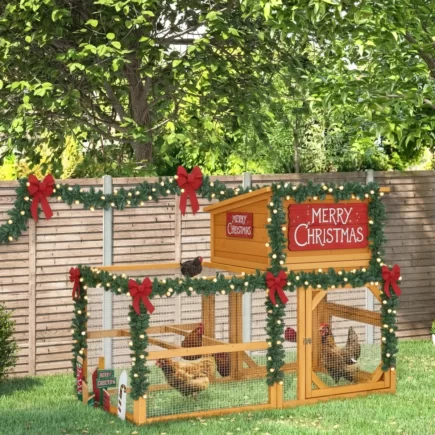



The size of your chicken run plays a crucial role in your flock’s health and happiness. A cramped space can cause stress and behavioral issues, while a spacious run encourages natural behaviors like foraging and dust bathing. In this article, we’ll help you determine the perfect chicken run size for your birds, ensuring a thriving and healthy environment.
1. The Core Space Formula: Square Footage Per Chicken
The standard industry recommendation for chicken run space is 8-15 square feet per bird. But why does this range exist? It comes down to a variety of factors, including breed size, activity level, and whether your chickens are confined 24/7 or have access to free range.
How Run Space Differs from Coop Space
It’s important to distinguish between run space and coop space. A coop is where your chickens sleep and lay eggs, while the run is their outdoor space where they can roam, scratch, and engage in natural behaviors. Your coop should have at least 2-4 square feet per chicken, but the run requires much more space, as it provides them with room to move around, dust bath, and socialize.
2. Simple Space Calculation for Your Flock
To calculate the size of your chicken run, you can use a simple multiplication formula:
Number of Chickens × Square Footage per chicken = Total Run Space
Here’s a quick reference chart to help you determine the required space for your flock:
| Number of Chickens | Recommended Run Size (Square Feet) |
| 3 chickens | 24 – 45 sq ft |
| 6 chickens | 48 – 90 sq ft |
| 10 chickens | 80 – 150 sq ft |
| 20 chickens | 160 – 300 sq ft |
Converting square footage into actual dimensions, you can adjust the length and width of your run based on the available space.
3. Factors That Determine Your Specific Square Footage Needs
Several factors will influence the specific square footage required for your flock. Here are the key ones to consider:
1. Breed Size
Different breeds of chickens require different amounts of space. For example:
- Bantam breeds need about 4-6 square feet per bird.
- Large breeds need 12-15 square feet for optimal welfare.
2. Breed Temperament
Some chicken breeds are more active or flighty than others, which means they require more space. Flighty breeds, such as Leghorns or Campines, benefit from an additional 20% more space than docile breeds like Orpingtons or Sussex.
3. Confinement Level
The amount of time your chickens spend on the run will impact how much space they need. For chickens that are confined 24/7, they need more space, around 12-15 square feet per bird. Chickens that are moved to fresh ground regularly with a chicken tractor can get by with as little as 3-5 square feet per bird.
4. Climate
If you live in a cold or wet climate where your chickens will be spending more time indoors, it’s a good idea to provide 25-50% more space in their run. This ensures that they have room to move around when they’re not able to go outside. Conversely, in warmer climates, chickens can be more comfortable with slightly less space.
5. Flock Dynamics
A flock of all hens will typically have fewer issues than a mixed flock that includes roosters. Roosters require their own space due to their territorial nature, so plan accordingly when determining your run size.
4. Run Dimensions and Height Considerations
Width and Length Requirements
The width of your chicken run should be at least 4 feet to allow for comfortable human access. However, if you’re looking for comfort and functionality, a width of 6-10 feet is ideal.
The total length of the run is determined by dividing the total square footage by the chosen width. For example, if you need 80 square feet and your run is 8 feet wide, the length should be 10 feet.
Height Considerations
Chickens need sufficient height for comfort, especially if you’re adding vertical space. The recommended height for walk-in runs is 6-7 feet to allow for human access. If you don’t plan to enter the run regularly, 3-4 feet may suffice. For breeds that like to fly, such as Leghorns or any other flighty varieties, a run height of 8 feet or more is recommended to allow for their natural behavior.
Shape Considerations
The shape of your chicken run impacts chicken behavior. Long rectangular runs are often the most efficient, but L-shaped or square runs may also work well depending on your available space.
5. Scaling Run Size for Future Flock Growth
When planning your chicken run, it’s a good idea to build with expansion in mind. Pullets (young chickens) need about 50% of the space of adult chickens. Plan for 25-40% extra space if you intend to increase your flock size later. However, when the flock size reaches a certain threshold (around 400-500 square feet), it may be more practical to build a second run instead of expanding the first one.
6. Small Property Run Sizing Solutions
If you have limited space, it’s still possible to build a Chicken Run that works. For example:
- The absolute minimum viable run for 4 bantams with daily free-range access is around 32 square feet.
- Vertical design solutions such as elevated platforms or multi-level roosts can help save space, although they only provide about 15-25% of the ground space replacement.
7. Common Run Sizing Mistakes to Avoid
- Calculating space based on chick size instead of planning for full-grown adult dimensions
- Forgetting to subtract the footprint of internal structures (feeders, waterers, dust bath boxes, nesting areas) from total usable run space
- Building runs too narrow for wheelbarrow access, making manure removal and maintenance difficult
- Placing runs in areas where future tree growth, landscaping expansion, or property changes will reduce available space.
- Creating perfectly square runs when chickens naturally prefer longer rectangular spaces for running and movement patterns
- Failing to plan for quarantine or separation space needed when introducing new birds or isolating sick chickens
- Designing odd angles or irregular shapes that make predator-proofing difficult and create vulnerable corners
Giving your chickens enough room to move freely reduces the likelihood of stress-related issues. By carefully considering factors like breed temperament and confinement time, you can create an environment that encourages healthier, happier chickens.
FAQs
1. What are the best materials for a chicken run?
Use predator-proof fencing like welded wire, hardware cloth, or chicken wire for security. For flooring, gravel, sand, or wood chips work well for drainage and comfort. Ensure the run is fully enclosed for your chickens’ safety.
2. How often should I clean my chicken run?
Clean your chicken run at least once a week to remove waste and replenish bedding. If you live in a damp climate or during winter, you may need to clean more often to maintain hygiene. Regular cleaning helps keep the environment healthy.
3. How do I make my chicken run predator-proof?
Use strong wire mesh or hardware cloth with small openings to keep predators out. Bury the fence a few inches underground to prevent digging. You can also cover the run with netting to protect against aerial predators and reinforce any weak spots.