


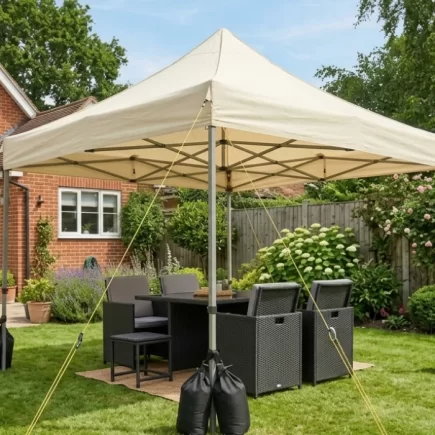





A patio umbrella is one of the best investments you can make for your outdoor space. It keeps you cool, protects your skin from UV rays, and prevents your outdoor furniture from fading in the sun. But with so many options out there, picking the right one takes more than just grabbing the first thing you see online.

This guide walks you through every decision you need to make, from size and style to fabric, base weight, and more, in plain, straightforward language.
What Size Patio Umbrella Do You Need for Your Outdoor Space?
Size is the most important decision when choosing a patio umbrella. An umbrella that is too small leaves people sitting in direct sun. One that is too large overwhelms a small patio and becomes a safety issue in the wind.
The rule to follow is simple: the canopy should extend at least two feet past the edge of your table or seating area on all sides. This ensures you stay shaded as the sun shifts throughout the day.
Helpful Tip: Always choose the larger size if in doubt. A slightly oversized umbrella provides better coverage, while a smaller one leaves gaps you’ll notice every time you sit down.
| Table Size | Seating Capacity | Recommended Umbrella Size |
| 30 inches (bistro) | 2 people | 6 to 6.5 feet |
| 42 inches (round) | 4 people | 9 feet |
| 48 inches (round or square) | 4 to 6 people | 9 to 10 feet |
| 60 inches (round) | 6 to 8 people | 10 to 11 feet |
| 72 inches (rectangular) | 8 or more | 11 feet |
| Large lounge or pool deck | Open seating | 13 feet or cantilever |
Market Umbrella vs. Cantilever: Which One Is Right for You?
There are two main types of patio umbrellas: Market Umbrellas and Cantilever Umbrellas. Each suits different setups.
Market Umbrellas
Market umbrellas have a straight pole running through the center of the canopy. The pole either inserts into a hole in your dining table or sits in a freestanding base. This classic style is great for most dining tables and smaller patios. They are affordable, easy to set up, and come in a wide range of sizes and colors.
Cantilever Umbrellas
Cantilever umbrellas use a side-mounted arm to hold the canopy, offering unobstructed space beneath. This makes them ideal for lounge areas, pool decks, and outdoor sofas. Cantilever umbrellas typically rotate 360 degrees and tilt in multiple directions, providing greater control over sun coverage throughout the day. While more expensive than market umbrellas, they are perfect for larger or more flexible outdoor spaces.
| Feature | Market Umbrella | Cantilever Umbrella |
| Pole location | Center | Off to the side |
| Best use | Dining tables | Lounge areas, pool decks |
| Typical size range | 6 to 11 feet | 10 to 15 feet |
| Rotation and tilt | Limited | Usually 360 degrees |
| Price | Lower | Higher |
| Base requirement | Moderate weight | Heavier base needed |
Helpful Tip: A market umbrella is best for outdoor dining. If you need an umbrella for a lounge or pool area, a cantilever umbrella is a better choice.
Explore our wide selection of patio umbrellas for every space and need.
Frame Materials: Aluminum, Fiberglass, and Wood
The frame material affects the umbrella’s ability to withstand wind, its durability, and how much maintenance it needs.
Aluminum
Aluminum is lightweight, rust-resistant, and requires minimal maintenance. It is the most popular frame material for residential patios and works well in most settings with moderate wind.
Fiberglass
Fiberglass is highly flexible, making it ideal for areas with strong winds. The material bends under pressure rather than snapping, helping prevent damage. Fiberglass is also corrosion-resistant, making it a good choice for coastal areas.
Wood
Wood frames, such as teak or bamboo, offer a natural aesthetic but require more maintenance, such as oiling and sealing to prevent cracking and weathering. Wood is less flexible than fiberglass, making it more suitable for sheltered patios.
| Frame Material | Wind Resistance | Maintenance Level | Best For | Price Range |
| Aluminum | Good | Very low | Most residential settings | Moderate |
| Fiberglass | Excellent | Low | Coastal areas, windy locations | Higher |
| Wood (Teak) | Moderate | Higher | Sheltered patios, natural aesthetics | Moderate to high |
Canopy Fabric: What to Choose
The canopy fabric plays a crucial role in how well the umbrella holds up against sun, rain, and wind.
Solution-Dyed Acrylic
Solution-dyed acrylic is the best fabric available. The color is embedded in the fibers, making it resistant to fading. This fabric is also resistant to water, mildew, and mold, and provides up to 98% UV protection.
Polyester
Polyester is more affordable and easy to clean, but it doesn’t resist fading or wear as well as acrylic, especially in areas with intense sun exposure. It’s best for those on a budget or for umbrellas stored during the off-season.
Olefin
Olefin sits between polyester and acrylic in performance and price. It dries quickly, resists mildew, and offers good UV protection. It’s a great option for humid or rainy climates.
| Fabric | UV Protection | Fade Resistance | Mildew Resistance | Expected Lifespan | Price |
| Solution-dyed acrylic | Up to 98% | Excellent | Excellent | 10+ years | Higher |
| Polyester | Moderate | Good | Moderate | 2 to 4 years | Lower |
| Olefin | Good | Very good | Good | 5 to 7 years | Moderate |
Base Weight: Why It Matters
The base is crucial for umbrella stability, especially in windy conditions. Ensure that the base is heavy enough to support the umbrella.
For freestanding umbrellas, the recommended base weight is 10 pounds per foot of canopy diameter. For umbrellas in tables, a base between 50 to 70 pounds is usually sufficient.
Looking for the perfect umbrella stand? Check out our range of sturdy umbrella stands to find the best fit for your outdoor umbrella.
Tilt Mechanisms: How Much Control Do You Want?
Tilt mechanisms allow you to adjust the angle of your umbrella to block the sun as it moves.
- Push-Button Tilt: Fast and easy but with limited adjustment.
- Collar Tilt: Offers more precision.
- Crank Tilt: Smooth and controlled, ideal for frequent adjustments.
Helpful Tip: If you plan to adjust the umbrella regularly, a crank tilt provides the best control.
Wind Resistance and Weather Protection
Wind can damage your umbrella, so make sure it’s designed for your climate. Fiberglass ribs offer better wind resistance than aluminum, as they bend under wind pressure rather than snapping.
Helpful Tip: Choose a double-vented canopy for better stability and cooler shade in windy or hot climates.
Design, Shape, and Color
Choose a shape and color that complement your outdoor space and furniture. Round or octagonal canopies are classic, while square and rectangular canopies offer a modern look.
Shape:
- Round: Best for circular or square tables.
- Rectangular: Works well with long tables and narrow spaces.
Color:
- Dark colors: Absorb more heat.
- Light colors: Reflect heat and keep the shaded area cooler.
Extra Features to Consider
- Built-in LED Lighting: Adds convenience for evening use without needing separate lights.
- Double Venting: Improves wind resistance and keeps the shaded area cooler.
Helpful Tip: If you’re investing in a quality umbrella, consider a model with integrated LED lighting or double venting.
Warranty: What to Expect
A warranty indicates the quality of the umbrella. Look for a minimum 3-year warranty for mid-range umbrellas, with 10-year coverage for premium materials like solution-dyed acrylic.
Helpful Tip: Always check what the warranty covers, frame, fabric, or both.
Quick Buying Checklist
| What to Decide | Right Choice for Most Buyers |
| Umbrella size | Canopy extends 2 feet past all sides of the table or seating area |
| Style | Market for dining tables, cantilever for lounge or pool areas |
| Frame material | Aluminum for low maintenance, fiberglass for wind and coastal use |
| Canopy fabric | Solution-dyed acrylic for best durability and UV protection |
| Base weight | 10 lbs per foot of canopy diameter, minimum 80 lbs freestanding |
| Opening system | Crank lift for smooth, easy daily use |
| Tilt mechanism | Crank tilt for precision, push-button for simplicity |
| Ventilation | Double-vented in hot or windy climates |
| Shape | Round for round tables, rectangular for long dining tables |
| Lighting | Solar LED if you use the space after dark |
Choosing the right patio umbrella comes down to understanding your space, weather conditions, and daily needs. From size and style to materials and features, every detail plays a role in long-term comfort and durability. By focusing on the right combination, you can create a shaded outdoor area that is both functional and visually appealing. A well-chosen umbrella not only enhances your outdoor experience but also protects your furniture and ensures lasting value.
FAQs
A regular umbrella has a center pole, ideal for dining tables and small spaces. A cantilever umbrella has a side pole, offering unobstructed shade and flexibility, making it perfect for lounges and pool areas.
A gazebo generally offers better wind resistance because of its sturdy construction and solid roof. It’s designed to withstand heavy wind, especially when made from durable materials like steel or aluminum. A regular umbrella, on the other hand, is lighter and can be unstable in strong winds, though cantilever umbrellas with heavier bases and vented canopies are better suited for wind resistance.
For large outdoor gatherings, a double-sided umbrella is ideal as it offers double the shade coverage with its two separate canopies. This type of umbrella is perfect for accommodating multiple seating areas or large dining tables. Additionally, cantilever umbrellas are also a great option, as they provide flexibility in shading larger spaces without a central pole obstructing the view.
Choose a stand based on your umbrella’s size and weather conditions. For smaller umbrellas, a fillable base works well, while larger umbrellas need heavier stands like concrete or weighted bases for stability. Make sure the stand fits your umbrella’s pole diameter.
Commercial umbrellas are typically designed to withstand heavier use and harsher weather conditions, making them more durable. Residential umbrellas are usually smaller, more affordable, and designed for personal outdoor spaces.