






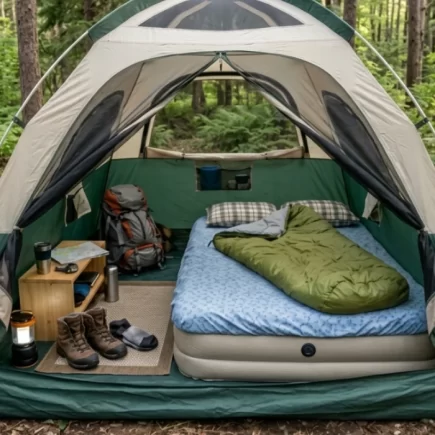








Choosing the right sleeping pad can make or break your outdoor experience. Whether you’re a seasoned backpacker or a casual camper, the pad beneath you matters just as much as the sleeping bag above. This guide walks you through every key factor so you can shop with confidence and pick the pad that truly fits your needs.
1. Material Quality and Construction
The material of your sleeping pad is the foundation of everything: comfort, durability, and weather performance all start here. Before buying, identify which material type matches your camping style.
- Closed-cell foam: Best for durability and budget-conscious buyers; naturally water-resistant and requires zero maintenance.
- Inflatable (air) pads: Best for packability and comfort; uses ripstop nylon or polyester shells.
- Self-inflating pads: Best all-rounder; combines open-cell foam with an airtight shell for automatic inflation.
2. Foam Density and Layer Composition
If you’re buying a foam-based pad, density tells you exactly how long it will hold up and how well it will support you. Measured in pounds per cubic foot (PCF), a higher number means the pad resists compression longer and doesn’t flatten after repeated use.
| Foam Density (PCF) | Performance Level | Best For |
| 1.2 – 1.5 | Basic | Occasional casual camping |
| 1.6 – 2.0 | Mid-range | Regular weekend trips |
| 2.1 – 2.5+ | Premium | Extended or year-round use |
Tip: Always ask for or check the PCF rating before purchasing budget pads and rarely advertise it because their density is low.
3. Thermal Insulation and R-Value Performance
R-value is the number you must check before buying any sleeping pad. It measures how well the pad blocks heat from escaping into the cold ground beneath you. Buying a pad with too low an R-value for your camping season means cold, interrupted sleep no matter how comfortable the pad feels in the store.
| R-Value | Season | When to Buy It |
| 1 – 2 | Summer only | Buy for warm-weather trips above 50°F. |
| 2 – 4 | 3-Season | Buy for spring, summer, and fall camping. |
| 4 – 6 | Cold weather | Buy for late fall and early winter trips. |
| 6+ | Winter/Alpine | Buy for snow camping and freezing conditions. |
Tip: Always buy one R-value tier above your expected conditions temperatures drop overnight and weather changes fast.
4. Waterproof and Moisture Resistance
Ground moisture silently ruins sleep quality and pad lifespan. When shopping, check that your pad has genuine moisture protection built in not just water-resistant marketing language on the packaging.
- Closed-cell foam pads: Naturally waterproof; no extra features needed.
- Inflatable pads: Must have a DWR (Durable Water Repellent) coating on the shell.
- Seam construction: Only welded or taped seams are truly waterproof; stitched seams leak.
Tip: Run your finger along the seams before purchasing in-store welded seams feel smooth and raised, while stitched seams have visible thread.
5. Size and Dimensional Fit
Buying the wrong size is one of the most common sleeping pad mistakes. A pad that’s too short leaves your legs on cold ground, and one that’s too narrow lets heat escape at your sides all night.
| Size | Dimensions (approx.) | Buy This If… |
| Short | 47″ x 20″ | You’re under 5’4″ or a minimalist packer. |
| Regular | 72″ x 20″ | You’re up to 6 ft tall. |
| Long | 78″ x 25″ | You’re over 6 ft tall. |
| Wide | 72″ x 25″+ | You’re a side sleeper or restless at night. |
6. Inflation System and Setup Ease
How the pad inflates affects how quickly you set up camp after a long day of hiking. It also affects the pad’s long-term internal condition. This is worth checking carefully before you buy.
- Built-in pump valve: Fastest setup; keeps moisture out of the foam core; worth paying more for.
- Pump sack: Lightweight, moisture-free inflation in 10–15 pumps; often included with mid-range pads.
- Lung inflation: Requires no extra gear but introduces moisture that breaks down internal insulation over time.
7. Fabric Strength and Load Capacity
For inflatable pads, the shell fabric determines how long the pad survives real outdoor conditions. Denier count (D) measures thread thickness and puncture resistance. Buying too low a denier for rugged terrain means dealing with leaks and patches on the trail.
| Denier (D) | Durability | Best For |
| 20D – 30D | Light, puncture-prone | Ultralight summer backpacking only. |
| 40D – 70D | Balanced | General 3-season backpacking. |
| 75D – 100D+ | Heavy-duty | Car camping, base camps, rocky terrain. |
Tip: For most buyers, 40D–70D is the right purchase; it balances packable weight with reliable field durability.
8. Comfort and Sleep Position Support
Your sleep position determines which thickness and surface profile you actually need. Buying a pad that doesn’t match your sleep style means waking up sore regardless of how premium the specs are.
| Thickness | Best For | Buy This If |
| 1 – 1.5 inches | Back sleepers on flat ground | You’re a minimalist or lightweight traveler. |
| 2 – 2.5 inches | Back and stomach sleepers | You want reliable comfort on most terrain. |
| 3 – 4 inches | Side sleepers, larger body types | You need pressure relief at hips and shoulders. |
| 4+ inches | All sleep positions | You’re car camping and prioritize max comfort. |
Tip: Side sleepers should never buy less than 3 inches of thickness; anything thinner causes hip and shoulder pressure that disrupts sleep.
9. Non-Slip Base and Surface Stability
A pad that slides around the tent floor all night is a real frustration that’s easy to avoid at the point of purchase. Check the underside of any pad you’re considering the grip surface is what keeps everything in place.
- Silicone dot grip: Best option; holds firmly on smooth tent floors without adding weight.
- Brushed polyester underside: Good mid-range grip option found on most self-inflating pads.
- Smooth bottom: Avoid this on inflatable pads unless you plan to use a separate grip layer.
10. Weight and Packability
Weight and packed size both matter when buying a pad for backpacking, evaluate them together, not separately. A light pad that stuffs down to fist-size is worth far more on a long trail than a slightly lighter pad that straps bulkily to the outside of your pack.
| Pad Type | Average Weight | Packed Size | Best For |
| Closed-cell foam | 8 – 14 oz | Large (exterior strap) | Budget backpackers |
| Self-inflating | 1 – 3 lbs | Medium stuff sack | Weekend campers |
| Ultralight inflatable | 8 – 16 oz | Fist-sized stuff sack | Thru-hikers, long trips |
11. Roll-Up Design and Carry Bag Storage
How well a pad packs away affects day-to-day usability on trail and storage at home. This feature is often overlooked at purchase but quickly becomes one you notice every single trip.
- Roll-top compression bags reduce packed volume by up to 40% versus standard stuff sacks worth buying for.
- An integrated stuff pocket allows the pad to self-pack with one hand, a genuinely useful feature in camp.
- Carry strap on foam pads is a small addition that makes a significant daily handling difference.
Tip: If the pad doesn’t come with a quality carry bag, factor in the cost of a compression stuff sack as part of your total purchase budget.
A good sleeping pad improves rest without drawing attention to itself. The right balance of comfort, insulation, and fit supports better sleep on every trip. Small choices add up to a smoother outdoor experience over time. In the end, a reliable sleeping pad simply lets you sleep well anywhere.
If you are narrowing down your options, comparing a few sleeping bags side by side makes it easier to find the right balance of warmth, weight, and packability. Aosom offers a range of sleeping bags designed to suit different camping styles, seasons, and comfort preferences.
FAQs
Yes, a sleeping pad can be used on its own for minimalist camping or under the stars. It provides insulation and cushioning directly on the ground. However, pairing it with a groundsheet or bivy can improve comfort and protect against moisture.
A high-quality sleeping pad can last several years with proper care and storage. Inflatable pads may require occasional repairs, while foam pads are more resistant to wear. Avoiding sharp surfaces and storing it properly helps extend its lifespan.
Even in warm weather, a sleeping pad improves comfort and protects against hard or uneven ground. It also provides light insulation and keeps you off damp surfaces. Skipping it may lead to poor sleep quality, especially on rough terrain.