






















Whether you’re a seasoned backcountry camper or heading out for your first overnight trip, knowing how to use a sleeping pad correctly can make the difference between a restful night and a miserable one. A sleeping pad isn’t just about comfort, it’s a critical piece of insulation gear that keeps body heat from escaping into the cold ground. This blog walks you through everything you need to know.
Step 1: Unpack and Inspect Your Sleeping Pad
Before your trip, unpack the sleeping pad and lay it flat. Check for any visible damage such as punctures, worn seams, or valve issues that could compromise insulation or inflation.
Quick Inspection Checklist:
- Look for holes, tears, or thin spots.
- Test the valve opens and closes smoothly.
- Confirm the pad returns to its full shape after unrolling.
- Check that repair patches (if any) are still firmly adhered.
If you’re using a new pad, do this at home not at the campsite so you have time to fix any issues.
Step 2: Choose the Right Location to Place Your Sleeping Pad
The ground beneath your tent matters more than most people realize. Always choose a flat, debris-free surface. Rocks, roots, and uneven terrain can puncture inflatable pads and create uncomfortable pressure points.
- Clear any sharp sticks or stones before pitching your tent.
- Slightly sloped ground is fine but position yourself so your head is uphill.
- Avoid low-lying areas where cold air and moisture collect overnight.
Step 3: Inflate Your Sleeping Pad Correctly
The inflation method depends on your pad type. Over-inflating is just as problematic as under-inflating; it can stress seams and create an uncomfortable, bouncy surface.
| Pad Type | Inflation Method | Avg. Time to Inflate |
| Self-Inflating Foam | Open valve, let it expand, top off with breath | 3–5 minutes |
| Air Pad (manual) | Use pump sack or blow valve | 1–3 minutes |
| Air Pad (built-in pump) | Fold and press built-in pump | 2–4 minutes |
| Closed-Cell Foam | No inflation needed | Instant |
Tip: When using breath inflation, exhale slowly and steadily to minimize moisture buildup inside the pad, which can degrade internal foam over time.
Step 4: Adjust the Firmness for Your Comfort
Getting the firmness right is personal and it takes a little experimenting. A pad that’s too firm creates pressure points; one that’s too soft won’t support your spine properly.
- Side sleepers generally prefer a slightly softer pad that contours to hips and shoulders.
- Back sleepers benefit from a firmer, flatter surface for spinal support.
- Release small bursts of air through the valve and lie down after each adjustment until it feels right.
Most campers land on about 70–80% inflation as a comfortable starting point.
Step 5: Position the Sleeping Pad Inside Your Tent or Shelter
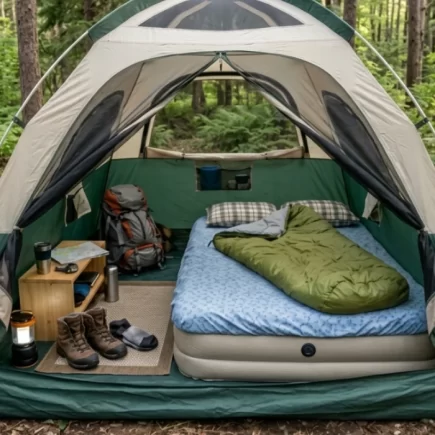
Placement inside the tent affects both warmth and safety. A poorly placed pad can slide, bunch up, or leave you partially exposed to cold tent flooring.
- Center the pad along the tent’s sleeping area.
- Keep the pad away from tent walls where condensation collects.
- If using a double setup, place pads side-by-side with edges slightly overlapping to prevent gaps.
- Secure with tent loops or non-slip pads if your model supports it.
Step 6: Layer Your Sleeping Bag on Top Correctly
Your sleeping bag and pad work as a system. The sleeping bag’s bottom insulation compresses under your body weight and loses effectiveness the pad compensates by blocking ground cold.
| Sleeping Bag Type | Recommended R-Value of Pad |
| Summer bag (>50°F) | R-1 to R-2 |
| 3-Season bag (20–50°F) | R-3 to R-4 |
| Winter bag (<20°F) | R-5 and above |
Always lay your sleeping bag directly on top of the pad not tucked underneath or beside it. Align the bag so it fully covers the pad from head to foot.
Step 7: Sleep in the Right Position for Best Insulation
How you sleep on a pad directly affects how well it insulates. Moving off-center during the night exposes you to the cold tent floor, which can rapidly lower your body temperature.
- If you’re a restless sleeper, use a pad that’s at least 20 inches wide.
- Tuck your arms inside your sleeping bag rather than letting them rest on the tent floor.
- Place a folded jacket or extra clothing layer under your feet for added insulation at the lower end of the pad.
Step 8: Deflate and Pack Your Sleeping Pad After Use
Proper packing extends the life of your pad significantly. Rushing this step is one of the most common mistakes campers make.
For Inflatable Pads:
- Open the valve fully.
- Start rolling from the foot end, pressing out air as you go.
- Once flat, fold or roll tightly and secure with the strap or stuff sack.
For Self-Inflating Pads:
- Open the valve before rolling to release trapped air.
- Roll tightly from the opposite end of the valve.
- Close the valve only after all air is expelled.
For Foam Pads:
- Simply roll or fold and strap to the outside of your pack.
Cleaning and Care
A clean pad performs better and lasts longer. Moisture, dirt, and body oils degrade materials over time if left unchecked.
| Care Task | Frequency | Method |
| Surface wipe-down | After every trip | Mild soap + damp cloth |
| Full wash | Every 3–5 uses | Hand wash, air dry flat |
| Valve cleaning | Monthly (if used often) | Cotton swab + rubbing alcohol |
| Storage inflation | Always | Store partially inflated to preserve foam |
Never store an inflatable pad fully compressed for long periods; it crushes the internal foam baffles and reduces loft over time. Store it loosely rolled or flat in a cool, dry place.
Troubleshooting Common Issues
- Pad losing air overnight: Submerge it in water section by section and look for bubbles to find micro-leaks. Mark the spot, dry thoroughly, and use a patch kit.
- Pad feels cold despite inflation: Check the R-value; it may simply not be rated for the temperature you’re camping in. Layering a closed-cell foam pad underneath an inflatable pad effectively doubles insulation.
- Pad won’t fully inflate: The valve may be partially blocked or the internal foam may be cold and slow to expand. Warm the pad slightly in your hands or sleeping bag before inflating in cold conditions.
- Pad feels too slippery inside the tent: Place a lightweight non-slip mat or a towel beneath it, or look for pads with textured bottom surfaces designed to grip tent floors.
Final Checklist
Before you zip up the tent for the night, run through this quick check:
- Pad is fully inflated to your preferred firmness.
- The pad is centered and away from condensation-prone tent walls.
- The sleeping bag is aligned fully on top of the pad.
- The valve is closed and secure.
- Extra insulation is placed under feet if camping in cold conditions.
- Shoes or gear are not resting on the pad edges (can cause leaks over time).
A properly used sleeping pad supports comfort and insulation across changing conditions while extending its overall lifespan. Small adjustments in setup, firmness, and care can significantly improve performance and prevent common issues. Consistency in how you use and store a sleeping pad ensures it remains reliable trip after trip.
When narrowing your choices, placing a few sleeping bags side by side helps you find the right mix of warmth, weight, and packability. Aosom provides a selection of sleeping bags suited to different camping styles, seasons, and comfort needs.
FAQs
Air loss can happen due to small leaks, temperature drops, or valve issues. Cold air causes the air inside the pad to contract, making it feel deflated by morning. Even minor punctures can slowly release air. Checking valves and doing a quick leak test before trips helps avoid this issue.
The right size depends on your height, sleeping style, and available tent space. Longer pads (72–78 inches) suit taller users, while wider options provide more comfort for restless sleepers. Ultralight campers may prefer compact sizes for easy packing. Always balance comfort with portability.
Yes, a sleeping pad plays a major role in insulation by blocking heat loss to the ground. Even with a warm sleeping bag, without a pad you can still feel cold. The insulation layer beneath your body is just as important as the one above. This is especially noticeable in colder environments.