










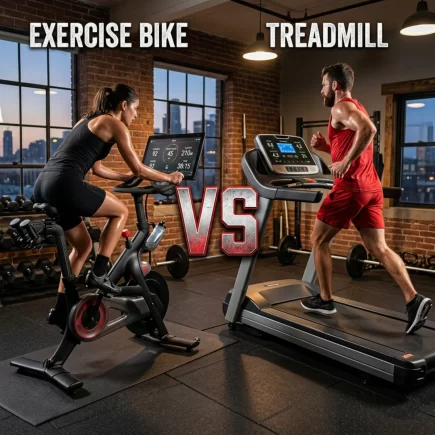








A treadmill is better for running training, lower-body fat loss, and pure calorie burn. A rowing machine is better for full-body conditioning, joint-friendly workouts, and apartment living. If you can only buy one and your goal is general fitness, the rowing machine delivers more value per session. If your goal is running or walking-based cardio, the treadmill wins without debate.
Quick Verdict at a Glance
| Factor | Treadmill | Rowing Machine |
| Calorie Burn (per hour) | 500–700 kcal | 400–600 kcal |
| Muscles Worked | Lower body dominant | 86% of muscles |
| Joint Impact | Moderate to high | Very low |
| Space Required | Large (fixed) | Medium (storable) |
| Noise Level | High | Low to moderate |
| Learning Curve | Minimal | Moderate |
| Best For | Running, fat loss | Full-body, endurance |
How Many Calories Does Each Machine Actually Burn?
A treadmill burns more calories per hour because it is weight-bearing. Your body carries itself, which demands more energy. A 75kg person running moderately burns 600–700 kcal per hour.
A rowing machine burns 400–600 kcal per hour but recruits far more muscle groups simultaneously. Your heart rate climbs faster than the numbers suggest, and post-workout burn continues longer.
Tip: For raw calorie burn per session, the treadmill leads. For extended metabolic burn after the workout, rowing competes closely.
Which Machine Works More Muscles?
Rowing wins this clearly. One stroke engages legs, core, back, shoulders, and arms in sequence. Research puts total muscle activation at roughly 86% of the body’s major groups.
A treadmill is predominantly lower body. Quads, hamstrings, calves, and glutes do the work. Your upper body contributes almost nothing.
- Rowing targets: Quads, hamstrings, glutes, lats, rhomboids, biceps, core
- Treadmill targets: Quads, hamstrings, calves, glutes, hip flexors
Which Machine Is Safer for Knees and Back?
Running has a repetitive impact. Every stride sends force through ankles, knees, and hips. For healthy runners this is manageable. For anyone with existing joint sensitivity, prolonged Treadmill use can worsen the problem.
Rowing is low-impact by design. No landing force, no heel strike, no jarring. It is widely recommended for people with lower-body joint issues or those returning from injury.
Caution: Rounded lower back during the rowing pull is the primary injury risk. Learn correct form before your first session.
Which Machine Gives Better Fat Loss and Toning Results?
| Goal | Better Machine |
| Lower-body fat loss | Treadmill |
| Full-body toning | Rowing Machine |
| Cardiovascular endurance | Both equally |
| Overall muscle definition | Rowing Machine |
| Run or marathon training | Treadmill |
The treadmill produces faster early fat loss around the legs. Rowing builds a leaner overall physique over time because it raises resting metabolic rate by building muscle across more of the body simultaneously.
How Much Space Does Each Machine Need at Home?
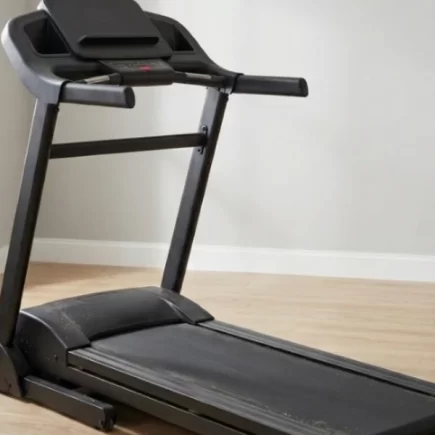
A treadmill is fixed and large. Standard models run 180–200cm long and 80–90cm wide. Folding versions help but still need a permanent zone during use.
A rowing machine is longer in use at around 240cm, but most quality models fold vertically and store flat against a wall between sessions. For smaller rooms, that storability is a real advantage.
Tip: Measure your floor space for the in-use footprint, not the stored size.
Which Machine Is Quieter for Apartment Living?
Treadmills are loud. Belt friction, motor hum, and foot impact travel through floors and walls. Running at pace in an upstairs flat will reach your neighbours reliably.
Rowing machines are significantly quieter across all types:
- Magnetic rower: Near silent
- Water rower: Gentle consistent rush, many find it calming
- Air rower: Steady whoosh, still far quieter than a treadmill
- Motorised treadmill at pace: Loudest of all options
For apartment living, the rowing machine wins without question.
Which Machine Is Harder to Learn?
A treadmill requires no learning. Step on, press start, walk or run. Beginners are fully operational in seconds.
Rowing has a real technique requirement. The sequence, legs first, then lean back, then arm pull, must become instinctive before sessions feel efficient or safe. Most beginners need two to three weeks before it clicks.
Tip: Watch a coached rowing technique video before your first session. Ten minutes of correct form learning prevents months of bad habits.
Which Machine Lasts Longer and Costs Less to Maintain?
| Maintenance Task | Treadmill | Rowing Machine |
| Belt lubrication | Every 3–6 months | Not applicable |
| Motor servicing | Annually | Not applicable |
| Part replacement risk | High | Low |
| Expected lifespan | 7–10 years | 10–15 years |
Treadmills have more failure points. Belt wear, motor issues, and electronic faults are common over time. Rowing machines are mechanically simpler with fewer moving parts and outlast treadmills at equivalent price points.
Which Machine Is Better for Interval Training?
Both support HIIT effectively but differently. Treadmill intervals, sprinting then recovering, are easy to programme and intuitive for beginners. Most models have built-in HIIT modes.
Rowing intervals require manual effort control through stroke rate and power. Less beginner-friendly but more effective for full-body conditioning since every high-intensity interval recruits the entire body.
- Beginner HIIT: Treadmill
- Advanced HIIT: Rowing machine
- Calorie spike intervals: Treadmill
- Strength-cardio hybrid intervals: Rowing machine
Which Machine Should You Buy Based on Your Goal?
Choose A Treadmill If:
- You are training for running or walking-based fitness
- You want zero learning curve
- Lower-body fat loss is the priority
- Noise is not a concern in your home
Choose A Rowing Machine If:
- You want full-body conditioning without separate strength work
- Joint pain or impact sensitivity is a factor
- You live in an apartment
- You want lower maintenance and longer lifespan
- You want cardio and muscle work from one machine
If the budget allows one machine and your goal is general fitness, buy the Rowing Machine. It trains more of your body, stores better, runs quieter, and lasts longer. Buy the treadmill only if running is specifically your goal.
FAQs
Both can support weight loss when combined with a calorie-controlled diet. Running typically burns more calories per minute at high intensities, while rowing engages more muscle groups across the body. The better option is the one you can use consistently over time.
Most beginners find a treadmill easier because walking and running are natural movements. A rowing machine requires proper technique to maximize results and avoid discomfort. However, many people can learn basic rowing form after a few practice sessions.
A rowing machine generally activates the legs, back, shoulders, arms, and core, making it more effective for muscle engagement. A treadmill primarily targets the lower body and cardiovascular system. Neither replaces strength training, but rowing provides more full-body involvement.