



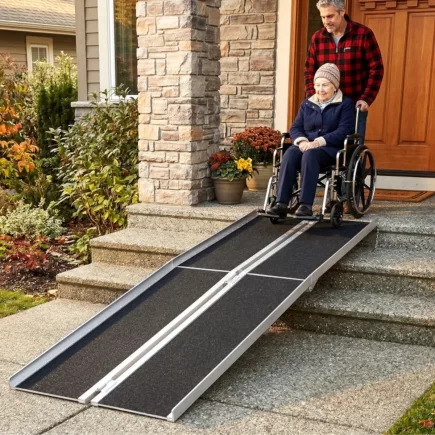























If you are looking for where to buy a wheelchair ramp, Aosom offers a range of portable and folding wheelchair ramps designed to improve accessibility at home, outdoors, and while travelling. With options for doorways, steps, curbs, and vehicle access, Aosom makes it easier to find a ramp that suits different mobility requirements.
Choosing the right wheelchair ramp depends on several factors, including the height of the step, the weight it needs to support, the available space, and where it will be used. By understanding these key features, you can select a ramp that provides safer and more convenient access.
Why Buy a Wheelchair Ramp from Aosom?
- Wide Range of Options: Aosom offers wheelchair ramps for different accessibility needs, including compact threshold ramps for small height differences and longer folding ramps for steps, entrances, and outdoor access.
- Durable and Practical Designs: Aosom wheelchair ramps feature strong aluminium construction, textured surfaces, folding designs, and reliable weight capacities for everyday convenience.
- Suitable for Various Mobility Equipment: These ramps are designed to support manual wheelchairs, power wheelchairs, and mobility scooters, providing easier access in different settings.
- Easy Product Comparison: Shopping through Aosom allows you to compare ramp dimensions, height ranges, and weight limits to find a suitable option for your space and requirements.
How to Choose the Right Wheelchair Ramp Before Buying
Before purchasing a wheelchair ramp, it is important to consider how and where it will be used. The correct ramp should provide a comfortable incline while supporting the user and their mobility equipment safely.
1. Match Ramp Length to Rise Height
The length of a wheelchair ramp determines how steep the incline will be. A ramp that is too short may create a difficult angle, making it harder for wheelchair users or mobility scooters to move smoothly.
As a general guide, a ramp should provide around 12 inches of length for every inch of height. For example, a 6-inch step usually requires a ramp around 5 to 6 feet long, while higher steps need a longer ramp for easier access.
Checking the recommended height range of each Aosom wheelchair ramp helps ensure you choose the right size for your doorway, step, or entrance.
2. Check the Weight Capacity
A wheelchair ramp needs to support the combined weight of the user, wheelchair or mobility scooter, and any additional items being carried. Choosing a ramp based only on body weight may result in selecting an unsuitable option.
Aosom portable ramps are available with strong weight capacities suitable for different mobility equipment. Always review the product specifications to make sure the ramp meets your requirements.
3. Consider the Ramp Surface Type
The ramp surface affects grip, comfort, and where the ramp works best. Textured aluminium surfaces are a popular choice for outdoor use because they provide traction and help water drain away during wet conditions.
Carpeted surfaces can provide a quieter ride and additional grip, making them useful for covered entrances and indoor areas. However, they may require more protection from moisture compared with aluminium options.
Best Wheelchair Ramps to Buy from Aosom
Aosom offers different wheelchair ramp styles to suit various accessibility needs. Whether you need a compact threshold ramp or a longer folding ramp for steps, choosing the right design can improve everyday convenience.
| Ramp | Length | Weight Capacity | Best For |
| 8′ Ribbed Aluminium Folding Ramp | 96″ | 600 lbs | Home steps and doorways |
| 5′ Single-Fold Ramp with Carrying Handle | 61.5″ | 600 lbs | Curbs, entryways, and vehicle access |
| 8′ Skidproof Carpeted Folding Ramp | 96″ | 594 lbs | Covered entrances and indoor use |
| 2′ Textured Threshold Ramp | 24″ | 594–600 lbs | Small doorway thresholds |
1) 8′ Ribbed Aluminium Folding Ramp – Best for Home Steps and Doorways
This folding wheelchair ramp is designed for higher steps, porches, and entrances where a longer access surface is required. The ribbed aluminium design provides a secure surface while allowing water and debris to clear easily.
Its folding construction makes storage more convenient when the ramp is not needed, making it a practical choice for homes requiring flexible accessibility support.
Pros:
- Supports manual wheelchairs, power wheelchairs, and mobility scooters.
- Folds for easier storage and transport.
- Textured surface improves traction.
Cons:
- Heavier compared with shorter portable ramps.
- Requires more storage space when folded.
2) 5′ Single-Fold Ramp with Carrying Handle – Best for Curbs and Vehicle Access
This compact wheelchair ramp is ideal for smaller height differences, including single steps, kerbs, and vehicle entry points. The lightweight design makes it easier to carry between locations.
The non-slip surface and raised edges help improve stability, while the folding design allows convenient storage when travelling.
Pros:
- Lightweight and easy to carry.
- Suitable for frequent movement.
- Simple setup without complicated installation.
Cons:
- Better suited for smaller rises.
- Not designed for large staircases.
3) 8′ Skidproof Carpeted Folding Ramp – Best for Covered Entrances
This folding ramp features a carpeted surface designed to provide a smoother and quieter ride. It works well for garages, covered porches, and indoor areas where additional grip is useful.
The longer length helps provide easier access over higher steps while the folding design makes storage more practical.
Pros:
- Comfortable surface for wheelchair users.
- Easy to store when folded.
- Provides additional grip.
Cons:
- Better suited for covered areas.
- Requires extra care around moisture.
4) 2′ Textured Threshold Ramp – Best for Small Doorways
A threshold ramp is an ideal choice for smaller barriers such as door frames, low sills, and raised entrances. Its compact size makes it easy to move and store around the home.
This option provides a simple accessibility solution without requiring a larger ramp system.
Pros:
- Lightweight and portable.
- Designed for small height differences.
- Easy to position around the home.
Cons:
- Not suitable for larger steps.
- Limited to lower thresholds.
Common Mistakes to Avoid When Buying a Wheelchair Ramp
When choosing where to buy a wheelchair ramp, it is important to select a model that matches your specific needs. Avoid these common mistakes:
- Choosing a ramp without measuring the exact step height.
- Ignoring the combined weight of the user and wheelchair.
- Selecting a surface unsuitable for outdoor conditions.
- Forgetting to check folded dimensions for storage.
- Buying a ramp without checking its recommended height range.
Choosing the right accessibility solution starts with understanding your space, mobility needs, and daily routines. HOMCOM wheelchair ramps from Aosom provide practical options for creating smoother transitions at home, entrances, and other frequently used areas. By considering ramp design, portability, and surface features, you can find a suitable option that supports safer and more convenient movement.
FAQs
Yes, many wheelchair ramps are suitable for mobility scooters as well as manual and powered wheelchairs. The ramp should have enough width, length, and weight capacity to support the scooter safely. Always consider the scooter’s dimensions before selecting a ramp.
To measure for a wheelchair ramp, first check the vertical height between the ground and the entrance or step. The ramp length should provide a comfortable incline for the user and allow enough space for safe movement. Accurate measurements help prevent steep or difficult access.
Not all wheelchair ramps need to be permanently installed. Portable and folding ramps are useful for homes, vehicles, and temporary accessibility needs. Permanent ramps may be better suited for long-term solutions where regular access is required.