

















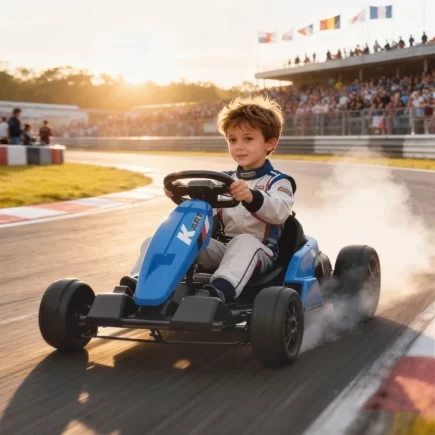
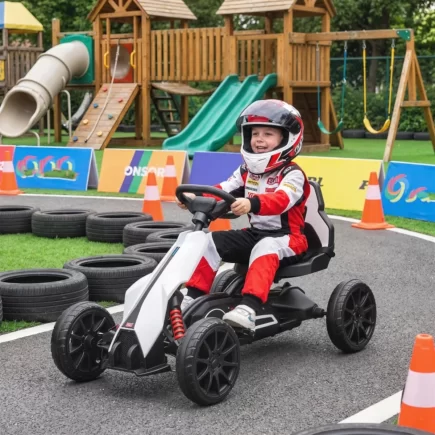
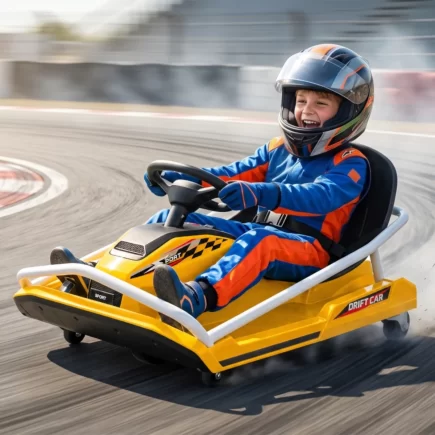
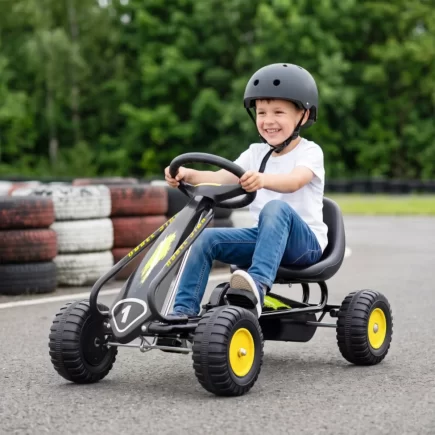




Choosing the right go kart for your child comes down to matching the kart to their age, size, and confidence level. The market offers pedal-powered models for younger riders and electric karts with adjustable speeds for kids who want more thrill. This blog breaks down the factors that matter most so you can make a confident purchase.
Age and Weight Range Guidelines
Every go kart is built with a specific age and weight range in mind, and staying within that range keeps your child safe and comfortable during play. A kart that’s too large can be difficult to control, while one that’s too small limits growth room and ride enjoyment over time. Manufacturers typically list a recommended age alongside a maximum weight capacity on the product label.
| Kart Type | Typical Age Range | Typical Weight Capacity |
| Pedal Go Kart (Beginner) | 3 to 6 years | 60 to 90 lbs |
| Pedal Go Kart (Advanced) | 5 to 12 years | 90 to 130 lbs |
| 12V Electric Go Kart | 3 to 8 years | 60 to 90 lbs |
| 24V Electric Go Kart | 6 to 12 years | 100 to 130 lbs |
Tip: Check both the age range and weight capacity separately, since a child can fall within the listed age but still exceed the weight limit.
Safety Features to Look For
Safety features matter regardless of which power type you choose. Look for a secure harness or lap belt on electric models, since these reach higher speeds than pedal karts. A working hand brake or foot brake is equally important, particularly for karts that will be used on sloped driveways.
- A multi-point harness or lap belt, especially on higher-speed electric models.
- A responsive hand brake or foot brake for reliable stopping power.
- A low center of gravity to reduce tipping risk during turns.
- Clear labeling for the recommended age, weight limit, and adult supervision.
Speed and Speed Control
Speed is one of the clearest differences between kart types, and it should match your child’s riding experience. Pedal karts move only as fast as your child can pedal, so speed naturally stays within a safe range. Electric karts list a specific top speed and often include multiple settings to control how fast the kart accelerates.
| Kart Type | Typical Top Speed | Speed Control |
| Pedal Go Kart | Rider-dependent | Manual pedaling only |
| 12V Electric Go Kart | 2.5 to 4 mph | Usually single-speed |
| 24V Electric Go Kart | 6 to 11 mph | Two-speed or adjustable modes |
Tip: For a child new to electric karts, choose a model with a gentle acceleration setting and a lower starting speed, so they can build confidence before trying faster modes.
Terrain and Riding Surface
Where your child will ride most often should guide which kart you choose. Pedal karts and lower-speed electric models generally perform best on smooth, flat surfaces such as driveways and paved paths. Higher-powered electric karts with sturdier wheels can also handle light grass or gravel in a backyard setting.
- Match the kart to your primary riding surface, whether pavement, grass, or a mix.
- Confirm the wheel type is rated for outdoor use if riding on uneven ground.
- Choose an open, obstacle-free area that allows room for safe turning and stopping.
Frame Materials and Wheel Types
The frame material affects how sturdy and long-lasting a go kart will be under regular use. Most child go karts combine polypropylene plastic with a metal frame, balancing durability with manageable weight. Steel-reinforced frames offer added strength, while all-plastic frames stay lighter but wear faster over time.
Wheel design also shapes ride quality and handling:
- EVA foam or rubber wheels provide better grip and shock absorption than hard plastic.
- Wear-resistant tread patterns improve traction during cornering.
- Swing-axle designs help the kart handle light bumps and uneven ground smoothly.
Battery Life and Charging Time
Battery life and charging time apply only to electric go karts, but they directly affect how much playtime your child gets per session. Most 24V models offer roughly 45 to 60 minutes of continuous ride time on a full charge. Charging duration varies depending on whether it’s the first charge or a routine recharge.
| Charge Type | Typical Duration |
| First Charge (New Battery) | 4 to 6 hours |
| Regular Recharge | 8 to 10 hours |
| Average Ride Time per Charge | 45 to 60 minutes |
Tip: Charge the kart overnight after each use, since regular recharges take longer than the initial charge and kids often want another ride the next day.
Assembly Time and Setup
Most child go karts require some assembly out of the box, whether pedal-powered or electric. This typically involves attaching the wheels, seat, and steering column, with electric models also requiring the battery to be connected. Assembly time generally falls between 20 and 45 minutes depending on the model’s complexity.
- Review the full instruction manual before starting, rather than working step by step blind.
- Keep all included tools and hardware organized in one place during setup.
- Confirm the battery connection is secure before the first ride on electric models.
Seat Adjustability and Growth Room
An adjustable seat is one of the most practical features on any child go kart, since it extends how long the kart remains useful as your child grows. Most models allow the seat to slide forward or backward by a couple of inches, accommodating a wider height range over time. This feature appears across both pedal and electric karts.
- Check how many inches of adjustment the seat offers.
- Look for a backrest that supports comfort during longer rides.
- Choose a seat mechanism that a parent can adjust easily without tools.
Extra Features and Add-Ons
Beyond the core mechanics, many electric go karts include extras that make rides more enjoyable without affecting safety or performance. Built-in speakers, USB connectivity, and lighting effects are common on mid-range and higher-end models. These additions are worth considering once the essentials, like fit and safety, are covered.
- Integrated speakers or USB compatibility for music during rides.
- LED headlights or underglow lighting for visual appeal.
- Racing-inspired color schemes and styling options.
Final Buying Checklist
Before finalizing your purchase, run through this checklist to confirm the kart suits your child and household:
✓ Match the kart’s listed age range and weight capacity to your child’s current size.
✓ Decide between pedal power, 12V, or 24V electric based on your desired speed.
✓ Confirm the presence of a harness or seat belt, along with a working brake.
✓ Consider the terrain where the kart will be ridden most often.
✓ Review battery life and charging time if selecting an electric model.
✓ Look for an adjustable seat that offers room for your child to grow.
✓ Compare prices across different kart types to find one that fits your budget.
Selecting the right Child Go Kart becomes straightforward once you know what to prioritize. Whether you prefer a pedal or electric model, Aosom offers child go karts designed for years of safe, enjoyable outdoor play.
FAQs
Many children can begin using a pedal go kart from around 3 years old if they can comfortably reach the pedals and steering wheel. Electric go karts are generally better suited to older children who can follow safety instructions and control the vehicle responsibly.
A suitable speed varies by age and experience. Beginners benefit from slower speeds, while older children may enjoy faster electric models with parental speed controls. Choosing a kart with adjustable speed settings allows it to grow with your child’s confidence.
No. Children’s go karts are designed for private property or designated riding areas only. They are not road legal and should always be used in safe, traffic-free environments with adult supervision.