











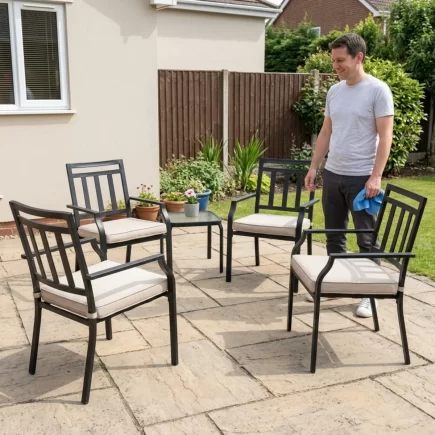












The fastest way to clean patio chairs is to rinse off loose dirt, wash with a mild soap solution suited to the material, treat stains, then rinse and dry completely. The method changes depending on your chair material, so match the right steps below to avoid damage.
What You Need Before You Start
A few basic supplies cover almost every cleaning scenario, so gather these before you begin.
| Supply | Purpose |
| Mild dish soap | A gentle all-purpose cleaner that works safely on every surface. |
| White vinegar and baking soda | Natural, non-toxic options for stain removal. |
| Soft-bristle brush | Scrubs away dirt without scratching delicate finishes. |
| Microfiber cloth | Wipes down surfaces and speeds up drying time. |
| Garden hose with spray nozzle | Handles both the pre-rinse and final rinse. |
| Rubber gloves and a bucket | Keep the process clean and comfortable throughout. |
Step 1 – Identify Your Chair Material
The cleaning method that works well on one material can damage another, so start by confirming what your chairs are made of.
- Wicker and rattan: Need gentle handling since they soften and fray if soaked too long.
- Aluminum and wrought iron: Can handle firmer scrubbing but are prone to rust and oxidation.
- Wood: Needs minimal water contact to avoid warping, cracking, or graying over time.
- Resin and plastic: The most forgiving materials, tolerating stronger cleaning products.
- Fabric slings and cushions: Need a separate, gentler approach to avoid trapped moisture.
Step 2 – Pre-Rinse to Remove Loose Dirt
Before any soap touches the chair, a full rinse clears away loose dirt and helps prevent scratching during the scrub stage.
- Hose down first: Rinse the entire chair before applying any soap or solution.
- Spray top to bottom: Lets dirt and debris run off instead of settling into seams.
- Removes loose grit: Clears dust and pollen that could scratch the surface while scrubbing.
- Skipping this step: Is one of the most common causes of surface scratches later on.
Step 3 – Mix the Right Cleaning Solution for Your Material
Once the chair is rinsed, match the solution to the material using the table below to avoid discoloration or damage.
| Material | Best Cleaning Solution | Avoid |
| Wicker and rattan | Mild dish soap and warm water. | Soaking or high-pressure water. |
| Aluminum | Mild soap and water, or a vinegar mix for oxidation. | Steel wool or harsh abrasives. |
| Wrought iron | Mild soap and water, rust remover for spots. | Leaving the surface wet after cleaning. |
| Wood | Wood-safe cleaner or mild soap with minimal water. | Excess water and soaking. |
| Plastic and resin | Baking soda paste or diluted bleach, one part bleach to ten parts water. | Undiluted bleach on colored resin. |
| Fabric and slings | Mild soap and water with spot treatment for stains. | Machine washing sling fabric. |
Step 4 – Treat Stubborn Stains and Problems
Not all buildup responds to a basic soap wash, so a few common stains need their own targeted fix before you move on to scrubbing.
Mold and Mildew
A vinegar solution breaks down mold spores without bleaching fabric or finishes.
- Mix the solution: Combine one part white vinegar with two parts water.
- Apply and wait: Let the mixture sit on the stain for about 10 minutes.
- Rinse thoroughly: Removes any remaining mold spores after scrubbing.
Bird Droppings and Tree Sap
These stains lift much more easily once softened, so avoid scraping at them while dry.
- Soak first: Warm soapy water for a few minutes softens the residue.
- Wipe gently: Never scrape the residue away while it is still dry.
- Rinse the spot: Clears the area fully to prevent staining.
Rust Spots
Rust needs to be treated quickly, since it spreads if left untreated on metal surfaces.
- Light rust: Treat with a paste of baking soda and water.
- Deep rust: Use a dedicated rust remover for stubborn spots.
- Rinse promptly: Stops the rust from spreading further after treatment.
General Grime and Pollen Buildup
Routine wiping keeps everyday buildup from turning into a bigger cleaning project.
- Wipe regularly: Use a microfiber cloth with mild soap solution.
- Repeat often: Clean every couple of weeks during high-pollen seasons.
- Prevents buildup: Stops small grime from becoming a bigger cleaning job.
Step 5 – Scrub Without Damaging the Finish
The right brush and technique matter just as much as the cleaning solution itself.
- Choose the right brush: Soft-bristle for wicker, fabric, and painted surfaces.
- Go firmer only if needed: A slightly stiffer brush works for metal or resin.
- Follow the texture: Scrub with the material’s grain, never against it.
- Work in sections: Rinse as you go instead of letting the cleaner dry on the surface.
Step 6 – Rinse Thoroughly
A thorough final rinse prevents soap residue from building up and attracting more dirt.
- Rinse completely: Clear every surface with clean water from the hose.
- Check hidden spots: Focus on joints, crevices, and woven sections where soap collects.
- Avoid leftover residue: Soap film attracts more dirt and dulls the finish.
- Rinse now, save time later: A thorough rinse prevents a repeat cleaning session.
Step 7 – Dry Properly to Prevent Mildew
How chairs dry matters just as much as how they are cleaned, since trapped moisture invites mildew.
- Air dry in shade: Choose a well-ventilated spot away from direct sunlight.
- Speed up flat surfaces: Wipe down with a dry microfiber cloth.
- Confirm full dryness: Especially important for wicker and wood before storage.
- Avoid trapped moisture: A leading cause of mildew and long-term material damage.
Step 8 – Clean Cushions and Fabric Slings
Cushions and slings hold onto moisture differently than hard surfaces, so they need their own care to avoid mildew and fading.
- Check the label first: Some cushions allow gentle machine washing, others need hand washing only.
- Remove covers: Wash separately from the cushion insert whenever possible.
- Hand wash gently: Use mild soap and a soft brush, then rinse well.
- Dry standing on edge: Ideally in the sun to help kill lingering mildew spores.
- Apply a protectant spray: Adds resistance against future stains and moisture.
How Often to Repeat This Process
Cleaning frequency depends on your climate and how much use the chairs get during the season.
| Cleaning Type | Recommended Frequency | Best For |
| Quick wipe-down | Every 1 to 2 weeks | Active outdoor season, general upkeep. |
| Full deep clean | Start and end of each season | Removing built-up grime before storage or use. |
| Mildew check | Every 1 to 2 weeks | Humid or coastal climates. |
| Routine wipe | Once a month | Drier, low-humidity regions. |
Tips to Keep Chairs Cleaner Longer
A few small habits go a long way toward reducing how often you need to deep clean.
- Use furniture covers: Protect chairs during rain, high pollen periods, or off-season storage.
- Store cushions properly: Keep them indoors or in a dry storage box when not in use.
- Choose a smart placement: Position chairs away from sprinklers, gutters, and overhanging trees.
- Wipe down after weather events: Clean up after storms or high-pollen days rather than waiting.
Common Mistakes to Avoid
A few small missteps are responsible for most of the damage and repeat cleaning people run into.
- Using undiluted bleach: Causes fading on colored resin or fabric surfaces.
- Pressure washing soft materials: Frays or strips wicker and fabric slings.
- Scrubbing dry stains: Always soak first instead of scrubbing residue while dry.
- Skipping the final rinse: Leaves soap residue that attracts more dirt over time.
- Storing damp cushions: Leads directly to mildew growth in storage.
With the right method for each material, cleaning patio chairs takes minutes, not hours. A little regular maintenance helps keep your Outsunny outdoor furniture looking fresh through every season.
Choosing the right care routine helps protect patio chairs from everyday wear while keeping outdoor spaces inviting. With Aosom, choosing suitable furniture and maintaining it properly can make seasonal upkeep simpler and more manageable. Paying attention to moisture, storage and placement also helps preserve the overall condition of your outdoor seating.
FAQs
The best patio chair depends on your climate, available space and how often you use it. Aluminium, plastic and treated wood options are popular because they can handle outdoor conditions. Look for weather-resistant finishes and easy-care materials.
Use weather-resistant covers when the chairs are not in use, especially during heavy rain or storms. Keep cushions in a dry, ventilated storage area to prevent moisture buildup. Allow damp chairs to dry fully before covering them.
Quality patio chairs can last several years when properly maintained and stored during harsh weather. Aluminium and well-treated materials generally offer good outdoor durability. Regular cleaning and timely repairs can help extend their usable life.