


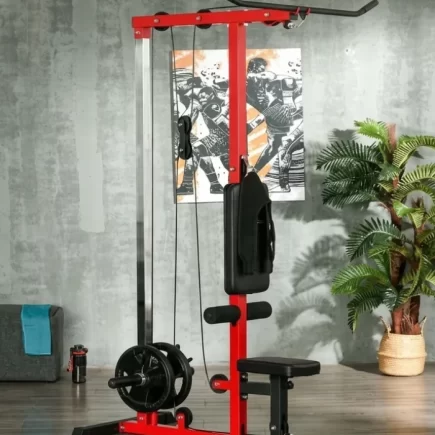

















Using a lat pulldown machine effectively starts with the right setup, grip and pulling technique. Proper form helps keep tension on your back muscles while reducing unnecessary strain on your shoulders, arms and lower back. Many home gym towers also include additional pulley exercises, such as low rows and back extensions, allowing you to train several areas of your back from one station.
Understanding how to perform each movement correctly can help you maintain better control, use a suitable resistance and get more from every set.
Lat Pulldown Exercises at a Glance
| Exercise/Position | Target | Grip/Position | Sets/Reps | Key Focus |
| Close-Grip Pulldown | Lats, Mid Back | Narrow, neutral | 3 sets x 10–12 reps | Keep elbows close and control the return. |
| Straight-Arm Pulldown | Lats, Shoulders | Wide bar or rope | 3 sets x 12–15 reps | Keep arms straight and pull from the shoulders. |
| Harness Lat Pulldown | Lats, Biceps | Harness, two-handed | 3 sets x 10–12 reps | Drive elbows towards the hips. |
| Low Row | Mid Back, Lats | Close, neutral | 3 sets x 10–12 reps | Pull elbows back without leaning or jerking. |
| Back Extension | Lower Back, Glutes | Bodyweight | 3 sets x 10–12 reps | Hinge at the hips and avoid hyperextension. |
Getting Set Up Correctly Before You Start
Setting up your Soozier pull-down machine correctly is important for both safety and performance. A poor setup can make the exercise less comfortable and shift tension away from the intended muscles.
- Seat and Thigh Pad Check: Adjust the thigh pad so it sits securely against your legs and keeps your body stable during pulldowns.
- Cable and Weight Setup: Choose a resistance that allows you to complete each repetition with control. Make sure the weight pin is fully inserted before starting.
- Grip Selection: Use the appropriate attachment and grip for each exercise. Avoid choosing a grip that causes discomfort in your shoulders or wrists.
- Clear Surroundings: Make sure there is sufficient space around and above the machine for the cable and attachment to move freely.
Recommended Weight Progression by Experience Level
Rather than choosing a load based solely on body weight, select resistance according to your current strength and ability to maintain proper form.
| Experience Level | Suggested Load | Suggested Reps | Sessions Per Week |
| Beginner | Light resistance. | 10–12 reps | 2 |
| Improving | Moderate resistance. | 8–12 reps | 2–3 |
| Intermediate | Moderate to heavy resistance. | 8–10 reps | 3 |
| Advanced | Heavy resistance with controlled form. | 6–10 reps | 3–4 |
The right weight should feel challenging towards the end of the set without forcing you to swing, lean excessively or shorten the range of motion. Increase resistance gradually as your technique and strength improve.
1. Close-Grip Lat Pulldown
Target: Lats, Mid Back
The close-grip lat pulldown uses a narrow, neutral-style grip with the elbows traveling down and close to the sides of the body. This setup emphasizes the lats and mid-back while allowing a controlled and comfortable pulling motion.
How to Do It
- Sit upright on the pulldown machine and position your legs comfortably with the thigh support securing your lower body.
- Grip the close-grip handle with both hands and keep your chest lifted.
- Pull the handle down toward your upper chest while driving your elbows down and slightly back.
- Keep your torso relatively stable and avoid excessive leaning or swinging.
- Pause briefly when the handle reaches the upper-chest area, then slowly extend your arms to return to the starting position.
What to Avoid
- Do not swing or excessively lean your torso to move the weight.
- Avoid shrugging your shoulders toward your ears.
- Do not pull the handle excessively behind your neck.
- Avoid cutting the range of motion short at the top.
- Return the handle under control rather than letting the weight drop suddenly.
2. Straight-Arm Pulldown
Target: Lats, Shoulders
The straight-arm pulldown focuses on the lats while keeping the elbows in a fixed position. It can work well as an activation movement or as a finishing exercise after heavier pulling movements.
How to Do It
- Stand facing the machine and grip the bar or rope attachment with both hands.
- Hinge slightly at your hips while keeping your back in a comfortable neutral position.
- Pull the attachment down towards your thighs while keeping your arms straight.
- Squeeze your lats at the bottom, then slowly raise the attachment back towards the starting position.
What to Avoid
- Do not bend your elbows significantly during the pull.
- Avoid using excessive weight that makes you rely on your arms or body momentum.
- Do not round your back to force the attachment lower.
- Avoid rushing the return phase.
3. Harness Lat Pulldown
Target: Lats, Biceps
The harness lat pulldown uses a chest strap or harness-style attachment held with both hands. Keeping the elbows tucked allows you to focus on pulling down and back through the lats while maintaining a stable upper body.
How to Do It
- Sit securely on the machine and grip the harness or chest strap attachment with both hands.
- Keep your elbows bent and close to your body while maintaining an upright chest.
- Pull the attachment down and back by driving your elbows towards your hips.
- Pause briefly when the attachment reaches the lower part of the movement.
- Return slowly to the starting position while keeping control of the cable.
What to Avoid
- Do not loosen your grip during the movement.
- Avoid shrugging your shoulders towards your ears.
- Do not allow your elbows to flare widely.
- Avoid leaning excessively backwards to move the resistance.
4. Low Row
Target: Mid Back, Lats
The low row changes the pulling direction from overhead to horizontal, making it a useful complement to pulldown movements. It primarily works the mid-back and lats while also involving the arms.
How to Do It
- Sit on the floor facing the low pulley attachment with your knees slightly bent and feet firmly braced.
- Grip the handle with a close or neutral grip and sit upright with your chest lifted.
- Pull the handle towards your torso while driving your elbows backwards.
- Squeeze your back muscles briefly at the end of the movement.
- Extend your arms slowly to return to the starting position.
What to Avoid
- Do not round your lower back while pulling.
- Avoid leaning backwards to create momentum.
- Do not jerk the handle towards your body.
- Never allow the weight stack to slam down during the return.
5. Back Extension
Target: Lower Back, Glutes
The back extension uses bodyweight resistance to strengthen the lower back and glutes. It provides a useful movement to include alongside the pulling exercises performed on the machine.
How to Do It
- Position yourself on the extension pad with your hips supported at the edge and your ankles secured.
- Cross your arms over your chest and keep your spine in a neutral position.
- Hinge forward slowly from your hips while maintaining control.
- Lower your torso until you feel a comfortable stretch through the hamstrings.
- Raise your torso until your body forms a straight line with your legs.
What to Avoid
- Do not round your back during the descent.
- Avoid bouncing or using fast movements to complete repetitions.
- Do not lift your torso beyond a straight line at the top.
- Avoid using additional weight until you can perform the movement with consistent control.
6. Behind-the-Neck Lat Pulldown
Target: Lats, Upper Back
The behind-the-neck lat pulldown is a variation of the traditional lat pulldown that involves pulling the bar behind the head towards the upper neck. It primarily targets the lats and upper-back muscles while requiring controlled shoulder movement.
How to Do It
- Sit securely on the pulldown machine and position your thighs firmly beneath the thigh pad.
- Grip the bar with both hands using a wide overhand grip.
- Keep your torso upright and pull the bar down behind your head towards the upper neck.
- Squeeze your lats and upper-back muscles briefly at the bottom of the movement.
- Slowly extend your arms to return the bar to the starting position.
What to Avoid
- Do not pull the bar aggressively or force it behind your neck.
- Avoid leaning your head forward excessively to make room for the bar.
- Do not use excessive weight or swing your body to move the resistance.
- Avoid rushing the return phase or allowing the weight stack to drop suddenly.
7. Cable Face Pull
Target: Rear Delts, Upper Back, Traps
The cable face pull is an upper-body pulling exercise performed using the chest/shoulder strap attachment on a cable machine. It primarily targets the rear deltoids and upper-back muscles while also engaging the traps and rotator-cuff muscles.
How to Do It
- Attach the chest strap to the cable and adjust the cable to approximately chest or shoulder height.
- Stand facing the machine and secure the chest strap firmly around your upper chest/shoulders.
- Hold the strap handles with both hands and step back slightly to create tension in the cable.
- Keep your torso upright and pull the handles back toward your face, driving your elbows outward.
- Squeeze your rear delts and upper-back muscles briefly at the end of the movement.
- Slowly extend your arms forward and return to the starting position under control.
What to Avoid
- Do not use excessive weight or jerk the cable.
- Avoid shrugging your shoulders excessively during the pull.
- Do not lean backward to move the resistance.
- Avoid pulling too low toward your chest; keep the movement directed toward your face.
- Do not rush the return phase or allow the cable to pull you forward suddenly.
A well-structured back workout is not only about how much resistance you use, but also how consistently you control each movement. With Aosom, you can find versatile fitness equipment, including a Pull Down Machine, that supports different pulling and strengthening exercises at home. Choosing suitable resistance and progressing gradually can help make each session more effective and manageable over time.
FAQs
Yes, it can be effective for developing the lats and creating a wider-looking back. Consistent training, controlled repetitions and gradually increasing resistance are important. It works especially well when combined with rows and other back exercises.
Beginners should choose a weight that allows them to complete their repetitions without swinging or leaning excessively. The final few reps should feel challenging while maintaining proper control. Starting lighter also makes it easier to learn the movement correctly.
Neither is universally better, as they serve slightly different purposes. A pulldown machine allows you to adjust resistance more easily, making it useful for beginners and progressive training. Pull-ups require you to move your body weight and demand greater overall control.