











A good backyard shed keeps your mower dry, gives the bikes a home, and frees up room in the garage. Before you buy, though, you have to answer one big question – metal or wood? Both materials can protect your gear, but they differ in cost, upkeep, comfort, and looks. This guide compares them side by side so you can choose the shed that fits your yard and your routine.
Comparison Table
| Feature | Metal Storage Shed | Wooden Storage Shed |
| Upfront Cost | Lower | Higher |
| Assembly | Quick kit with basic tools | Longer, more parts and finishing |
| Maintenance | Minimal | Regular sealing and painting |
| Rot and Pests | Naturally resistant | Vulnerable without treatment |
| Insulation | Poor, heats up and cools fast | Good natural insulation |
| Customization | Limited | Easy to modify |
| Noise in Rain | Can be loud | Quiet |
| HOA Approval | Sometimes restricted | Usually easier |
| Best For | Tools, mowers, bikes, budget storage | Workshops, hobby rooms, curb appeal |
What Is a Metal Storage Shed?
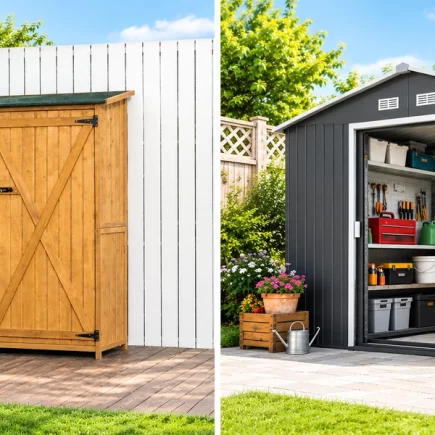
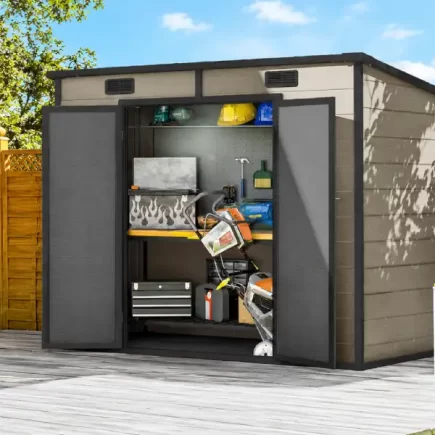
A Metal Storage Shed is made of galvanized steel or aluminum panels fastened to a light frame. It is the most common choice for basic backyard storage.
Pros of Metal Sheds
- Budget-Friendly: Metal sheds usually cost less upfront than wooden sheds of a similar size.
- Quick DIY Assembly: Kits come with numbered parts and clear instructions, so two people can finish many models in a day.
- Resistant to Rot, Pests, and Fire: Steel will not rot or attract termites, and it does not burn.
- Low Maintenance: There is no painting or sealing schedule. An occasional rinse and a check for scratches is usually enough.
Cons of Metal Sheds
- Condensation and Rust: When warm, humid air meets cool metal walls, moisture forms inside the shed. If the coating is scratched, that moisture can start to rust.
- Poor Temperature Control: Metal heats up fast in summer and turns cold in winter. That is hard on sensitive items and on anyone working inside.
What Is a Wooden Storage Shed?
A Wooden Storage Shed has a timber frame with wood or engineered wood siding, fir, or cedar. It looks like a small outbuilding and blends naturally with homes, fences, and gardens.
Pros of Wooden Sheds
- Curb Appeal: You can paint or stain it to match your house trim, deck, or fence.
- Natural Insulation: Wood slows heat transfer, so the inside stays cooler in summer and milder in winter.
- Easy to Customize: You can add shelves, pegboards, a workbench, a loft, or a window with ordinary tools.
- Solid and Quiet: A wooden shed feels sturdy, holds heavy shelving, and stays quiet during heavy rain.
Cons of Wooden Sheds
- Higher Cost: Wooden sheds cost more to buy and often take more time and labor to install.
- Regular Upkeep: Without sealing, painting, and inspections, wood can rot, warp, or attract termites.
Installation and Customization Options
Metal sheds are generally easier to install. Their light, pre-drilled panels go together quickly, while wooden sheds take longer because of heavier parts, roofing, and finishing work. How easy either one feels depends on the shed size, your site, and whether you hire help.
Customization works the other way around. Metal panels are hard to modify without damaging the coating, so add-ons are limited. Wood framing makes it simple to add shelves, cabinets, or a loft, so the layout can grow with your needs.
Size and Design Considerations
Both come in sizes from slim lean-to units to roomy sheds, but wood offers more flexibility. Metal kits usually come in fixed footprints with lower walls, while wooden sheds can be taller and fit a loft. The right size depends on what you store and how much yard space you have.
For design, metal gives a clean, practical look, while wood offers a classic style with windows and trim that blends with most homes. Which one suits you depends on how visible the shed will be and on any local permit or HOA rules.
Perfect Storage Consideration
What you plan to keep inside the shed should guide your choice. Use this quick guide to match your items with the right material.
| What You Store | Best Material | Why It Fits |
| Lawn Mowers And Garden Tools | Metal | Handles temperature swings without harming the gear |
| Bikes And Pool Supplies | Metal | Low-cost, low-maintenance protection from rain |
| Seasonal Decorations | Metal | Sealed bins guard against condensation |
| Paint, Electronics, And Seed Packets | Wood | Steadier temperatures protect heat- and cold-sensitive items |
| Patio Cushions And Fabrics | Wood | A drier, more stable interior lowers the risk of mildew |
| Workshop Or Potting Bench | Wood | Comfortable to work inside in most seasons |
Maintenance and Lifespan Comparison
A metal shed needs a yearly wash, quick touch-ups on any scratches, snow cleared from the roof, and open vents to limit condensation. A little lubricant on the door tracks keeps sliding doors moving smoothly. How long it lasts depends mostly on the panel thickness and whether the coating stays intact. With that care, it can serve you for many years.
A wooden shed asks for more. Plan to reseal or repaint every few years, keep the base dry, and replace soft boards early. A quick walk-around each spring helps you catch winter damage before it spreads. Pressure-treated framing and a raised, dry base add years to its life. In return, a well-kept wooden shed can last for decades.
Durability, Weather, and Security Comparison
Metal resists rot and insects, but it can dent from hail or falling branches. It also needs solid anchoring against strong wind. Rain on a metal roof can be loud, which matters if the shed sits near a bedroom or patio. Wood handles impacts well and stays rigid, though damp climates call for consistent sealing and good airflow.
For security, thin metal panels can sometimes be pried open. Thick wooden walls and framed doors hold heavy-duty locks and hinges more firmly. If you plan to store expensive tools or bikes, look at door strength and locking options before material alone.
Cost and Long-Term Value Consideration
When you look past the sticker price, two costs matter most.
- Upfront Price: Metal sheds cost less to buy and install, which keeps your first investment low. Wooden sheds cost more for both materials and labor, especially if you add windows or a loft.
- Repair Costs: Swapping a wooden board or repainting siding is simple and affordable. A dented metal panel is harder to fix, and a broken coating invites rust that keeps spreading.
What Material Is Best For Storage Shed?
The right material depends on your priorities. Here is a simple way to decide.
1. When to Choose Metal
Go with metal if you want affordable, low-maintenance storage for tools, mowers, and outdoor gear. It also suits renters, homeowners in termite-prone areas, and anyone who may move the shed later.
2. When to Choose Wood
Go with wood if you want a shed that matches your home, stays comfortable inside, and can grow with your needs. It is ideal for workshops, hobby spaces, and homeowners who plan to stay put for years.
Which One Should You Choose?
Here is a quick verdict on each factor, so you can see where each material comes out ahead.
| Choose a Metal Shed If You… | Choose a Wood Shed If You |
| Want the lowest upfront cost | Want a shed that matches your home and boosts curb appeal |
| Need strong resistance to rot, pests, and fire | Plan to paint, customize, or set up a workshop |
| Live in a humid or rainy climate | Need natural insulation for tools, paint, or plants |
1. In Terms of Durability
Metal wins against rot, termites, and fire, so it suits yards where pests or wildfire risk are a concern. Wood wins against everyday knocks and heavy shelf loads. Over the long run, a well-cared-for wooden shed usually outlasts a basic metal kit. The real winner depends on how much care you plan to give.
2. In Terms of Weather Resistance
Metal is the easier pick in humid or rainy areas where wood would need constant sealing, as long as the coating stays intact. It is less ideal on windy or hail-prone sites. Wood is the stronger choice for snowy, cold, or stormy regions. In very wet climates, plan on treating it more often.
3. In Terms of Insulation
Wood is the clear winner if you plan to spend time inside the shed. It stays comfortable enough for a workshop or potting bench without extra work. Metal can be insulated with panels, but that adds cost and effort. For storage that never needs climate comfort, metal is still perfectly fine.
4. In Terms of the Assembly Process
Choose metal if you want the shed up the same weekend you buy it. It is the simpler option when time or extra help is limited. Choose wood if you can set aside more time or budget for installation help. The extra effort pays off in a sturdier, more flexible building.
Find Your Perfect Garden Shed
Before you buy, ask yourself three simple questions. How much do you want to spend today? Will you spend real time inside the shed, or just store things there? How much yearly upkeep are you willing to do? Your answers point the way, and Aosom US carries outdoor sheds in both materials.
- Metal Sheds: The smart move if low cost and easy care top your list. They assemble easily and protect lawn equipment, garden tools, and bikes while keeping your budget in check.
- Wooden Sheds: The better pick if comfort, style, and room to grow matter more. They add classic charm and give you space to organize, customize, and make the shed your own.
FAQs
Yes, you can paint a metal shed to refresh its look or cover small rust spots. Clean and lightly sand the panels first, then apply a rust-inhibiting metal primer. Finish with an exterior paint made for metal so the new color holds up to sun and rain.
Many metal shed kits do not include a floor, so the shed sits right on the base you prepare. You can build a wood floor frame, pour a concrete slab, or buy a floor kit made for your model. A raised floor also keeps all your stored items off damp ground.
Yes, but running power to a shed is a job for a licensed electrician, and most towns require a permit. The wiring usually runs underground in conduit from your home’s main panel. A metal shed also needs proper grounding to stay safe once power is added.
Resin Sheds will not rust or rot and need very little upkeep, which makes them a good fit for small storage needs. They are lighter than wood, though, so wall shelves hold less weight. Some can also fade or turn brittle after years of strong sun or deep cold.