


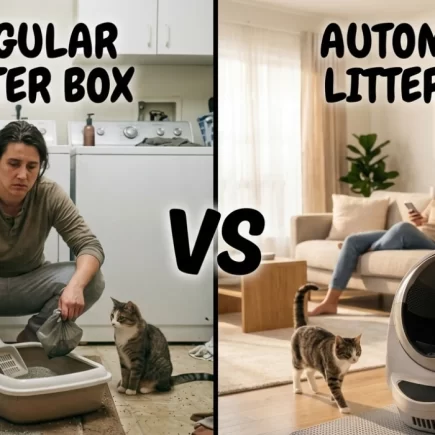














Choosing the right litter box helps keep your cat’s environment clean, comfortable, and hygienic. Automatic and regular litter boxes differ in cleaning methods, maintenance, cost, and convenience. Understanding these differences can help you find the best option for your cat’s needs and your daily routine.
Core Difference Between An Automatic And A Regular Litter Box?
A regular litter box is a tray that you fill with litter and clean manually. It is affordable, easy to set up, and compatible with a wide range of litter types. You remain responsible for removing waste and keeping the tray clean.
An automatic litter box uses a motorised rake or rotating mechanism to separate waste from clean litter. Depending on the model, waste is transferred into a collection drawer after your cat leaves. This reduces the need for frequent scooping, although the unit still requires routine maintenance.
| Feature | Regular Litter Box | Automatic Litter Box |
| Cleaning method | Manual scooping. | Automatic sifting or rotation. |
| Power supply | Not required. | Electricity or batteries, depending on the model. |
| Initial cost | Generally low. | Generally higher. |
| Litter compatibility | Broad range of litter types. | Depends on the mechanism. |
| Maintenance | Washing and replacing litter. | Emptying the waste drawer and cleaning components. |
| Mechanical components | None | Motor, sensors, or moving parts. |
1. Cleaning Requirements And Daily Maintenance
A regular litter box requires you to remove clumps and solid waste at least once or twice a day, with more frequent cleaning sometimes necessary in multi-cat households. You also need to replace the litter and wash the tray periodically. Although each task takes little time, the responsibility remains part of your daily routine.
An automatic model handles much of the scooping after your cat uses it. You still need to empty the waste container, replenish litter, and clean the unit according to the manufacturer’s instructions. The time saved depends on the model, the number of cats, and how frequently the waste drawer fills.
2. Odour Control And Freshness
Odour control depends on waste removal, litter quality, ventilation, and regular maintenance. With a standard litter box, unpleasant smells can develop when waste remains in the tray for too long. Covered designs may contain some odours, but they do not eliminate the need for scooping.
Automatic litter boxes can improve freshness by transferring waste into a separate compartment shortly after use. Some models include carbon filters or sealed drawers to help limit odours. However, these features are not equally effective across all products, and accumulated waste can still smell if the container is not emptied regularly.
3. Suitability For Kittens, Senior Cats And Large Breeds
A litter box should provide enough space for your cat to turn around comfortably and enter without difficulty. Regular litter boxes offer flexible sizing, while automatic models may have minimum weight requirements, raised entrances, or enclosed interiors that are unsuitable for some cats.
| Factor | Regular Litter Box | Automatic Litter Box |
| Kittens | Low-entry trays are easier to access. | Check minimum weight and age requirements. |
| Senior Cats | Low entrances can support easier access. | Raised entrances may be difficult to navigate. |
| Large Breeds | Choose a tray with sufficient room. | Check internal dimensions and entry space. |
4. Noise And Your Cat’s Comfort
A regular litter box produces little noise beyond the sound of digging and covering waste. Its predictable operation can make it a good option for cats that are easily startled or sensitive to changes in their environment.
An automatic model may produce humming, grinding, or rotating sounds during its cleaning cycle. Some cats adjust quickly, while others become anxious or avoid the box. Quieter operation can help, but it does not guarantee that every cat will accept the device.
If you introduce an automatic box, keep the familiar litter box available during the transition. Allow your cat to investigate the new unit without pressure and follow the manufacturer’s guidance on when to activate its automatic cycle.
5. Safety Features And Potential Risks
A regular litter box has no moving parts or electrical components, making it straightforward to use. Its main concerns involve hygiene, litter tracking, and whether the tray is accessible and comfortable for your cat.
Automatic litter boxes introduce additional safety considerations because their mechanisms can move while operating. Look for features such as:
- Weight and motion sensors: Detect a cat and prevent or pause cleaning when necessary.
- Automatic cycle interruption: Stops operation if a cat approaches or re-enters during a cycle.
- Protected moving components: Reduces access to areas where paws or tails could become trapped.
- Reliable controls: Allows the unit to be switched off or stopped when needed.
These features vary by model, so read the safety instructions and check whether the manufacturer specifies restrictions for kittens or other small animals. No automatic litter box should be assumed safe solely because it includes sensors.
6. Space and Placement
A regular litter box is usually easier to position because it does not need an electrical connection. You can place it in a suitable bathroom, utility room, or quiet corner, provided your cat has easy access and the area is well ventilated.
Automatic models often have a larger footprint and require additional clearance for entry, exit, and maintenance. Many also need a nearby power socket. Enclosed units can be particularly bulky, so measuring the available area before purchase helps avoid problems with placement.
Regardless of the design, position the box somewhere quiet and accessible, away from food and water bowls. Avoid locations where household noise or frequent foot traffic might discourage your cat from using it.
7. Purchase Price, Durability And Running Costs
A regular litter box is generally inexpensive to purchase and replace. With basic care, a plastic tray can last several years, although scratches, damage, and persistent odours may eventually make replacement necessary. There are no motors or electronic components to repair.
An automatic litter box requires a larger initial investment. Depending on the design, ongoing costs may include replacement filters, compatible litter, waste liners, spare parts, and electricity. Motors and sensors can also wear out, so the manufacturer’s warranty and availability of replacement components are worth checking.
| Cost Factor | Regular Litter Box | Automatic Litter Box |
| Initial purchase | Low | Higher. |
| Electricity | Not required | Usually required, depending on the model. |
| Replacement parts | Rarely needed | May be needed. |
| Special accessories | Usually unnecessary | May include filters or liners. |
| Repair complexity | Minimal | Depends on the mechanism. |
Best choice: A regular box is the more economical option for most budget-conscious households. An automatic model may justify its higher cost if reduced daily scooping is a priority.
8. Managing Litter Boxes In Multi-Cat Homes
In a home with several cats, a regular litter box can require considerable daily effort. The commonly recommended starting point is one litter box per cat, plus one extra, although the best arrangement depends on your cats’ behaviour, available space, and household needs. Each box still needs regular cleaning.
Automatic litter boxes can reduce the workload by removing waste after individual visits. However, a single unit may not meet the needs of every cat, especially if several animals use it frequently. The waste drawer will also fill faster, increasing the frequency of emptying.
Some models offer usage tracking or individual cat recognition, but these features are not universal. Cats that guard resources or refuse to share a toilet may still need separate boxes in different locations.
Which Litter Box Should You Choose?
The better option depends on which trade-offs matter most to you. Compare the main advantages and limitations before deciding.
Regular Litter Box: Pros And Cons
| Pros | Cons |
| Affordable to buy and replace | Requires frequent manual scooping. |
| Quiet and simple to use | Odours can build up if cleaning is delayed. |
| Compatible with many litter types | Cleaning workload increases with multiple cats. |
| Suitable for cats of different ages and sizes when properly chosen | Offers no automatic waste separation. |
| No electricity or mechanical maintenance | Requires more attention when arranging care during travel. |
Automatic Litter Box: Pros And Cons
| Pros | Cons |
| Reduces the need for daily scooping | Higher purchase price. |
| Separates waste from clean litter automatically | Requires compatible litter. |
| Can help contain unpleasant smells | Needs regular drawer emptying and component cleaning. |
| Convenient for owners with busy schedules | Noise may discourage sensitive cats. |
| Some models offer monitoring features | Requires adequate space and careful safety checks. |
If daily scooping, lingering litter odours, or managing multiple cats makes keeping your home clean a challenge, choosing the right litter box can make a real difference. Compare the automatic and regular litter box options available at Aosom to find one that fits your cat’s habits, your available space, and your cleaning routine, making everyday litter maintenance easier to manage.
FAQs
The frequency depends on the litter type, the number of cats, and how well the box is maintained. Clumping litter often lasts longer when waste is removed daily, while non-clumping litter may need more frequent replacement. Follow the litter manufacturer’s instructions and wash the tray regularly.
Cats can share a litter box, but some prefer having their own space. Too few boxes can lead to territorial behaviour, stress, or toileting accidents around the home. A common recommendation is one box per cat, plus one extra, placed in accessible locations.
Choose a quiet, well-ventilated location where your cat can enter and leave without being disturbed. Keep the box away from food and water bowls, noisy appliances, and busy walkways. In multi-cat homes, separate locations can help reduce competition and give each cat more privacy.