


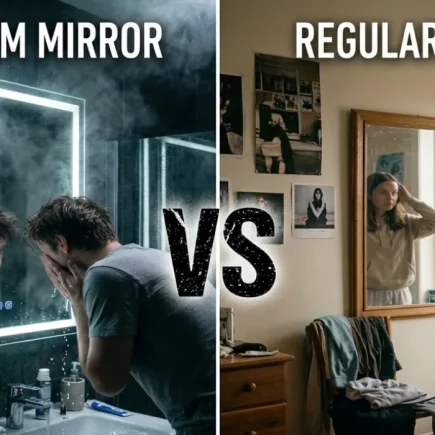




















A bathroom mirror does more than reflect your image; it is designed to handle steam, moisture and everyday bathroom routines. A regular mirror may suit a bedroom or hallway, but it can struggle in humid conditions. Understanding the differences in durability, lighting and features will help you choose the right mirror for your home.
What Makes a Bathroom Mirror Different from a Regular Mirror?
A bathroom mirror is engineered for humid, wet spaces, while a regular mirror is made for dry rooms like bedrooms, hallways, and living rooms. Both reflect your image, but they differ in coatings, frames, glass strength, lighting, and extra features. These differences decide how long the mirror lasts and how well it performs. Here is the quick snapshot.
| Feature | Bathroom Mirror | Regular Mirror |
| Moisture protection | Sealed edges, protective backing. | Minimal or none. |
| Anti-fog | Heated pad or coating. | Not available. |
| Lighting | Often built-in LED. | Relies on room light. |
| Frame | Aluminum, stainless steel, sealed PVC. | Wood, MDF, untreated metal. |
| Glass safety | Tempered or film-backed. | Standard annealed glass. |
| Best location | Bathrooms, humid areas. | Bedrooms, hallways, living rooms. |
1. Anti-Fog and Heated Features
Fog is the most common bathroom mirror complaint, and bathroom models are built to handle it. Many include a defogger that gently warms the glass so condensation can’t form, while others use anti-fog coatings that need no power. A regular mirror has no fog protection at all, so you’ll be wiping it with a towel after every shower.
- Heated pads: Keep the glass just above the dew point.
- Anti-fog coatings: Reduce condensation without electricity.
- Touch controls: Switch the defogger on or off in seconds.
2. LED Lighting and Built-In Illumination
Integrated LEDs on a bathroom mirror give even, shadow-free light that is ideal for shaving, skincare, and makeup. Many models let you adjust brightness and color temperature to match the time of day. A regular mirror depends on overhead lighting, which often casts harsh shadows under the eyes and chin and makes detail work harder.
| Color Temperature | Look and Feel | Best For |
| 2700K-3000K (warm white) | Soft, relaxing. | Evening routines. |
| 3500K-4000K (neutral white) | Balanced, natural. | All-purpose use. |
| 5000K-6500K (cool white) | Bright, crisp. | Shaving, makeup, detail work. |
Tip: Look for a CRI (Color Rendering Index) of 90 or above for true-to-life skin tones.
3. Frame Materials and Durability
Frames in a humid room must resist rust, warping, and swelling, so bathroom mirrors typically use aluminum, stainless steel, or sealed PVC. These materials shrug off steam and splashes for years. Regular mirrors often come with untreated wood or MDF frames, which soak up moisture, swell, and peel when exposed to bathroom humidity.
| Frame Material | Moisture Resistance | Typical Use |
| Aluminum | Excellent | Bathroom |
| Stainless steel | Excellent | Bathroom |
| Sealed PVC | Very good | Bathroom |
| Treated wood | Moderate | Either |
| Untreated wood or MDF | Poor | Regular |
4. Glass Quality and Safety Backing
Bathroom mirrors are often made with tempered or shatter-resistant glass and a safety film on the back. If the glass breaks, the film holds the pieces together instead of letting them scatter. This matters on hard, slippery bathroom floors, where bare feet are common. Regular mirrors usually use standard annealed glass, which can break into large, sharp shards.
- Safety film: Keeps shards from scattering
- Tempered glass: Stronger, and breaks into small, blunt pieces
- Polished edges: Reduce chipping and snagging
5. Size, Shape, and Mounting Options
Bathroom mirrors are designed to fit vanities and compact spaces, and most come with moisture-safe mounting hardware. Many can be hung vertically or horizontally, which gives you flexibility in tight layouts. Regular mirrors come in an even wider range of sizes, but their hardware is often basic and not made for damp walls.
- Round and oval: Soften the hard lines of modern bathrooms
- Rectangular: A classic, space-efficient choice
- Full-width wall mirrors: Make small bathrooms feel larger
- Arched: Add a gentle, designer touch
Tip: Choose a mirror about two-thirds the width of your vanity for a balanced look.
6. Storage and Functionality (Medicine Cabinets, Shelves)
Many bathroom mirrors double as storage. Mirrored medicine cabinets hide toiletries and keep counters clear, and some models add shelves, magnifying sections, or built-in outlets for razors and toothbrushes. A regular mirror is purely decorative. It reflects light and space well, but it offers no practical extras for daily routines.
| Function | Bathroom Mirror | Regular Mirror |
| Hidden storage | Available | Rare |
| Magnifying section | Common | Rare |
| Open shelf | Available | No |
7. Cost Comparison
A bathroom mirror is a bigger upfront investment, but it holds up for years in humid conditions. A regular mirror is a lighter investment at purchase, yet in a bathroom it often needs replacing within a few years. When you factor in repeat replacements and the hassle of re-hanging, the bathroom mirror delivers better long-term value.
| Factor | Bathroom Mirror | Regular Mirror |
| Upfront investment | Higher | Lower |
| Lifespan in a bathroom | 8-15 years | 1-3 years |
| Anti-fog option | Often included | Not available |
| LED lighting | Common | Rare |
| Replacements over 10 years | Usually none | 3-5 |
8. Installation and Maintenance
Bathroom mirrors with LEDs or defoggers need a power connection, so plan the wiring before you mount them. Use wall anchors rated for the mirror’s weight, and hire an electrician for hardwired units. A regular mirror is simpler to hang with a hook or bracket, and it is easy to maintain in a dry room, but much harder to keep clean in a humid one.
Maintenance Tips For Both:
- Clean with a soft microfiber cloth and non-abrasive glass cleaner.
- Spray cleaner onto the cloth, not directly on the edges.
- Wipe edges dry to prevent moisture buildup.
- Run the exhaust fan during and after showers.
- Check edge sealant once a year.
9. Style and Design Versatility
Bathroom mirrors now range from sleek frameless designs to bold black frames and glowing backlit halos. A well-chosen one becomes the focal point of the room, tying together your fixtures, tiles, and color palette. Regular mirrors offer even more decorative variety, such as ornate frames and oversized floor mirrors, but most of those styles aren’t built to handle moisture.
| Style | Works Best With |
| Frameless | Modern, minimalist spaces. |
| Black metal frame | Industrial or contemporary looks. |
| Gold or brass frame | Luxe, classic bathrooms. |
| Backlit halo | Spa-style, high-tech designs. |
| Sealed wood-look frame | Farmhouse or rustic themes. |
Can You Use a Regular Mirror in a Bathroom?
Yes, but with caveats. A regular mirror can work in a powder room or a well-ventilated bathroom that sees little steam. In a full bathroom with a daily shower, expect it to age much faster. With a few precautions, you can extend its life and delay those dark edge spots.
If you do use one:
- Seal the edges with mirror-safe edge sealant.
- Keep it away from the shower and splash zones.
- Make sure the room has strong ventilation.
- Choose a moisture-resistant frame.
| Bathroom Type | Regular Mirror Suitability |
| Powder room (no shower) | Good |
| Guest bath, occasional use | Fair |
| Main bath with daily shower | Poor |
Which One Should You Choose?
Choose a bathroom mirror if you have a shower or bath, want built-in lighting, or need long-term durability. Choose a regular mirror only for dry, low-use areas or short-term setups. For most homes, a purpose-built bathroom mirror offers better value, safety, and performance over the years. Use the table below to match your situation.
| Your Situation | Best Choice |
| Daily showers, busy bathroom | Bathroom mirror. |
| Makeup, shaving, or skincare routine | Bathroom mirror with LED. |
| Powder room with low humidity | Either works. |
| Temporary setup, dry space | Regular mirror with sealed edges. |
While regular mirrors work well in bedrooms and hallways, bathrooms need a mirror that can cope with daily steam and humidity without losing its finish. A bathroom mirror offers practical advantages, from moisture-resistant materials and anti-fog features to integrated lighting that makes everyday grooming easier. To bring these benefits into your own space, browse the Bathroom Mirror at Aosom and find a design that suits your routine and bathroom style.
FAQs
An anti-fog mirror with a built-in heating pad helps prevent condensation after hot showers. Running an extractor fan during and after showering also reduces moisture. Anti-fog sprays offer temporary protection, depending on the product and application.
A frameless, backlit or wall-mounted bathroom mirror helps maximise space and reflect light. A large mirror can make a small bathroom feel more open, while integrated LED lighting provides extra illumination. Choose a size that suits your vanity and wall space.
LED bathroom mirrors generally consume less electricity than traditional incandescent lighting. Their energy use depends on wattage, brightness settings and daily operating time. Check the manufacturer’s power specifications to estimate running costs.