
















Picking the right lawn mower can feel overwhelming with so many types, engine sizes, and features on the market. Once you understand a handful of core factors, the decision becomes much simpler. This guide breaks down exactly what to look for so you can buy with confidence.
Choosing Your Power Source
Your first decision is what powers your mower: gas, electric, battery, or manual. Each option has real trade-offs in cost, maintenance, and performance that affect your day-to-day mowing experience.
Gas mowers deliver the most raw power and suit large or tough terrain, but they require fuel, oil changes, and periodic tune-ups. Battery and electric mowers are quieter and easier to maintain, making them popular for small to mid-sized yards.
| Power Source | Best For | Maintenance Level | Noise Level |
| Gas | Large yards, tough terrain | High | Loud |
| Electric (corded) | Small yards | Low | Quiet |
| Battery | Small to medium yards | Low | Quiet |
| Manual (reel) | Very small, flat yards | Very low | Silent |
Tip: If your property is large or uneven, a gas engine still offers the most reliable, sustained power output.
Engine Power and Horsepower
Horsepower determines how well a mower handles thick grass and rough ground. A higher rating generally means more cutting force and better performance under load.
Heavier-duty models built for estates, orchards, or commercial-style landscaping often use engines in the 6.5 to 8 HP range, while standard residential mowers typically run lower. Matching engine power to your actual terrain avoids paying for capability you don’t need.
- Under 4 HP: Light residential use, small flat lawns.
- 4 to 6.5 HP: Standard residential lawns with moderate grass.
- 6.5 HP and above: large properties, overgrown fields, or difficult ground.
Cutting Width and Height
Cutting width determines how much ground you cover per pass, which affects how long mowing takes. Wider decks are more efficient for large areas but harder to maneuver in tight spaces.
Cutting height adjustability matters just as much. Grass type, season, and soil condition all call for different heights, so look for a wide adjustment range rather than a few fixed settings.
| Deck Width | Best Use Case |
| Under 18 inches | Small yards, tight corners. |
| 18-21 inches | Standard residential lawns. |
| 22 inches and above | Large lawns, estates, commercial use. |
Tip: A wider height adjustment range lets one machine handle both manicured lawns and longer, overgrown grass.
Handling Obstacles Safely
Every yard has obstacles: trees, flower beds, ditches, or uneven patches. A good mower should navigate these without stalling, tipping, or damaging the blade.
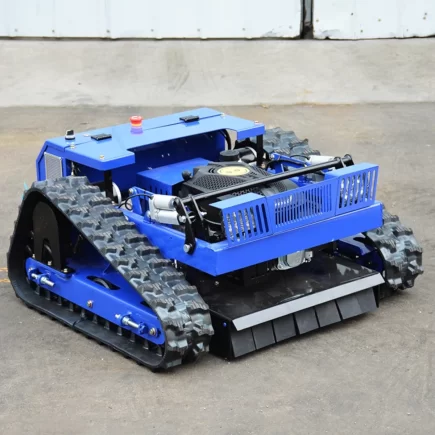
Wheeled mowers work fine on flat, obstacle-light lawns, but rougher ground often calls for something sturdier. Tracked or crawler-style mowers are built with a low center of gravity specifically for steep or uneven land.
- Check the maximum slope rating before buying.
- Consider tracked designs for ditches or uneven ground.
- Look for models rated for brush and overgrown fields if your property isn’t a manicured lawn.
Speed and Control Modes
Speed control affects both cutting quality and how tiring mowing feels. Single-speed mowers work fine for small, flat lawns, but variable or dual-speed settings help on larger properties.
Some higher-end models now include remote control operation, letting you manage speed and direction from a safe distance. This is especially useful on demanding terrain where standing behind the mower isn’t practical.
- Single speed: fine for small, flat lawns.
- Dual speed (high/low): better for mixed terrain.
- Remote control: hands-free operation over longer distances.
Key Safety Features
Safety features matter more than most buyers realize, particularly for gas and higher-powered mowers. Look for basics like a blade shut-off switch, along with electrical safeguards on more advanced models.
Dual electrical protection, such as a fuse combined with an air switch, helps prevent overloads and mechanical damage. LED headlights are another underrated feature for early morning or low-light mowing.
Tip: Never compromise on safety features to save money, especially with gas engines or heavier equipment.
Maintenance and Running Costs
Ongoing costs vary significantly by mower type, and this is where many buyers underestimate total ownership expense. Gas mowers need regular oil changes, air filter replacements, and occasional servicing.
Electric and battery mowers have lower maintenance needs but may require battery replacement every few years. Factor in these long-term costs, not just the sticker price, when comparing options.
| Mower Type | Annual Maintenance Cost (Est.) | Typical Lifespan |
| Gas | $50-$150 | 8-10 years |
| Electric/Battery | $10-$40 | 5-8 years |
Storage and Portability
Storage space is often overlooked until the mower arrives. Measure your shed, garage corner, or storage box before buying, especially for larger gas-powered or heavy-duty models.
Foldable handles and compact battery mowers suit smaller properties or apartment-style storage. Larger, heavier-duty machines need more planning but deliver far more capability for bigger properties.
- Measure your storage space before purchasing.
- Look for foldable handles on compact models.
- Consider weight if you’ll be moving the mower often.
Final Buying Checklist
Before committing to a purchase, run through these points one more time. Small oversights early on often lead to regret later.
✓ Confirm the mower fits your yard size and terrain.
✓ Choose a power source that matches your maintenance tolerance.
✓ Check cutting width and height range for flexibility.
✓ Verify the slope rating if your property isn’t flat.
✓ Prioritize safety features, especially for gas and high-power models.
✓ Factor in long-term maintenance costs, not just upfront price.
✓ Confirm you have adequate storage space.
Choosing the right Lawn Mower comes down to matching the machine to your property, rather than simply choosing the highest-spec model available. Whether you need a simple push mower for a small, flat yard or a heavier-duty option for sloped, overgrown terrain, considering these factors will naturally guide you towards the right choice. With Aosom, you can find a mower that suits your lawn, terrain, and everyday mowing needs.
FAQs
The ideal cutting height varies by grass type and growing conditions. Keeping grass slightly taller can help it retain moisture and develop stronger roots. Adjust the mower gradually rather than removing a large amount at once.
Self-propelled mowers can reduce the effort needed to move the machine, particularly across larger lawns or gentle slopes. They can be especially useful when pushing a heavier mower would become tiring during longer mowing sessions.
It is generally better to wait until the grass is dry. Wet grass can clump beneath the deck, produce an uneven cut and make the mower harder to control. Damp conditions can also increase the chance of slipping on slopes.