

























A meat grinder can usually be fixed by checking the power supply, clearing clogs, correcting the blade and auger assembly, or replacing worn parts. Keep the meat cold, feed it in small batches, and make sure the blade sits correctly against the grinding plate. If the grinder overheats, makes unusual noises, or produces metal shavings, stop using it and inspect the internal components before continuing.
Common Problems and Fixes
| Problem | Likely Cause | Fix |
| Grinder won’t turn on | No power, overheating cutoff, faulty switch. | Check outlet and cord, let motor cool, test switch. |
| Grinder clogs or jams | Meat too warm, sinew, overfeeding. | Chill meat, feed smaller amounts, clear blockage. |
| Meat comes out mushy or uneven | Dull blade, worn plate, warm meat. | Sharpen or replace blade, chill meat. |
| Grinder makes grinding or squealing noise | Blade not flush, loose parts, worn auger. | Reassemble parts correctly, tighten ring. |
| Motor runs but nothing feeds through | Auger jam, wrong assembly order. | Disassemble and check part order. |
| Meat leaks from the ring or housing | Loose retaining ring, cracked plate. | Tighten ring, inspect plate for cracks. |
| Meat spins in the hopper but won’t feed through | Missing auger bushing, blade installed backward. | Check bushing, reverse blade orientation. |
| Motor overheats and shuts off mid-grind | Too much meat processed at once, no cooldown. | Reduce batch size, let motor rest between batches. |
| Ring is stuck or grinder won’t turn at all | Threads over-tightened or debris in threads. | Loosen ring, clean threads, retighten by hand. |
| Ground meat has black specks or metal shavings | Worn or dented auger scraping the housing. | Stop use immediately, inspect and replace auger. |
1. Why Is My Meat Grinder Not Turning On?
A grinder with no power is almost always an electrical or safety-switch issue, not a motor failure. Work through these steps in order before assuming the motor is broken.
- Check the outlet by plugging in another appliance to confirm it has power.
- Inspect the power cord for cuts, fraying, or a loose connection at the plug.
- Unplug the grinder and let it sit for 15 to 20 minutes, since most electric grinders have an overheating cutoff that resets on its own once the motor cools.
- Check that the hopper and pusher are fully seated, since many grinders have a safety interlock switch that blocks power unless these parts are locked in place.
- If it still will not start after these checks, the motor or internal switch likely needs professional repair or replacement.
2. Why Does My Meat Grinder Overheat and Shut Off?
Overheating is different from a grinder that won’t start at all it means the motor was running, got too hot, and its built-in safety cutoff switched it off mid-job. This is common on smaller home grinders processing large amounts of meat in one session.
- Reduce the amount of meat processed in a single session, since small motors are rated for short bursts, not continuous heavy loads.
- Grind in batches of 2 to 3 pounds, then pause for 10 to 15 minutes to let the motor cool before continuing.
- Make sure the grinder’s air vents are not blocked or covered while running, since blocked airflow makes overheating worse.
- If the motor overheats repeatedly with small batches, the motor itself may be undersized for the job or failing, and the manufacturer should be contacted.
3. Why Is My Meat Grinder Spinning But Not Feeding Meat Through?
If the motor runs and the auger turns but the meat just spins in the hopper instead of moving forward, the problem is almost always inside the grinding head, not the motor. This is one of the most common mistakes even experienced users make.
- Unplug the grinder and remove the grinding head.
- Check for a small plastic or metal auger bushing at the base of the head, since this part presses the blade tight against the plate and is easy to leave out after cleaning.
- Reinstall the bushing if it is missing, since without it the blade cannot cut and meat will just spin instead of grinding.
- Check that the blade is facing the right way, with the flat side against the plate and the cutting edges facing outward, since a backward blade will not pull meat through.
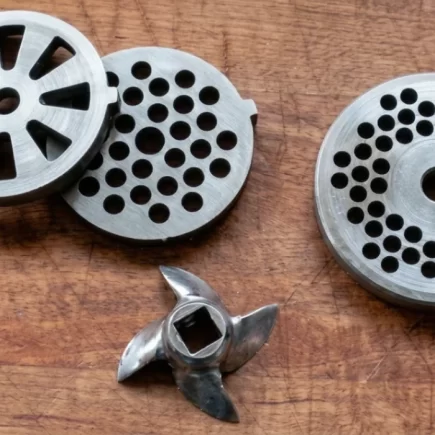
- Reassemble in the correct order: auger, bushing, blade, plate, ring.
4. Why Does My Ground Meat Have Black Specks or Metal Shavings?
Black specks or metallic flecks in ground meat are a safety issue, not just a grinding fault, and mean a metal part inside the grinder is being worn away during use.
- Stop grinding immediately and discard any meat with visible specks.
- Unplug the grinder and inspect the auger for dents, worn edges, or smoothed-down sections where metal has been scraped away.
- Check the inside of the housing for scratches or rough spots that the auger may be rubbing against.
- Replace the auger if it shows visible wear, since a damaged auger will keep shedding metal into the meat.
- Do not resume grinding until the worn part has been replaced.
5. How Do You Fix a Meat Grinder That Keeps Clogging?
Clogging is the most common meat grinder problem, and it almost always comes down to meat temperature or overfeeding. Fixing it means changing how the meat is prepared and fed, not just clearing the blockage once.
- Unplug the grinder before touching any internal parts.
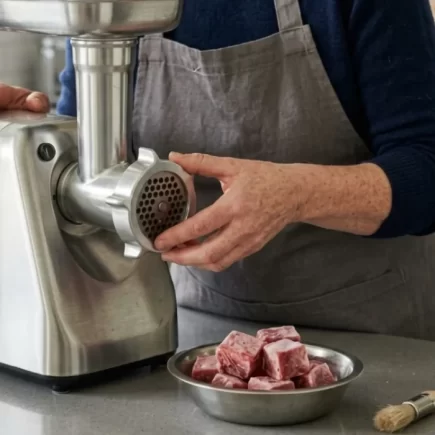
- Chill the meat in the freezer for 20 to 30 minutes before grinding, since warm meat smears fat instead of cutting cleanly and causes clogs.
- Cut the meat into 1-inch cubes so pieces fit the feed tube without forcing.
- Feed meat through in small, steady batches instead of pushing large amounts in at once.
- Trim off excess sinew and connective tissue before grinding, since these wrap around the blade and block the plate.
- If the grinder slows down mid-use, turn it off immediately, disassemble the head, and remove any built-up sinew or fat from the blade and plate before restarting.
6. Why Is My Meat Grinder Producing Mushy or Uneven Meat?
Uneven or mushy ground meat is a sign that the blade or plate is worn, or that the meat was too warm during grinding. This is a maintenance issue, not a mechanical fault.
- Remove the blade and check the edge for dullness or nicks by running a finger carefully along it.
- Sharpen the blade with a flat sharpening stone, or replace it if it is more than a year old with regular use.
- Check the grinding plate for worn or enlarged holes, and replace the plate if the holes look stretched or oval instead of round.
- Confirm the blade sits flush against the plate with no visible gap, since a gap causes tearing instead of clean cutting.
- Keep meat cold throughout the process, including chilling the grinder head in the freezer for 15 minutes before use in warm kitchens.
7. Why Is My Meat Grinder Making a Grinding or Squealing Noise?
A grinding, squealing, or rattling sound usually means a part is loose, misaligned, or worn. Running the grinder with this kind of noise can damage the motor, so stop and check the parts before continuing.
- Unplug the grinder and disassemble the grinding head.
- Check the assembly order: auger first, then blade, then plate, then retaining ring, in that exact sequence.
- Confirm the blade is installed with the flat side facing outward against the plate, since installing it backward causes grinding noise and poor cutting.
- Tighten the retaining ring by hand until snug, then a quarter turn more with a wrench if the grinder has one.
- Inspect the auger for cracks or worn threads, since a worn auger causes rattling under load and should be replaced.
When Does a Meat Grinder Need Professional Repair?
A meat grinder needs professional repair when basic troubleshooting fails or the problem involves the motor, wiring, or internal electrical parts. Stop using it if you notice smoke, sparks, a burning smell, or repeated overheating. Blades, plates and augers can usually be replaced at home, but electrical faults require professional attention.
| Problem | What to Do |
| Motor won’t start | Have the motor or switch inspected. |
| Smoke or sparks | Unplug immediately and seek professional repair. |
| Burning smell | Stop using it and have the electrical parts checked. |
| Repeated overheating | Have the motor inspected if cooling does not help. |
| Loud internal noise | Check removable parts; seek repair if noise continues. |
| Repeated shutdowns | Have the motor or electrical system diagnosed. |
| Damaged cord or plug | Replace it or have it professionally repaired. |
| Internal wiring damage | Do not open the motor housing; seek professional service. |
When Should You Replace a Meat Grinder Instead of Repairing It?
Replace a meat grinder when the motor has failed, major components are damaged, or repair costs are too high compared with a new machine. Minor problems such as a dull blade, worn plate, clogged head, or loose retaining ring can usually be fixed by replacing or cleaning the affected part.
- The Motor Still Will Not Run: Replace the grinder if basic electrical checks fail and professional repair is too costly.
- The Auger Or Grinding Plate Is Cracked: Replace the damaged part, or replace the grinder if a compatible replacement is unavailable.
- The Motor Keeps Overheating: Consider replacement if proper cleaning, smaller batches and professional servicing do not solve the problem.
- Repair Costs Are Too High: Replacing the grinder may make more sense when repair costs approach the price of a new machine.
- Parts Are Difficult To Find: Replacement may be more practical when essential components are discontinued or unavailable.
- The Grinder Needs Frequent Repairs: Replace it when repeated failures make continued repairs impractical.
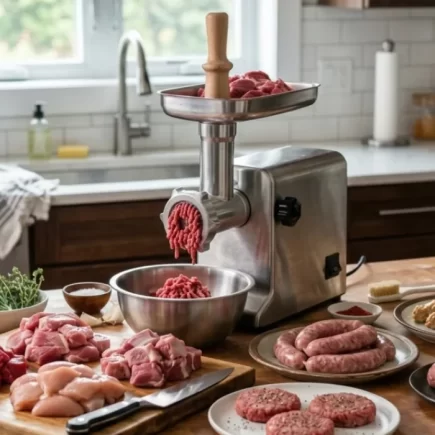
Proper assembly, chilled meat and regular cleaning help keep your meat grinder running smoothly, supporting efficient grinding and consistent results. With the right care and maintenance, a dependable grinder can make home food preparation easier and more convenient. Aosom Meat Grinders are worth considering for reliable and consistent meat grinding at home.
FAQs
The right size depends on how much meat you usually process and how often you use the grinder. Smaller models suit occasional home use, while larger grinders are better for frequent or bulk preparation. Consider the grinding capacity, motor power and feeding tube size.
Meat should generally be partially frozen rather than completely solid before grinding. Chilled meat stays firmer and passes through the grinder more cleanly. Completely frozen meat can put extra strain on the motor and grinding components.
A grinder blade should be sharpened when it starts producing uneven or mushy mince instead of a clean grind. The frequency depends on how often the grinder is used and the type of meat processed. Replace the blade if sharpening no longer restores its cutting performance.