





















Burgers on Friday, homemade sausage on Sunday, fresh salsa for game day. Both appliances can help with food preparation, but they are designed for very different jobs. Choosing the wrong tool can lead to uneven textures, overworked meat or unnecessary preparation time. Here is how they compare and where each one fits best.
Meat Grinder vs Food Processor: Key Differences
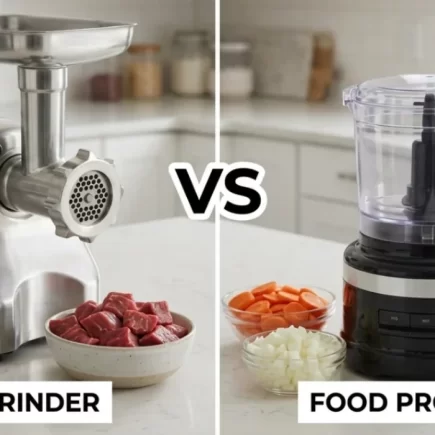
A meat grinder is specifically designed to turn chunks of meat into evenly sized mince. A food processor uses a high-speed blade or discs to chop, slice, shred or blend ingredients. Their different mechanisms affect texture, capacity and the types of recipes they handle best.
| Feature | Meat Grinder | Food Processor |
| Main job | Grinding meat and preparing sausage. | Chopping, slicing, shredding and mixing. |
| Cutting method | Auger, knife and grinding plate. | S-blade or processing discs. |
| Meat texture | Defined and consistent. | Depends on processing time. |
| Large batches | Suitable for continuous feeding. | Limited by bowl capacity. |
| Fat handling | Designed for chilled meat and fat. | Can smear fat if overprocessed. |
| Vegetable preparation | Limited. | Excellent. |
| Sausage making | Can support stuffing attachments. | Not designed for stuffing. |
How a Meat Grinder and Food Processor Work
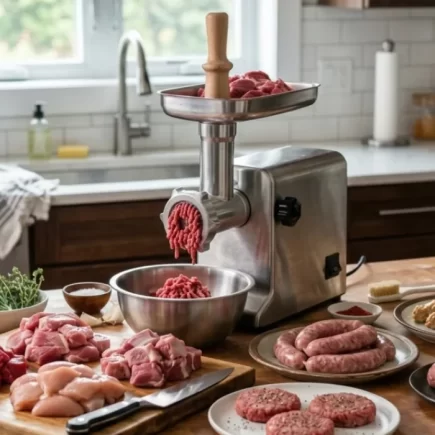
A meat grinder uses a feed-and-cut system. Meat enters the hopper and is pulled forward by a rotating auger. It then reaches a knife that cuts it against a perforated grinding plate, producing a consistent mince as the meat passes through.
A food processor works differently. Ingredients sit inside a bowl while a blade rotates at high speed. Short pulses can produce a coarse chop, while longer processing creates a much finer mixture. The result therefore depends heavily on processing time and ingredient placement.
Auger and Grinding Plates VS S-Blade
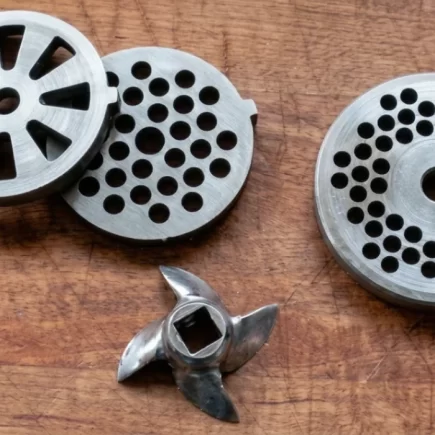
The grinder’s auger moves meat steadily towards the cutting assembly, while the rotating knife cuts it against the selected plate. Plate openings determine the size of the finished mince, allowing you to adjust the texture for different recipes.
A food processor relies primarily on an S-shaped blade positioned near the bottom of the bowl. It works especially well for vegetables, herbs, nuts and sauces. With meat, however, the blade chops rather than producing the distinct strands associated with a dedicated grinder.
Grinding Meat vs Processing It
Grinding is useful when you want individual pieces of meat that retain a defined texture after cooking. The combination of the knife and plate creates a more controlled result, which is useful for burgers, sausages and other minced-meat recipes.
Food processing is more appropriate when meat is only one part of a broader mixture. Short pulses can chop cooked or raw meat, but excessive processing can make it dense and paste-like. Careful timing is therefore important when using a processor for meat.
Texture, Fat and Consistency
The biggest difference appears in how each appliance handles meat, particularly when fat is involved. A meat grinder cuts chilled meat and fat through a selected plate, giving you greater control over the size and consistency of the mince. A food processor chops meat with a rapidly spinning blade, which can break down the meat unevenly and smear softened fat if it is processed for too long.
| Factor | Meat Grinder | Food Processor |
| Texture | Produces defined pieces with a consistent grind. | Can range from coarse pieces to a finer, paste-like mixture. |
| Fat handling | Chilled fat passes through the plate with the meat. | Fat can soften and smear around the blade during extended processing. |
| Consistency | Plate size provides direct control over the grind. | Depends mainly on pulse duration and ingredient placement. |
| Meat structure | Maintains a distinct minced texture. | Can break down the meat structure more extensively. |
| Best for | Burgers, sausages and controlled mince. | Chopped meat mixtures and recipes requiring finer processing. |
Grinding Plate Sizes
A grinder also gives you more control over the final texture through interchangeable plates.
| Plate Size | Texture | Best For |
| 3 mm (fine) | Fine and compact. | Fine sausage, meatballs. |
| 4.5–6 mm (medium) | Balanced and defined. | Burgers, sausages, meatloaf. |
| 8–10 mm (coarse) | Chunky and pronounced. | Chilli, ragù, coarse sausage. |
Tip: Keep the meat and fat cold before processing. This helps the grinder produce cleaner cuts and reduces the chance of fat becoming soft and smeared.
Best Uses: Burgers, Sausages and Salsa
The most suitable appliance depends on what you are preparing. A grinder is built around meat preparation, while a processor is more useful when chopping or combining a wider range of ingredients.
- Burgers: A grinder provides control over the mince size and finished texture.
- Sausages: A grinder is suitable for preparing the filling and can work with stuffing attachments.
- Meatballs and pâté: Either appliance can be used, depending on the texture required.
- Salsa and dips: A food processor quickly chops and combines vegetables, herbs and other ingredients.
Batch Size, Speed and Processing Capacity
A grinder is practical for repeated batches because meat can be fed through the hopper continuously once it has been prepared. This makes it useful when preparing several portions for meal preparation, gatherings or freezer storage.
Food processors work within the capacity of their bowl. Larger quantities may need to be divided into batches to prevent overcrowding and uneven processing. For small amounts this is rarely an issue, but larger preparations can require additional cycles.
Versatility: What Else Can You Make?
A food processor is designed for a broad range of kitchen tasks, including chopping vegetables, preparing sauces, shredding ingredients and mixing certain doughs. Its versatility makes it useful as an everyday preparation appliance.
A grinder is more specialised, but its capabilities can extend beyond basic beef mince depending on the model and attachments.
- Grinder: Ground chicken, turkey, pork and lamb
- Grinder: Fresh sausage mixtures and customised burger blends
- Grinder: Some models can process vegetables or other ingredients with suitable attachments
- Processor: Hummus, pesto, slaws, sauces and dough
The better fit depends on whether your priority is specialised meat preparation or a wider range of everyday kitchen tasks.
Motor Power, Capacity and Build Quality
Motor power alone does not determine how well an appliance performs. A grinder needs sufficient torque to move dense, chilled meat through its cutting assembly, while a processor relies on high-speed blade movement to chop and blend ingredients.
| Spec | Meat Grinder | Food Processor |
| Main power requirement | Steady torque. | High-speed rotation. |
| Capacity | Hopper-fed system. | Bowl capacity. |
| Common components | Metal or stainless-steel cutting parts vary by model. | Plastic or glass bowl with steel blade. |
| Designed for | Dense meat and repeated grinding. | Chopping, slicing, mixing and blending. |
Tip: When comparing models, consider the construction of the cutting components, gearbox and housing rather than judging performance by wattage alone.
Attachments, Grinding Plates and Sausage Stuffers
A meat grinder can offer different preparation options through interchangeable plates and accessories. Fine, medium and coarse plates allow you to alter the texture, while stuffing tubes can simplify homemade sausage preparation.
Food processors generally focus on preparation accessories rather than meat-specific attachments. Depending on the model, these may include slicing, shredding and dough-processing tools.
- Grinder extras: Multiple plates, stuffing tubes and specialised attachments.
- Processor extras: Slicing discs, shredding discs and dough blades.
Always check the included accessories because attachments and compatibility vary between models.
Cleaning, Dishwasher-Safe Parts and Storage
Raw meat requires prompt cleaning, particularly around components that come into direct contact with food. Grinder plates, knives, augers and hoppers should be cleaned according to the manufacturer’s instructions and dried thoroughly before storage.
Food processor bowls, lids and some accessories may be dishwasher safe, although this depends on the specific model. Their larger bowls and collection of attachments can also require more cupboard space.
- Clean meat-contact parts promptly after use.
- Dry metal components completely before storing them.
- Keep attachments together to make future preparation easier.
Food Safety and Keeping Meat Cold
Ground meat requires careful handling because cutting increases the amount of exposed surface area. Keeping the ingredients cold and maintaining clean equipment can help reduce food-safety risks during preparation.
- Keep raw meat properly chilled until it is ready to process.
- Chill cubed meat and grinder components when appropriate for the recipe and appliance.
- Keep raw meat separate from ready-to-eat ingredients and surfaces.
- Cook ground beef and pork to 160°F (71°C), and ground poultry to 165°F (74°C).
- Wash food-contact surfaces and equipment thoroughly after handling raw meat.
For specific food-safety requirements, follow guidance from your local food-safety authority.
Price, Value and Long-Term Use
The cost of either appliance varies considerably depending on capacity, construction, attachments and features. Basic models can be relatively affordable, while heavy-duty machines are designed for more demanding use.
Value ultimately depends on how often you will use the appliance. A dedicated grinder can make sense for households that regularly prepare burgers, sausages or large quantities of mince. A food processor may provide greater day-to-day value when chopping, blending and slicing are more common tasks.
Meat Grinder vs Food Processor: Which One Do You Need?
The right appliance depends on the recipes and preparation methods you use most often. A meat grinder is designed around controlled meat preparation, while a food processor offers broader functionality across everyday kitchen tasks.
- Get a meat grinder if you regularly make burgers, sausages or large batches of mince.
- Choose a food processor if chopping, slicing, shredding, blending and dough preparation are higher priorities.
- Consider both if you frequently prepare ground meat as well as a wide range of other ingredients.
Both appliances have their place in the kitchen, but they suit different types of food preparation. A food processor is useful for everyday chopping and blending, while a Meat Grinder gives you greater control over the texture of fresh mince. If grinding meat is part of your regular cooking routine, Aosom is worth considering when choosing the right equipment for your kitchen.
FAQs
Meat can become mushy when it is processed for too long or when the ingredients become too warm. The high-speed blade breaks down the meat structure quickly. Using chilled meat and brief pulses can help produce a more controlled texture.
The best method depends on the quantity and texture required. A meat grinder provides consistent mince and allows you to select different grind sizes. For occasional small batches, a food processor can provide a practical alternative.
Fully frozen meat is generally difficult for a food processor to process effectively and may place unnecessary strain on the blade and motor. Slightly chilled meat that is firm but not completely frozen is easier to cut. Always follow the appliance manufacturer’s instructions.