































Choosing where to place a dishwasher can affect how easily you load, unload and move around your kitchen. The location should suit your kitchen layout while leaving enough space for the appliance and its open door. This blog covers practical placement options and the key factors to consider before choosing a spot.
Common Dishwasher Placement Options
Different kitchen layouts offer different possibilities for dishwasher placement. Before choosing a location, consider how easily you can access the appliance and whether it fits comfortably into the surrounding space. The table below compares the most common options.
| Location | Main Benefit | Key Consideration |
| Beside the kitchen sink | Convenient for everyday washing. | Allow enough door clearance. |
| On a kitchen counter | Easy to reach and load. | Use a strong, stable surface. |
| On a kitchen island | Close to food preparation. | Check connection requirements. |
| On a kitchen peninsula | Makes use of available space. | Keep walkways clear. |
| On a rolling kitchen cart | Flexible for compact kitchens. | Ensure the cart is sturdy. |
| Butler’s pantry or wet bar | Keeps the main kitchen less crowded. | Check available space. |
| Laundry room | Useful when kitchen space is limited. | Avoid blocking laundry equipment. |
| Breakfast nook | Can suit compact layouts. | Protect seating and movement. |
| Dorm or shared kitchen | Makes use of communal space. | Keep shared areas accessible. |
1. Beside the Kitchen Sink
Placing a dishwasher beside the kitchen sink is a practical option for many kitchens. It keeps the main washing area together and reduces the distance between the sink and dishwasher. This can make everyday dishwashing more convenient.
You can scrape or rinse plates at the sink before placing them directly into the dishwasher. The position can also make unloading easier when clean dishes need to be transferred to nearby cupboards. Make sure the open door does not block the sink or a main walkway.
2. On a Kitchen Counter
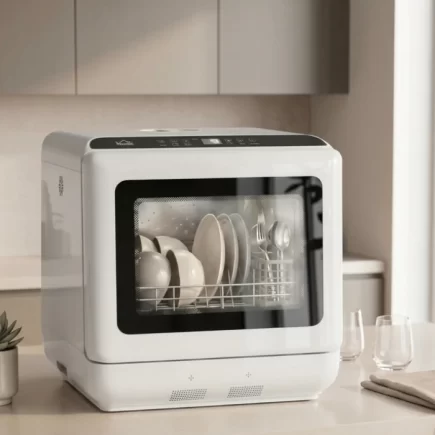
A countertop can be suitable for a compact or countertop dishwasher, especially when floor space is limited. The raised position can make loading and unloading easier because the appliance is closer to your working height. It can also avoid taking up valuable cabinet space.
Before choosing this location, check that the counter is strong and stable enough to support the appliance. You should also consider how much preparation space will remain available. The dishwasher should not interfere with nearby cupboards, appliances or other essential kitchen surfaces.
3. On a Kitchen Island
A kitchen island can provide a convenient location for a dishwasher when there is sufficient space. Its position near the centre of the kitchen can make it easy to move dishes between preparation, washing and storage areas. This can work particularly well in larger kitchen layouts.
However, an island may require additional planning if suitable connections are not already available. The appliance should also have enough space around it for comfortable loading and unloading. Make sure the open door does not create an obstruction in the main kitchen walkway.
4. On a Kitchen Peninsula
A kitchen peninsula can be a useful dishwasher location when available wall or cabinet space is limited. It keeps the appliance close to the main working area while making use of an existing section of the kitchen. This can be especially useful in open-plan layouts.
Check the space around the peninsula before choosing this position. The dishwasher door should open fully without blocking a walkway or preventing nearby cabinets from being used. Leave enough room for comfortable loading and unloading.
5. On a Rolling Kitchen Cart
A sturdy rolling kitchen cart can provide a flexible option for a compact dishwasher. This arrangement may suit smaller kitchens where permanent cabinet or floor space is limited. It can also make better use of space that needs to remain adaptable.
The cart must be strong and stable enough to support the appliance securely. Its position should allow the dishwasher to be used without creating an obstruction. Make sure any required connections can be accommodated safely without restricting movement.
6. In a Butler’s Pantry or Wet Bar
A butler’s pantry or wet bar can be a convenient location when there is sufficient space for a dishwasher. These areas are often close to food preparation and storage, making them suitable for handling dishes. They can also help keep the main kitchen less crowded.
Consider how easily the dishwasher can be accessed from the main kitchen. There should be enough room to open the door fully and move around the appliance. Nearby shelves, cabinets and work surfaces should remain easy to access during everyday use.
7. In a Laundry Room
A laundry room can be an alternative location when suitable space is unavailable in the kitchen. This option may be practical when the room has a utility sink or other suitable facilities nearby. However, the dishwasher should fit without disrupting normal laundry activities.
Before choosing this location, check the following:
- Space around the washing machine and dryer.
- Access to the dishwasher when laundry is being handled.
- Available room for opening the dishwasher door.
- Clear access to storage and utility areas.
- Safe movement through the room.
8. In a Breakfast Nook
A breakfast nook may work for a compact dishwasher when there is enough unused space. This can be useful in smaller kitchens where traditional dishwasher locations are already occupied. However, the position should not interfere with the primary purpose of the dining area.
Consider how much space is available around the table and seating. The dishwasher door should be able to open without blocking chairs or creating an obstruction. Leave enough room for people to move comfortably around the area.
9. In a Dorm or Shared Kitchen
A dorm or shared kitchen may have limited space, so careful placement is important. The dishwasher should fit into the existing layout without taking over a shared preparation or washing area. Its position should also be convenient for everyone who uses the kitchen.
A suitable shared-kitchen location should provide:
- Easy access for different users
- Clear movement around the appliance
- Enough space for loading and unloading
- Minimal interference with preparation areas
- Convenient access to nearby storage
Where Not to Place a Dishwasher
Not every space that can physically accommodate a dishwasher is suitable for everyday use. A poor location can restrict movement, interfere with other appliances or make loading and unloading unnecessarily difficult. The surrounding kitchen should remain functional when the dishwasher is open.
Avoid placing a dishwasher in an area with:
- Insufficient space for the appliance or open door.
- An unstable or unsuitable supporting surface.
- Restricted access to nearby cabinets or drawers.
- Heavy foot traffic directly in front of the appliance.
- Excessive heat or moisture.
- Poor access to the required connections.
- Interference with other kitchen appliances.
Think about the space required when the dishwasher door is fully open. A location may appear suitable when the appliance is closed but become difficult to use once the racks are pulled out. Always consider the surrounding space as well as the appliance itself.
How to Choose the Best Place for a Dishwasher
The best location should fit naturally into your kitchen workflow rather than simply filling an available space. Think about where you normally prepare food, wash dishes and store clean tableware. Keeping these activities reasonably close together can make everyday kitchen tasks more convenient.
Use the following checklist before deciding on a location:
| What to Check | Why It Matters |
| Available space | Ensures the appliance fits comfortably. |
| Door clearance | Provides room for loading and unloading. |
| Water access | Supports the required water connection. |
| Drainage | Provides a suitable route for wastewater. |
| Electrical access | Supports safe appliance operation. |
| Nearby cabinets | Prevents doors and drawers from clashing. |
| Walkway space | Keeps movement around the kitchen clear. |
| Kitchen workflow | Makes everyday use more convenient. |
Once these points have been checked, compare the available locations based on how they fit your routine. A position that works well technically may still be inconvenient if it creates obstacles or requires unnecessary movement between different kitchen areas.
A dishwasher can simplify daily kitchen cleaning by saving time and reducing the effort needed to wash dishes by hand. For kitchens with limited space, a Countertop Dishwasher can offer these benefits while taking up less room than a full-size model. Aosom offers dishwasher options that can suit compact kitchen setups, making them worth considering when choosing a convenient place for your appliance.
FAQs
Items made from wood, delicate crystal, certain plastics and some non-stick cookware may not be dishwasher-safe. Always check the manufacturer’s care instructions before placing an item inside. High heat and strong detergents can damage unsuitable materials.
You usually do not need to fully rinse dishes before loading them. Scraping off large food particles is generally enough for modern dishwashers. Excessive pre-rinsing can also waste water without providing much additional benefit.
Cleaning the dishwasher regularly helps remove food residue, grease and mineral buildup. The filter should be checked and cleaned according to the manufacturer’s instructions. A deeper cleaning can be done when you notice odours, buildup or reduced cleaning performance.