
























A sticking, squeaking, leaking, or sagging shower door is almost always caused by dirt buildup, misalignment, or worn hardware, not a faulty door. Most problems can be fixed in under an hour with a screwdriver, white vinegar, and silicone lubricant. The only exception is cracked or chipped glass, which must be replaced by a professional.
What Are the Most Common Shower Door Problems?
Shower doors usually fail in one of seven ways: sticking, squeaking, falling off the track, not closing, leaking, sagging, or a loose handle. Each problem has a distinct cause and a simple fix.
| Problem | Likely Cause | Quick Fix | Time |
| Sticking or dragging | Dirty track or dry rollers. | Clean track, lubricate rollers. | 30 min. |
| Squeaking | Dry hinges or rollers. | Silicone lubricant. | 5 min. |
| Off the track | Worn or dislodged rollers. | Realign or replace rollers. | 15–30 min. |
| Won’t close properly | Misaligned frame or worn seal. | Square the frame, adjust hinges. | 30–60 min. |
| Leaking | Worn sweep, cracked caulk, gaps. | Replace sweep, re-caulk. | 15 min + cure time. |
| Sagging | Loose or worn hinges. | Tighten or replace hinges. | 15–45 min. |
| Loose handle | Loose set screws. | Tighten set screws. | 5 min. |
What Should You Check Before Fixing a Shower Door?
Before any repair, identify your door type and confirm the actual cause. This prevents fixing a symptom, like a leak, when the real problem is a shifted frame.
- Identify whether the door is sliding, hinged, or pivot.
- Inspect the track and rollers for dirt, cracks, or flat spots.
- Check hinge and handle screws for looseness or rust.
- Examine the glass edges for chips or cracks.
- Use a level to check that the frame is level and plumb.
What Tools Do You Need to Fix a Shower Door?
Most shower door repairs need only basic hand tools and a few inexpensive replacement parts costing 5–40.
| Tool or Material | Used For |
| Flathead screwdriver | Hinges, handles, track brackets |
| Adjustable wrench | Tightening bolts |
| Silicone lubricant spray | Rollers and hinges |
| White vinegar | Cleaning tracks |
| Old toothbrush | Scrubbing tracks and hinges |
| Level | Checking frame alignment |
| Utility knife | Removing old caulk |
| Silicone sealant and caulk gun | Re-sealing the frame |
| Replacement rollers, hinges, or sweep | Replacing worn hardware |
Glass doors can weigh 40–100 lbs, so have a second person help whenever you lift or remove one.
How Do You Fix a Sticking or Dragging Shower Door?
A sticking sliding door is usually caused by soap scum and limescale in the track or dry rollers. Cleaning the track with white vinegar and lubricating the rollers fixes most cases in about 30 minutes.
How Do You Clean the Shower Door Track and Rollers?
- Lift the door up and tilt the bottom out to remove it from the track.
- Spray white vinegar into the track and let it sit for 10 minutes.
- Scrub the track with an old toothbrush.
- Rinse with warm water and dry completely.
- Wipe the rollers clean and apply silicone lubricant.
- Reinstall the door and test it.
Avoid vinegar on natural stone such as marble or travertine, as the acid can etch the surface.
When Should You Replace Shower Door Rollers?
Replace rollers if they are cracked, flat-spotted, wobbly, or still drag after cleaning. Worn rollers cannot be repaired. Replacement takes about 15 minutes with a screwdriver, and a matching roller set costs 10–25. Order using your door’s model number, since roller sizes vary by brand.
How Do You Fix a Squeaking Shower Door?
Squeaking comes from dry metal-on-metal contact at the hinges or rollers. Spray a silicone-based lubricant onto the moving parts, wait a few minutes, and wipe off the excess.
Avoid oil-based lubricants such as WD-40, which attract dirt and soap residue and make the squeak return. Wipe any overspray off the shower floor to prevent slipping.
How Do You Fix a Shower Door That Fell Off Its Track?
A sliding door that comes off its track usually has worn or loose rollers, not a broken track. Lift the door, realign the rollers, and set it back in place.
- With a helper, lift the door slightly.
- Align the rollers with the top track groove.
- Lower the door until the rollers seat properly.
- Check the bottom guide sits inside the lower track.
- Slide the door open and closed to test.
If the door derails again, adjust the roller height screws. If it still slips, replace the rollers.
How Do You Fix a Shower Door That Will Not Close Properly?
A shower door that won’t close fully is almost always misaligned rather than broken. Check the frame with a level first, then adjust the frame or hinges before replacing any parts.
How Do You Fix a Misaligned Shower Door Frame?
- Hold a level against the top track and both sides of the frame.
- Loosen the frame or top track screws slightly.
- Gently shift the frame until the level reads true.
- Retighten the screws.
How Do You Adjust the Shower Door Gap?
- Loosen the hinge screws slightly.
- Shift the door a few millimeters left or right.
- Retighten while checking the gap is even from top to bottom.
If the door is aligned but still won’t seal, replace the worn magnetic strip or gasket on the closing edge.
How Do You Fix a Leaking Shower Door?
Shower door leaks come from four sources: a worn door sweep, cracked caulk, an out-of-plumb frame, or gaps between panels. Run the shower and watch where water escapes to find the source before fixing it.
How Do You Replace a Shower Door Sweep?
- Slide or peel off the old sweep from the bottom of the door.
- Clean the glass edge with rubbing alcohol.
- Press the new sweep on until it seats firmly.
- Trim to length with a utility knife if needed.
Buy a sweep that matches your glass thickness, usually 1/4″, 5/16″, or 3/8″.
How Do You Check if a Shower Door Is Out of Plumb?
Hold a level vertically against both sides of the frame. If the bubble isn’t centered, the frame has shifted and water escapes through the gap. This needs a frame realignment, as replacing the seal alone will not stop the leak.
How Do You Re-Caulk a Shower Door Frame?
- Score the old caulk with a utility knife and peel it away.
- Clean the surface with rubbing alcohol and let it dry.
- Apply a thin, continuous bead of 100% silicone sealant.
- Smooth the bead with a caulking tool.
- Let it cure for about 24 hours before using the shower.
Caulk only the outside of the frame. The small weep holes on the inside of the bottom track drain water back into the shower and should never be sealed.
How Do You Fix a Loose Shower Door Handle?
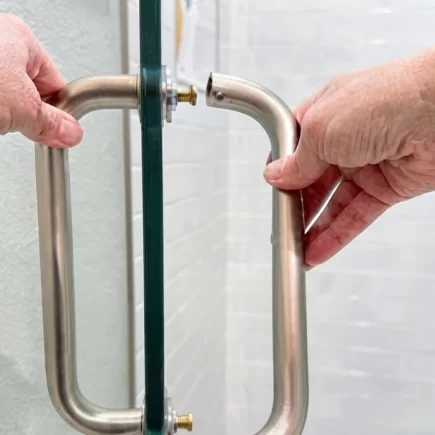
Most loose shower door handles only need their set screws tightened. The screws are usually under a decorative cap or on the underside of the handle.
How Do You Tighten a Shower Door Handle?
- Find the set screws under the cap or on the underside.
- Tighten them with a hex key or small screwdriver.
- Test the handle for wobble.
When Should You Replace a Shower Door Handle?
Replace the handle if it is cracked, the mounting points are stripped, or it still wobbles after tightening. Measure the hole spacing on your glass before buying a new one. Most handles can be replaced without removing the door.
Can You Repair Cracked or Chipped Shower Door Glass?
No. Shower doors use tempered safety glass, and any crack or chip means the whole panel must be replaced. Damage weakens tempered glass, and a chipped edge can cause the panel to shatter suddenly, even days later.
Resin repair kits are designed for car windshields and are not safe for shower glass. If you find a chip or crack, stop using the shower and call a glass professional.
How Do You Remove Mold From Shower Door Tracks?
Mold grows in shower tracks because moisture and soap residue get trapped there. A vinegar-and-water spray removes it, and drying the track regularly prevents it from returning.
- Mix equal parts white vinegar and water in a spray bottle.
- Spray the track and let it sit for 15 minutes.
- Scrub with an old toothbrush.
- Rinse and dry the track fully.
Never mix vinegar with bleach-based cleaners, as the combination releases toxic chlorine gas.
Do Sliding or Hinged Shower Doors Have Fewer Problems?
Hinged and pivot doors generally have fewer problems because they don’t rely on tracks and rollers. However, they put constant stress on the hinges, which makes sagging their most common issue.
| Door Type | Common Issues | Maintenance Level |
| Sliding | Track buildup, roller wear, derailing. | Higher, needs weekly track cleaning. |
| Hinged | Hinge wear, sagging. | Lower, fewer moving parts. |
| Pivot | Pivot pin wear, alignment. | Lower, fewer moving parts. |
Can You Fix a Shower Door Yourself or Should You Call a Professional?
Most shower door problems are DIY-friendly and take under an hour. Call a professional for damaged glass, a structurally shifted frame, or full door replacement.
| DIY-Friendly | Call a Professional |
| Cleaning tracks and rollers | Cracked or chipped glass. |
| Lubricating hinges and rollers | Structurally out-of-plumb frame. |
| Replacing rollers or a sweep | Heavy frameless door hinges. |
| Tightening hinges and handles | Full door or enclosure replacement. |
| Re-caulking the frame | Water damage to the wall or floor. |
Most shower door problems can be fixed with cleaning, realignment, lubrication or replacement of worn hardware, but damaged glass and repeated faults may make replacement a better option. When choosing a new shower door, consider its safety, sealing, style and suitability for your bathroom layout. Aosom offers practical bathroom solutions to help you find suitable options when refreshing your space.
FAQs
A well-maintained shower door can last for many years, depending on the glass, hardware and installation quality. Frequent cleaning helps prevent mineral buildup and corrosion. Replacing worn seals and hardware can also extend its usable life.
Yes, frameless shower doors are designed using tempered safety glass that is stronger than ordinary glass. However, the glass must be correctly installed and handled carefully. Any damaged panel should be assessed and replaced by a qualified professional.
Common shower door glass thicknesses include 1/4 inch, 5/16 inch and 3/8 inch. The appropriate thickness depends on the door design, size and hardware. Always follow the specifications recommended for the particular installation.