











Choosing the right patio heater depends on your outdoor space, the temperatures you experience, and how you plan to use it. Fuel type, heating power, coverage area, and installation requirements all affect how well a heater performs. Understanding these factors helps you compare suitable options, manage running costs, and create a comfortable outdoor seating area.
1. Choose the Right Fuel Type and Heating Technology
The fuel type decides how your heater runs, where you can use it, and how much upkeep it needs. Propane and natural gas heaters give strong heat but need fuel storage or a gas line. Electric infrared heaters just plug in and warm people directly, not the air around them. That matters outdoors, where wind carries warm air away fast.
- Propane: High output and portable, but tanks need refilling or swapping.
- Natural gas: Steady supply, but needs a fixed gas line.
- Electric infrared: Instant heat, no fuel, no open flame.
- Carbon fibre elements: Warm up quickly with a softer, glare-free glow.
| Fuel Type | Best For | Main Drawback |
| Propane | Large open patios. | Tank refills. |
| Natural Gas | Permanent setups. | Fixed installation. |
| Electric Infrared | Small to mid-sized patios. | I need a power outlet. |
2. Determine the Heating Power and Coverage Area
Power only helps if it matches your space. A weak heater leaves guests cold, while an oversized one wastes energy. Check the wattage or BTU rating, then compare the stated coverage area with the size of your seating zone. Wind and open sides always reduce real-world performance.
- Measure your seating area in sq.ft before shopping.
- Electric patio heaters commonly run at up to 1500W.
- Models with multiple power levels adapt to changing weather.
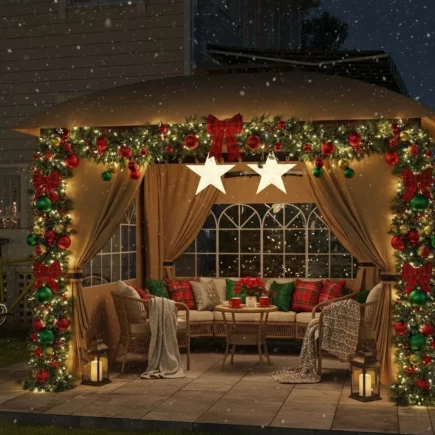
- Enclosed spaces like gazebos hold heat better than open decks.
| Power Rating | Typical Use | Suitable Space |
| 500W | Close-range warmth. | Mild evenings. |
| 1000W | Moderate warmth. | Small balcony or table. |
| 1500W | Strong warmth. | Lounge corner or dining area. |
3. Select the Best Patio Heater Type and Mounting Style
Where the heater sits affects how well it warms you and how much floor space it takes. Freestanding models can move around, while hanging and wall-mounted ones free up the floor and suit permanent spots. Pick the style that fits your layout and how often you rearrange your furniture.
- Freestanding or tripod: Easy to reposition for different gatherings.
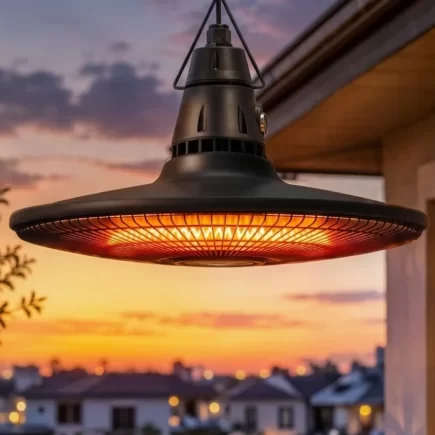
- Hanging or ceiling-mount: Saves space under pergolas and gazebos.
- Wall-mounted: Good for narrow terraces.
- Tabletop: Best for small, close-up seating.
| Style | Flexibility | Floor Space Needed |
| Freestanding | High | Medium to High. |
| Ceiling Hanging | Low (fixed) | None |
| Wall-Mounted | Low (fixed) | None |
| Tabletop | High | Very Low |
4. Check Weather Resistance for Outdoor Use
Outdoor heaters face rain, damp air, dust, and sun every season. Look for an IP rating, which shows how well the unit is sealed. IP65 means it’s dust-tight and protected against water jets, so it handles rain and splashes. Materials matter too, since powder-coated metal and aluminium resist rust far better than bare steel.
- Look for IP65 or higher for year-round outdoor use.
- Choose rust-resistant aluminium or powder-coated metal.
- UV resistance stops fading and cracking in strong sun.
- Covered areas extend the life of any heater.
| Feature | What It Protects Against | Why It Matters |
| IP65 Rating | Rain and dust. | Safe in damp weather. |
| Powder Coating | Rust and corrosion. | Longer lifespan. |
| UV Resistance | Sun damage. | Keep the finish intact. |
5. Prioritise Essential Safety Features
A patio heater runs near furniture, kids, and pets, so safety should never be an afterthought. Good models include automatic protection that kicks in when something goes wrong. Always check for recognised safety certifications and physical guards around the hot element.
- Tip-over shutoff: Cuts power or gas if the heater falls.
- Protective mesh guard: Blocks accidental contact with the element.
- Overheat protection: Stops heat damaging nearby fabric or parts.
- Safety certifications (UL, ETL, CSA): Confirm independent testing.
| Safety Feature | Risk It Reduces | Priority |
| Tip-Over Shutoff | Fire and falls. | High |
| Mesh Guard | Burns | High |
| Overheat Protection | Heat damage. | Medium |
| Certification | Product faults. | High |
6. Compare Controls and Ease of Use
You bought a heater to relax, not to keep getting up. Remote controls let you change settings from your seat, and a backup button helps if the remote batteries die. Timers are handy too, as they switch the heater off on their own so it isn’t left running.
- Remote control for on/off and heat changes from your seat.
- A push button or touch panel as a backup.
- A timer for automatic shut-off.
- Multiple heat levels for different temperatures.
| Control Type | Convenience | Backup Option |
| Manual Switch Only | Basic | None |
| Remote Only | Good | None |
| Remote + Push Button | Very Good | Yes |
| Remote + Touch Panel + Timer | Excellent | Yes |
7. Consider Portability, Weight, and Stability
Think about how often you’ll move or store your heater. A light, foldable unit is easy to take indoors for winter or shift between zones. But a lighter heater must still be stable, especially in wind. A solid base or a secure ceiling fixing keeps it steady.
- Lighter heaters are easier to move and store.
- Foldable stands save space in a garage or shed.
- A wide base improves stability on uneven ground.
- Hanging heaters stay fixed, so tipping isn’t a concern.
| Heater Type | Weight | Portability |
| Hanging Electric | Light | Fixed in place. |
| Tripod Electric | Light to Medium. | Often foldable and movable. |
| Gas Standing | Heavy | Wheeled, but bulky. |
8. Evaluate Running Costs and Energy Efficiency
Running cost depends on the fuel and how long you use the heater. A 1500W electric heater uses about 1.5 kWh per hour at full power. Multiply that by your local electricity rate to estimate the hourly cost. Adjustable power levels help a lot, because you can drop to a lower setting on milder nights.
- Wattage (in kW) × hours used × electricity rate = running cost.
- Lower heat settings cut energy use.
- Timers prevent heaters running when nobody is outside.
- Electric heaters have no fuel refills to budget for.
| Power Setting | Energy Use Per Hour | Best Used When |
| 500W | 0.5 kWh | Mild evenings. |
| 1000W | 1.0 kWh | Cool nights. |
| 1500W | 1.5 kWh | Cold weather. |
9. Check Installation Requirements and Setup
Setup varies a lot between heater types. Gas models may need a tank or a professional gas connection. Electric models need a nearby outdoor power outlet and a safe cord path. Hanging heaters need a strong mounting point at the right height, so check cord and chain length before buying.
- Confirm a weatherproof outlet is close to the heater.
- Check the cord length so it doesn’t stretch or trail across walkways.
- Use a secure ceiling or wall point for fixed models.
- Read the assembly instructions before you start.
| Heater Type | Setup Needed | Difficulty |
| Hanging Electric | Ceiling fixing, chain, nearby outlet. | Medium |
| Freestanding Electric | Assemble stand, plug in. | Easy |
| Gas Heater | Tank or gas line. | Medium to Hard. |
10. Choose the Right Size, Height, and Design
Finally, make sure the heater fits your space and style. Size and height affect how well heat reaches people, and mounting at around 6 ft is common for overhead heaters. Adjustable height gives you more control over coverage. A finish like black powder-coated metal blends neatly into most outdoor spaces.
- Check the overall dimensions against your available space.
- Adjustable height lets you tune the warmth zone.
- Pick a finish that matches your furniture and decor.
- Compare prices only after the key features are covered.
| Factor | What to Check | Why It Matters |
| Dimensions | Fit for your space. | Avoids a cramped layout. |
| Height | Fixed or adjustable. | Controls heat reach. |
| Finish | Colour and material. | Match your decor. |
A chilly evening, a comfortable seat, and a warm outdoor setting can make all the difference to how you enjoy your patio. But with so many heating options available, finding one that delivers enough warmth without unnecessary energy use can be challenging. Aosom offers outdoor living solutions, and understanding what matters in a Patio Heater can help you make a choice that fits your space and everyday needs.
FAQs
Patio heaters can make outdoor seating more comfortable during winter, particularly in sheltered areas. Their effectiveness depends on the heat output, distance from people, and exposure to wind. Infrared models are useful because they warm people and nearby objects directly.
The cheaper option depends on local electricity prices, propane costs, and how frequently you use the heater. Electric models avoid fuel tank refills, while propane heaters can provide strong heat in open spaces. Compare the cost per hour using each model’s energy consumption and fuel requirements.
Yes, but only if the heater is specifically rated for that installation and the required clearances are maintained. Gas heaters need adequate ventilation to prevent dangerous gas buildup, while electric models must meet the manufacturer’s mounting and clearance requirements. Never assume a heater is safe for an enclosed or covered area.