



























The right snow shovel makes winter clearing faster, easier, and a lot less tiring. For most driveways and sidewalks, that means a push shovel, a wide blade you slide along the ground instead of lifting. Push shovels come in two main styles, the wide manual pusher and the wheeled push shovel. This guide explains how they differ and what to check on each, so you can pick the one that fits your space.
1. Decide Between a Wide Manual Pusher and a Wheeled Push Shovel
Start here, because this one choice shapes everything else. Both styles push snow instead of lifting it, which is easier on your back. The difference is who carries the load, you or the wheels.
- Wide manual pusher: A wide, curved blade on a long handle, usually around 29, 31.75, or 37 inches across. It’s light, easy to store, and quick to grab for a few inches of snow on a driveway, sidewalk, or patio.
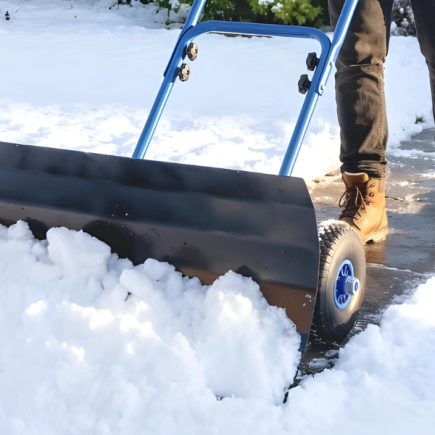
- Wheeled push shovel: The same wide blade mounted on a frame with wheels. The wheels take the weight, so you simply walk behind it. It’s the better pick for long driveways, deep snow, or anyone who wants to avoid back strain.
| Feature | Wide Manual Pusher | Wheeled Push Shovel |
| Best for | Small to medium driveways, sidewalks, patios | Long driveways, large yards, parking areas |
| Snow depth | Light to moderate snow | Moderate to deep snow |
| Effort | You push the full load | Wheels carry most of the weight |
| Maneuvering | Easy in tight spots and near steps | Best on open, flat ground |
| Storage | Hangs flat on a wall | Needs more floor or wall space |
2. Check the Features That Matter on Both Types
Whichever style you choose, these five features decide how well the shovel performs.
Blade Material
The blade does the real work, and its material decides how the shovel handles different conditions. Light, fluffy powder is easy to move with almost any blade, but wet, heavy snow and packed ice put far more stress on the metal.
- Aluminum: A strong middle ground. It’s fairly light, it won’t rust, and it moves well through wet, heavy snow.
- Steel: The heavy-duty Metal Snow Shovel choice for packed snow and ice. It’s extremely durable, but it adds weight, so it suits wheeled models best.
Blade Edge
A 29 to 37 Inch Metal Blade Snow Shovel covers a lot of ground, so its edge touches nearly every inch of your driveway or walkway.
- Metal edge: An aluminum blade with a galvanized steel edge scrapes packed snow clean and can even break up thin ice. It also holds up on rough concrete and asphalt for years.
- Delicate surfaces: On wooden decks, stone pavers, or painted surfaces, go easy on the pressure and let the blade glide so the metal doesn’t leave marks.
Blade Shape
On a wide blade, shape matters as much as size. High side walls keep snow from spilling off the ends as you push, and a gentle curve helps the snow roll forward instead of packing up under the edge.
3. What to Check on a Wide Manual Pusher
A wide manual pusher depends on you for every pass, so comfort and control matter most.
- Light, sturdy build: You push the full weight of the shovel and the snow, so an aluminum blade on a lightweight shaft keeps each pass easy.
- Blade width that suits your strength: A 29 inch blade is easier to push through wet snow, while a 37 Inch Snow Shovel Blade clears more ground in light snow.
- Comfortable shaft: An aluminum shaft won’t rust and is easy to steer around tight spots like cars, mailboxes, and step edges.
- Push, don’t lift: A wide blade full of wet snow gets heavy fast. Push the snow to the edge of the driveway instead of trying to scoop and throw it.
4. Get the Handle Length Right
With a wide manual shovel, you mostly push and pull the snow instead of lifting it. The right handle length lets you do that while standing up straight.
A simple rule is that the handle should reach about chest height when the blade sits on the ground. If it is too short, you will bend over on every pull that causes muscle fatigue. If it is too long, the wide blade gets hard to steer.
5. Choose the Handle Style and Features
On a wide wheeled shovel, the handle and blade settings decide how easily it steers. Check these four features before you buy.
- Adjustable handle: Most wide wheeled shovels have a handle you can raise or lower. Set it to about chest height, and everyone in the house can push while standing tall.
- Ergonomic shape: A handle designed to keep you upright eases the strain on your lower back. On a wheeled shovel, the wheels carry the snow, so you just guide the blade.
- Adjustable blade angle: Many wheeled shovels let you set the blade at several angles. Angle it, and the snow rolls off to the side as you walk, so you never have to stop and throw it.
- Comfortable grip: Look for a grip that’s easy to hold in bulky winter gloves, with a textured surface that won’t slip when your gloves get wet.
6. Pay Attention to Weight and Shaft Material
On a wide wheeled pusher, you never lift the shovel. The wheels carry the weight, so a sturdy frame matters more than a light one. Extra weight can even help keep the blade down on packed snow.
- Steel: The heavy-duty choice. A powder-coated steel shaft is very strong and stands up to wet, heavy snow.
- Aluminum: Lighter and easier to steer. An aluminum shaft does not rust, and it is easier to move around tight spots.
7. Consider Wheeled Shovels for Flat Areas
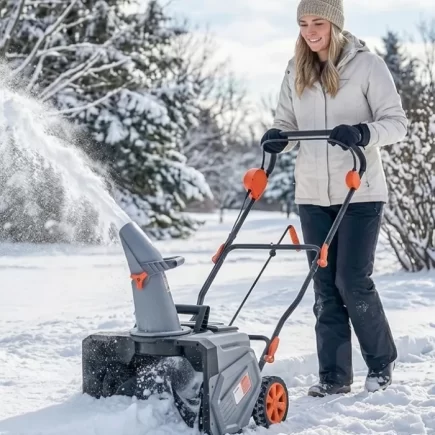
If you clear a large driveway, yard, or parking area, a wheeled snow shovel is worth a look. You push the snow ahead of you instead of lifting it, which takes a lot of strain off the back. On narrow paths and stairs, though, a classic handheld shovel is still the better tool.
8. Check Storage and Portability
A wide 29 to 37 inch snow shovel a home between storms, so think about where it will go before you buy. Most people keep theirs in the garage, the shed, or a corner by the back door, and that space fills up fast once the car, bikes, and lawn tools are in.
- Wide manual pusher: It’s the easier one to store. Hang it flat on a wall hook to keep it off the floor and stop the blade from bending.
- Wheeled push shovel: It takes more room because of the frame and wheels. Measure the space first, and look for a telescoping or detachable handle that makes it shorter for storage.
Best Snow Shovel for Common Situations
Not sure where to start? Find the situation below and see which shovel fits it best..
| Snow Shovel | Best For |
| Wheeled snow shovel with an adjustable blade | Large driveways, yards, and anyone with a sore back |
| Wide snow pusher with a 29 to 37 inch blade | Flat driveways and sidewalks with light snow |
| Shovel with a strong steel edge | Packed snow and thin ice |
| Aluminum scoop shovel with a smaller blade | Wet, heavy snow you need to lift |
Common Mistakes When Choosing a Snow Shovel
Even a good shovel can feel like the wrong one if it doesn’t fit the way you clear snow. These are the mistakes that need to be considered.
1. Choosing a Blade That Is Too Wide
A wide 29 to 37 inch blade is great for pushing snow down a driveway, but it is the wrong tool for lifting. Fill it with wet snow and every scoop gets heavy fast. If you need to clear steps or toss snow onto a pile, pair your wide pusher with a smaller lifting shovel.
2. Buying a Shovel That Is Too Heavy
A heavy handheld shovel wears you out long before the job is done, because you lift its weight on every scoop. Keep handheld shovels light, and save heavier steel models for wheeled or push-style shovels, where the ground carries the load.
3. Ignoring Handle Comfort
A handle that is too short makes you bend over on every pass, and a grip that is too small is hard to hold with winter gloves on. Check that the handle reaches about chest height and that the grip feels secure in gloved hands.
4. Using the Same Shovel for Every Condition
Light powder, wet slush, and packed ice all behave differently. A shovel that glides through fresh powder may struggle with ice. If your winters bring a mix, a wide pusher with a steel edge for the driveway and a smaller shovel for the steps will cover most conditions.
Bringing the Right Snow Shovel Home
The right snow shovel starts with knowing your snow and your surface. Pick a wide blade with a strong metal edge, set the handle to chest height, and you’ll clear your driveway faster with less strain on your back.
Don’t wait for the first big storm to find out your old shovel can’t keep up. The Aosom collection of wide manual snow shovels comes with 29 to 37 inch blades and sturdy metal edges, so you clear more of your driveway with every pass. Pick yours now and be ready before the snow starts falling.
FAQs
Neither is better for every job. Plastic is lighter and works well for light, fluffy snow. Metal is sturdier and holds up much better against wet, heavy snow, packed snow, and ice. If your winters bring more than a light dusting, a metal shovel is usually the safer long-term choice.
A standard snow shovel has a smaller, deeper blade made for scooping and tossing snow. A snow pusher has a wide, curved blade that you push along the ground instead of lifting. Pushers clear large, flat areas faster, while shovels work better on steps and for throwing snow onto a pile.
For large driveways and frequent snow, yes. The wheels carry the weight of the snow, so you can clear more ground with far less strain on your back and arms. For a short sidewalk or small patio, a wide manual pusher is usually enough
Coat the blade with a thin layer of silicone spray, car wax, or cooking spray before you start. This makes wet, sticky snow slide right off, so you don’t have to stop and knock it loose. Reapply it every few uses, especially during heavy, wet storms.