


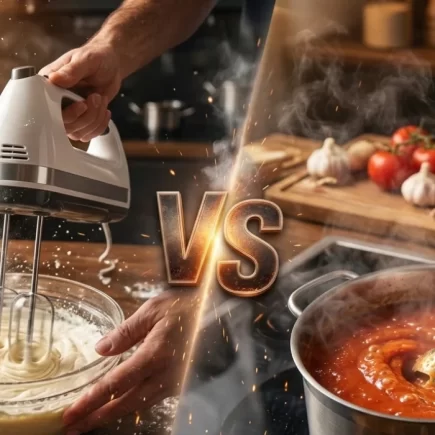




















Choosing between a hand mixer and an immersion blender depends on the textures you want to create and the way you prepare food. A hand mixer is ideal for whipping cream, beating eggs, and mixing cake batter, while an immersion blender turns soups, sauces, and soft ingredients into smooth purées. Understanding how these appliances differ can help you choose the right tool for your kitchen.
Quick Summary
| Feature | Hand Mixer | Immersion Blender |
| Mechanism | Rotating beaters | Rotating blades. |
| Primary function | Mixing, whipping, beating. | Blending, puréeing. |
| Whipped cream and egg whites | Excellent | Limited, needs whisk attachment. |
| Cake batter and frosting | Very good | Generally unsuitable. |
| Thick dough | Limited, model-dependent. | Not recommended. |
| Soups and sauces | Unsuitable | Excellent |
| Smoothies and purées | Unsuitable | Good with suitable ingredients. |
| Ice and hard ingredients | Unsuitable | Model-dependent. |
| Cleaning | Removable beaters. | Blade guard needs care. |
| Best for | Baking | Soups, sauces, blending. |
What Is a Hand Mixer?
A hand mixer is a handheld electric appliance with two removable beaters. It combines ingredients in a bowl and works air into mixtures that need a light, fluffy texture. It has no cutting blades, so it can’t purée food.
Best for:
- Whipping cream and egg whites.
- Cake batter, cookie dough, and pancake mix.
- Frosting, buttercream, and fillings.
What Is an Immersion Blender?
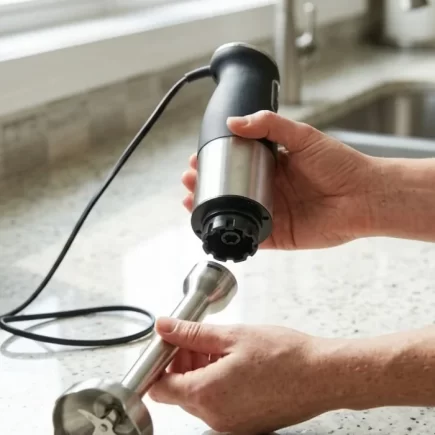
An immersion blender has a motorized handle and a long shaft with a blade guard. You put it straight into a pot, bowl, or cup, so there’s no need to transfer food to a countertop blender.
Best for:
- Creamy soups blended in the pot.
- Sauces, dips, and dressings.
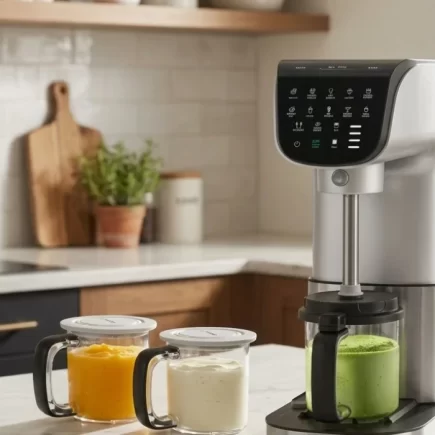
- Small smoothies and vegetable or fruit purées.
Hand Mixer vs Immersion Blender: Key Differences
1. Function and Results
A hand mixer is built for mixing, beating, and whipping. Its beaters move through the mixture and work air into it, which is why it suits fluffy cake batter, whipped cream, and smooth frosting. The ingredients stay combined but are never broken down into a liquid.
An immersion blender is built for blending and puréeing. Its blades cut soft ingredients into fine particles and combine liquids, which is why it suits creamy soups, sauces, and fruit mixtures. Blending time and blade design affect how smooth the final texture is.
2. Design and Attachments
A hand mixer has a compact body with beaters underneath, and some models add dough hooks or a whisk. An immersion blender has a longer shaft that reaches into deep pots, and some models add a whisk, mini chopper, or beaker.
A whisk attachment doesn’t make an immersion blender a full hand mixer replacement. Check what’s included before you buy.
3. Power and Speed
Both come with variable speeds, and hand mixers often add a turbo boost. Wattage alone doesn’t decide performance. Motor quality, blade or beater design, and the ingredients matter just as much.
Ease of Use and Safety
- Hand mixer: Pick a speed and move it around the bowl. Unplug it before removing beaters or scraping the bowl.
- Immersion blender: Start on low and keep the blade guard submerged to limit splashing. For hot soup, let it stop bubbling first. Unplug it before cleaning or changing attachments, as the blades are sharp.
4. Cleaning and Storage
Hand mixer beaters detach and are easy to wash, but keep the motor housing dry and wipe it with a damp cloth. Immersion blenders need extra care around the blade guard, where residue collects. Both are compact, though immersion blender shafts and accessories can take a bit more room.
5. Durability and Price
Lifespan depends on build quality, how often you use it, and whether you stay within its limits. Overloading either motor shortens its life. Price varies with power, speed controls, accessories, and brand. Pay for the features you’ll actually use.
Pros and Cons of a Hand Mixer vs Immersion Blender
Hand Mixer
Pros
- Creates light, fluffy textures: Whips cream and egg whites into soft or stiff peaks for desserts, toppings, and baked goods.
- Mixes baking ingredients evenly: Combine cake batter, pancake mix, frosting, and cookie dough without requiring manual beating.
- Simple to clean and store: Removable beaters are easy to wash, and the compact design fits comfortably in most kitchen cabinets.
Cons
- Cannot purée ingredients: Rotating beaters cannot break down vegetables or fruit into smooth soups, sauces, and smoothies.
- May struggle with heavy mixtures: Thick dough and dense ingredients can strain the motor, depending on the model and attachment.
- Requires a separate mixing bowl: You need a suitable container for mixing, which can add to the dishes you wash after baking.
Immersion Blender
Pros
- Blends directly in cookware: Purées cooked vegetables into creamy soups and blends sauces in the same pot, reducing transfers and cleanup.
- Handles a variety of blending tasks: Suitable models can prepare dips, dressings, baby food, and small fruit purées with minimal effort.
- Offers flexible attachment options: Some models include a whisk, mini chopper, or measuring beaker for additional food preparation tasks.
Cons
- Can splash during operation: Starting at a high speed or lifting the blade above the liquid can spray hot soup or sauce onto nearby surfaces.
- Requires careful blade cleaning: Food can collect around the blade guard, so the blending shaft needs thorough cleaning after use.
- Less suitable for baking: Standard blades do not incorporate air or mix batters like beaters, making them a poor choice for cake batter, buttercream, and whipped cream.
Can One Replace the Other?
Immersion blender instead of a hand mixer: Only for light tasks, like whisking small amounts with a whisk attachment. It won’t handle cake batter or buttercream reliably.
Hand mixer instead of an immersion blender: No. Beaters can’t cut or purée, so soups, smooth sauces, and smoothies are out.
Which One Should You Buy?
- Bakers: Hand mixer. If you knead heavy dough often, consider a stand mixer instead.
- Soup and sauce lovers: Immersion blender. Look for a comfortable grip, easy speed control, and a shaft that’s simple to clean.
- Small kitchens: Pick by how you cook. An immersion blender can stand in for a countertop blender, while a hand mixer suits baking-first kitchens. Check dimensions and attachment storage.
- Tight budgets: Buy the one that covers your most frequent task. Compare accessories, motor specs, and warranty.
- Cook and bake regularly: Get both. They handle different jobs and take little space together.
Choosing between a hand mixer and an immersion blender depends on the textures you want to create and the tasks you handle most often. While a hand mixer excels at whipping cream and preparing cake batter, an immersion blender offers greater versatility for blending soups, making sauces, and creating smooth purées. For added flexibility in everyday food preparation, consider the 5-In-1 Hand Blender available at Aosom, which combines blending with other useful kitchen functions.
FAQs
Yes, an immersion blender can emulsify oil, egg yolk, and other ingredients to make homemade mayonnaise. Use a suitable blending container and keep the blade near the bottom until the mixture begins to thicken. Add oil gradually if your recipe requires it.
Yes, a hand mixer can whip cooked potatoes into a fluffy mash when used at low speed. Avoid overmixing, as the potatoes can become gluey and sticky. An immersion blender is generally less suitable because its blades can release too much starch.
An immersion blender is useful for turning cooked vegetables, fruits, and other soft ingredients into smooth baby food. Add a little cooking liquid to achieve the desired consistency. Allow hot ingredients to cool appropriately and check the texture and temperature before serving.