


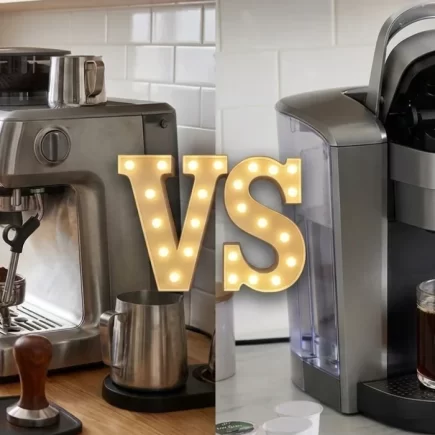











Choosing between an espresso machine and a coffee pod machine comes down to your budget, time, and coffee preferences. An espresso machine offers rich, café-style drinks but usually requires more effort, space, and investment. A coffee pod machine prioritises speed and convenience, while hybrid options offer a balance between the two.
Choose An Espresso Machine If You:
- Love bold shots, lattes, and cappuccinos.
- Enjoy the ritual of making your coffee.
- Want more control over flavor.
Choose A Coffee Pod Machine If You:
- Want a fast, consistent cup every time.
- Prefer minimal cleanup.
- Share a kitchen with people who like different drinks.
Espresso Machine vs Coffee Pod Machine at a Glance
The table below gives you a quick snapshot of how the two stack up on the factors buyers care about most. Use it as a starting point, then read on for the details behind each number. Costs are rough averages and will vary by model, beans, and pod brand.
| Feature | Espresso Machine | Coffee Pod Machine |
| Typical price | 100–1,500+ | 80–250 |
| Brew time | 25–30 sec per shot, plus prep | Under 1 minute |
| Flavor | Bold, rich, crema on top | Smooth, milder |
| Drink variety | Espresso, lattes, cappuccinos, Americanos | Drip-style coffee, tea, cocoa |
| Learning curve | Moderate to steep | Very low |
| Cost per cup | About 0.40–0.90 | About 0.50–1.00 |
| Lifespan | 5–10+ years | 3–5 years |
How Each Machine Works
Brewing method: An espresso machine uses a pump to push water heated to about 195–205°F through finely ground, tightly packed coffee. That high pressure pulls out concentrated flavor and oils in roughly 30 seconds. A Coffee pod machine pierces a sealed pod and pushes hot water through at much lower pressure, so the result is closer to drip coffee than true espresso.
| Brewing Detail | Espresso Machine | Coffee Pod Machine |
| Water pressure | About 9 bars | Low (pump-driven) |
| Water temperature | 195–205°F | About 192°F |
| Coffee format | Fresh-ground beans | Sealed pod |
| Output | 1–2 oz concentrated shot | 6–12 oz brewed cup |
Freshness of ingredients: With an espresso machine, you can grind whole beans right before brewing, which locks in aroma and flavor at their peak. Coffee pods are sealed for convenience, but the coffee inside was ground weeks or even months earlier. Pods deliver consistency every time, though they rarely match the vibrancy of freshly ground beans.
Taste and Coffee Quality Compared
Taste and strength: Espresso is concentrated, so you get deep, layered flavor with notes of chocolate, caramel, or fruit, depending on the beans. Coffee pod machine coffee is smoother and lighter, which many people find easier to sip all morning. Even “bold” pods rarely match the intensity of a real espresso shot.
Crema and body: Crema is the golden foam that forms when pressurized water emulsifies coffee oils. It adds silky texture and rich aroma, and it’s a hallmark of quality espresso. Coffee pod machine brewers don’t produce true crema, so the body is thinner, cleaner, and more like standard drip coffee.
| Quality Factor | Espresso Machine | Coffee Pod Machine |
| Flavor intensity | High | Mild to medium. |
| Crema | Yes | No |
| Body | Thick, syrupy. | Light, clean. |
| Caffeine per serving | About 63 mg per 1 oz shot. | About 75–150 mg per 8 oz cup. |
Espresso is stronger per ounce, but a full coffee pod machine mug often contains more total caffeine. If you’re watching your intake, compare by serving size rather than strength. A double shot lands around 125 mg, which is close to a small pod-brewed cup.
What Drinks Can You Make?
Drink variety: Espresso machines are the foundation of nearly every café menu, from ristrettos to flat whites. Coffee pod machines cover the everyday basics well, including regular coffee, tea, and hot cocoa. Newer models also offer specialty pods that stretch the menu a bit further.
| Drink | Espresso Machine | Coffee Pod Machine |
| Espresso shot | Yes | No |
| Latte / cappuccino | Yes, with a steam wand. | Yes |
| Americano | Yes | Similar (strong brew). |
| Standard mug of coffee | Via Americano. | Yes |
| Tea / hot cocoa | No | Yes, with pods. |
Milk frothing: A steam wand lets you texture milk into the silky microfoam that lattes and flat whites depend on. It takes practice, but the results are true café quality. Coffee pod machine’s models use a handheld or built-in frother, which is much easier but produces lighter, less velvety foam.
Customization and control: Espresso lets you adjust nearly every part of the process, which is exciting if you love tinkering and overwhelming if you don’t. The coffee pod machine keeps things simple with cup size and strength settings. Neither approach is better; it depends on how hands-on you want to be.
Espresso variables you can tweak:
- Grind size
- Dose (how much coffee you use)
- Water temperature
- Shot time
Pro tip: If your shots taste sour, your grind is likely too coarse and the water is rushing through. If they taste bitter, the grind is probably too fine. Change one variable at a time, and give each adjustment a few shots before judging.
Ease of Use, Speed, and Daily Routine
Ease of use and learning curve: Coffee pod machine is nearly foolproof: insert a pod, press a button, and you’re done. Espresso takes real practice, and most beginners need a week or two of trial and error before their shots taste right. The payoff is a drink you can’t get from a pod.
Speed: A coffee pod machine delivers a cup in under a minute, start to finish. Espresso machines need warm-up time, plus grinding, tamping, brewing, and cleanup. A full latte routine takes about five minutes, which feels long on a rushed weekday morning.
| Routine Step | Espresso Machine | Coffee Pod Machine |
| Warm-up | 30 sec to 15 min. | About 1 min. |
| Prep | Grind, dose, tamp. | Insert pod. |
| Brew | 25–30 sec. | 1 min or less. |
| Total (latte) | About 5 min. | About 2 min. |
Household fit: Your household’s habits matter as much as your own taste. A machine that one person loves can sit unused if everyone else finds it too fussy. Here’s how each option matches common situations:
- Solo drinker who loves lattes: Espresso machine
- Family with mixed tastes: Coffee Pod Machine
- Busy mornings, no patience for prep: Coffee Pod Machine
- Weekend coffee enthusiast: Espresso machine
Size, Noise, and Kitchen Fit
Before you fall for a machine, check that it actually fits your kitchen and your routine. Size, sound, and safety all shape how much you’ll enjoy using it every day. This table covers the basics.
| Factor | Espresso Machine | Coffee Pod Machine |
| Counter footprint | Larger, especially with a grinder | Compact |
| Noise level | About 50–70 dB (grinders louder) | About 55–65 dB |
| Water tank size | About 34–70 oz | About 48–80 oz |
| Safety features | Auto shutoff, hot steam wand | Auto shutoff |
Counter space and design: Espresso machines are heavier and wider, and a separate grinder takes up even more room. Coffee pod machines are slim and easy to tuck under a cabinet or into a corner. Either way, choose a finish and profile that suits the rest of your kitchen.
Noise level: The pump on an espresso machine is moderately loud, and grinders can reach 80–90 dB. Coffee pod machines mostly hum quietly while they brew. If you wake up early while the rest of the house sleeps, that difference matters.
Water tank size: Larger tanks mean fewer refills, which is a real convenience in busy households. Coffee pod machine’s bigger reservoirs suit families and offices well. Compact espresso machines may need a top-up every day or two if you make several drinks.
Safety features: Both machine types offer automatic shutoff, which adds peace of mind if you rush out the door. With espresso, the steam wand and portafilter get very hot during use. Keep kids at a safe distance and let parts cool before cleaning.
Before You Buy, Measure:
- Counter width and depth.
- Cabinet clearance (for refilling the tank).
- Outlet location.
Cleaning, Maintenance, Lifespan, and Warranty
Cleanup and descaling. Espresso machines need daily rinsing, regular backflushing, and descaling every 1–3 months. Coffee pod machines are much easier: empty the pod holder, wipe the exterior, and descale every 3–6 months. Skipping descaling on either type leads to weaker coffee and shorter machine life.
| Maintenance Task | Espresso Machine | Coffee Pod Machine |
| Daily | Rinse portafilter, wipe steam wand. | Empty used pod, refill water. |
| Weekly | Backflush, clean grinder. | Wipe exterior. |
| Descaling | Every 1–3 months. | Every 3–6 months. |
| Lifespan | 5–10+ years. | 3–5 years. |
| Warranty | 1–3 years. | Typically 1 year. |
Durability and lifespan: Well-maintained espresso machines often outlast coffee pod machines, and many parts, such as gaskets and portafilters, are replaceable. Coffee pod machines are simpler, sealed units, so repairs are less common. When one fails, replacing it is usually the easier route.
Warranty and support: Most coffee pod machines come with a 1-year limited warranty. Espresso machines range from 1 to 3 years, and premium brands often add repair support and parts availability. Read the fine print, since some warranties exclude damage from mineral buildup.
Maintenance tips:
- Use filtered water to improve taste and slow mineral buildup.
- Never skip descaling, even if the machine looks clean.
- Replace the water in the tank daily.
Environmental Impact: Pod Waste vs Coffee Grounds
Single-use pods create more packaging waste, even though many coffee pod machine pods are now labeled recyclable. You still need to peel the foil lid and separate the parts before they go in the bin, and many people skip that step. Espresso produces grounds, which are compostable and great for gardens.
| Impact | Espresso Machine | Coffee Pod Machine |
| Waste type | Compostable grounds. | Plastic pod, foil, grounds. |
| Packaging | Bulk bag of beans. | Boxes of individual pods. |
| Recycling effort | Low | Higher (separate parts). |
Ways To Cut Waste:
- Use a reusable coffee pod machine filter with your own grounds.
- Buy beans in bulk.
- Compost espresso grounds.
Which One Is Right for You? Best Choice by Lifestyle
Every kitchen and routine is different, so the right pick depends on where and how you’ll brew. This table matches each common situation to the machine that fits it best.
| Situation | Best Pick | Why |
| Home | espresso for coffee lovers, coffee pod machine for mixed tastes | Flavor vs. variety |
| Office | Coffee pod machine | Speed, low mess, variety |
| RV | Compact pod machine | Low prep, easy cleanup |
| Gift | Coffee pod machine for beginners, espresso for hobbyists | Matches skill level |
Whether you prefer the convenience of pods or the richer experience of freshly brewed espresso, your daily coffee routine comes down to what suits your habits. If flavour, control and café-style drinks matter most, an Espresso Machine offers more flexibility to explore different coffee styles. For those ready to bring that experience home, Aosom has espresso machines worth exploring for your kitchen setup.
FAQs
Neither is automatically healthier, as it depends on serving size, ingredients and how much coffee you drink. Espresso is more concentrated, while a coffee pod machine typically produces a larger drink. Added sugar, cream and flavoured ingredients can also affect the overall nutritional value.
Regular coffee grounds are generally not ideal for an espresso machine because espresso requires a finer grind and a suitable coffee dose. Using the wrong grind can affect extraction and produce weak or overly bitter results. Espresso-specific grounds usually provide better results.
Coffee pods can cost more per cup than buying ground coffee in larger packs. However, they can reduce waste by providing a pre-measured amount for each brew. The overall cost depends on the pod type, brand and how often you drink coffee.