


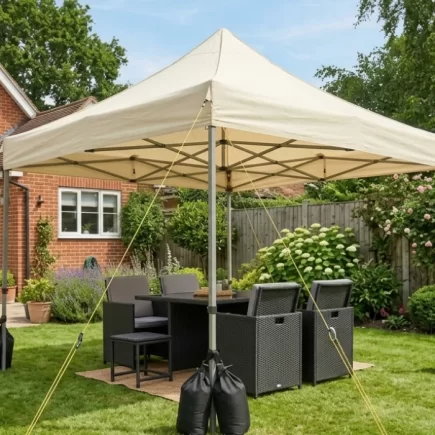














To secure a canopy tent, place a weight on every leg, anchor the frame to the ground with stakes and guy lines where the surface allows, and take the canopy down once wind exceeds the manufacturer’s limit. Securing also covers protection from rain, snow, sun, theft, and fire risk. The sections below explain each one in the order most people need it.
Quick Summary
| Threat | Best Method | Key Rule |
| Wind | Weights plus stakes and guy lines. | Use more than one anchor type. |
| Rain | Taut roof and good drainage. | Clear pooled water promptly. |
| Lightning | Building or hard-topped vehicle. | A canopy is not a shelter. |
| Snow | Take the canopy down. | Standard frames are not built for snow. |
| Sun and heat | UV-rated fabric and airflow. | Dry the roof fully before storing it. |
| Frame | Locked pins and inspected joints. | Check every leg at setup. |
| Theft | Cable locks and marked gear. | Anchors do not stop theft. |
| Fire | Distance from heat sources. | Follow venue and fire code rules. |
How Do You Secure a Canopy Tent Against Wind?
Wind is the leading cause of canopy failure because a roof catches air like a sail. Securing against it relies on three things: enough weight at the legs, a ground connection at the roof, and a clear decision on when to stop using the canopy.
How Much Weight Does a Canopy Tent Need Per Leg?
A university safety office recommends at least 40 pounds per leg for a 10×10 canopy and 50 pounds or more for larger structures. Check the manufacturer’s instructions too, and use whichever number is higher. Every leg needs weight, since one light corner gives wind a starting point to lift the frame.
| Canopy Size | Minimum Per Leg | Total for Four Legs |
| 10×10 | 40 lb | 160 lb |
| 10×15 | 50 lb or more | 200 lb or more |
| 10×20 | 50 lb or more | 200 lb or more |
| 12×12 | 50 lb or more | 200 lb or more |
Follow these handling rules when attaching weights:
- Place weights on the ground, never above head height.
- Tie weights upright to the legs, and avoid large sandbags that cannot be secured that way.
- Split heavy loads into 10 or 20 pound pieces so they are easier to lift safely.
- Add extra weight when sidewalls are attached.
What Is the Best Way to Anchor a Canopy Tent?
The most reliable setup uses two methods together. Weights at the base of each leg stop the frame from lifting, while guy lines tied from the roof corners to ground stakes resist the sideways pull. Either method alone tends to fail first, because weights can slide and stakes can pull out.
| Method | Best For | Limitation |
| Stakes | Grass and soft ground. | Pull out in loose or wet soil. |
| Screw-in ground anchors | Stronger wind, loose or sandy soil. | Cannot be used on hard surfaces. |
| Ropes and guy lines | Resisting roof pull at the corners. | Must stay taut to work. |
| Ratchet straps | Connecting legs to fixed anchor points. | Need a solid point to attach to. |
| Weights | Every surface. | Can slide if used alone. |
Drive each stake at a different angle instead of straight down, and use the holes in the feet when they are present.
How Do You Secure a Canopy on Different Surfaces?
The surface determines which anchors are possible. Where stakes cannot be driven, weights must carry the full load, so choose the method by what is under the legs.
| Surface | Best Method | Avoid |
| Grass and soil | Stakes or screw-in anchors, plus weights. | Short stakes in wet or loose soil. |
| Concrete and asphalt | Weights on every leg, straps to fixed points. | Drilling or driving stakes. |
| Wooden decks | Weights with padding under the feet. | Stakes through the decking. |
| Sand and beach | Long screw-in anchors or buried weight bags, plus weights. | Short stakes that slide out. |
How Much Wind Can a Canopy Tent Withstand?
Standard pop-up canopies are built for light wind, and the manufacturer’s rating sets the limit. That rating assumes correct anchoring and setup, so a weak setup lowers the real limit. Gusts matter more than steady wind, so check the gust forecast before setting up.
Watch for these signs that conditions are becoming unsafe:
- Legs lifting or sliding on the ground.
- The frame flexing or twisting.
- The roof flapping hard.
- Stakes pulling loose.
Placement and sidewall choices also change how much wind the canopy takes:
- Set up on the leeward side of bushes, trees, a building, or a hillside when possible.
- Leave detachable sidewalls off in the wind, since they add force against the structure.
- Some guidance places a sidewall on the windward side to block air from getting under the roof, but this works only with a well-anchored canopy.
- Roof vents provide ventilation but also give wind an opening.
How Do You Secure a Canopy Tent in Rain and Storms?
Rain adds weight to the roof, and wind-driven water finds gaps in the frame and fabric. Securing a canopy in wet weather comes down to keeping the roof taut, keeping water moving off it, and recognizing when conditions are too dangerous to stay underneath.
How Do You Prevent Water From Pooling on a Canopy Roof?
Standing water bends legs and stretches fabric, so a pooled roof can fail quickly. A taut roof with all legs fully extended creates a pitch that sheds water before it gathers.
| Cause of Pooling | Fix |
| Loose roof fabric | Re-tension every attachment point. |
| Legs not fully extended | Extend all legs to the same length. |
| Worn, stretched fabric | Replace the roof cover. |
| Water already collected | Push up gently from underneath with a broom handle. |
How Do You Keep Rain Out of a Canopy Tent?
Water-resistant fabric slows light rain, while waterproof coated fabric is better for extended wet use. Fitted sidewalls stop wind-driven rain from reaching the sides. Set up on ground that drains so water does not collect around the legs.
- Choose waterproof coated fabric for rainy use.
- Fit sidewalls snugly along the top and bottom edges.
- Treat seams and attachment points with a sealer made for the fabric type.
How Do You Protect a Canopy Tent From Snow and Cold?
Standard canopies are made for fair-weather use, so snow is a take-down situation rather than a securing one. The two sections below cover what the frame can handle and how to clear light snow if it appears unexpectedly.
Can a Standard Canopy Tent Hold Snow?
Most standard canopies are not designed for snow loads, and wet snow is heavy. Thin legs and light fabric cannot carry sustained weight. The safest choice is to take the canopy down when snow is forecast.
- Accumulated snow can bend or collapse the frame.
- Weight on the roof adds stress to every joint at once.
- Cold weather can make fabric and plastic fittings brittle.
How Do You Safely Remove Snow From a Canopy?
If light snow settles, clear it before it packs down. Use a soft broom or push up gently from underneath, and avoid hard tools that can tear the roof.
- Clear snow early, before it accumulates.
- Avoid excessive force on the roof.
- Inspect legs and joints for bending before using the canopy again.
How Do You Protect a Canopy Tent From Sun, UV, and Heat?
Sun damages a roof gradually and makes hot days harder to manage. UV-rated fabric, airflow, and routine care reduce both problems.
How Does UV Exposure Damage a Canopy?
UV rays break down fabric fibers and the protective coating over time. Weakened fabric then tears more easily in wind and rain, so sun damage becomes a structural issue and not only a cosmetic one.
| Type of Damage | What You See | Result |
| Fading | Color loss on the roof | First visible sign of wear. |
| Material deterioration | Brittle, chalky fabric | Coating stops protecting. |
| Reduced strength | Easy tearing | Higher risk of failure in wind. |
How Do You Keep a Canopy Cool on Hot Days?
UV-rated fabric blocks more sun and reduces the heat underneath. Combine it with airflow and smart placement for the best result.
- Open roof vents and sidewalls to move hot air out.
- Face open sides away from the strongest afternoon sun.
- Set up near natural shade when possible..
How Do You Secure a Canopy Tent Frame?
The frame carries every load, so one unlocked or damaged joint puts the whole structure at risk. Frame security comes down to locking, load balance, and corrosion control.
How Do You Lock Canopy Legs and Sliders?
Extend all legs to the same length and make sure the spring-loaded pins are fully engaged. A pin that has not clicked into place can release under a gust. Use the table below as a quick inspection guide at setup.
| Part | What to Check | Action if Faulty |
|---|---|---|
| Leg pins | Fully clicked into place. | Reseat or replace the pin. |
| Sliders | Seated and not twisted. | Realign before raising. |
| Frame joints | No cracks or looseness. | Replace the damaged part. |
| Leg extension | All four legs the same length. | Readjust before weighting. |
How Do You Prevent Canopy Frames From Bending?
Most bending comes from wind exposure, uneven loads, or parts that were already damaged.
- Keep legs level and firmly planted.
- Spread weight evenly across all four legs.
- Take the canopy down before wind passes the safe limit.
- Replace bent legs and cracked joints right away instead of reusing them.
How Do You Prevent Canopy Frame Joints From Rusting?
Moisture and scratched finishes lead to rust at pins and joints. Catching corrosion early keeps the frame strong.
- Wipe the frame after wet use and let it air dry.
- Look for orange spots at pins and joints.
- Touch up bare metal with rust-resistant paint.
- Replace parts that are badly corroded.
How Do You Secure a Canopy Roof and Sidewalls?
A loose roof or flapping wall can fail before the frame does. These sections cover keeping fabric tight, controlling loose walls, and repairing damage.
How Do You Keep a Canopy Roof Tight?
Fasten every hook-and-loop strap, tie, and clip so the cover is held to the frame at all points. A loose top can blow off the frame and is much harder to catch.
- Pull the fabric evenly so no corner sags.
- Recheck attachment points after setup.
- Recheck again after gusty weather.
How Do You Stop Canopy Sidewalls From Flapping?
Flapping fabric catches wind and strains the frame, so every wall needs to be held firmly in place.
- Secure every fastening point along the top and sides.
- Add straps, clips, or ties where a wall hangs loose.
- Roll up and tie down any wall you are not using.
How Do You Repair a Torn Canopy?
The wind spreads tears quickly, so act early. Use repair patches made for canopy fabric, and match the response to the size of the damage.
| Damage | Recommended Action |
| Small tear or puncture | Patch immediately with canopy repair tape. |
| Tear near a seam or attachment point | Replace the fabric. |
| Multiple tears or large rips | Replace the fabric. |
How Do You Secure Items Under a Canopy Tent?
Loose items can become airborne in wind, and some items add fire risk. These sections cover furnishings, power, heat sources, and fire rules.
How Do You Secure Tables, Displays, and Decorations?
Keep light items from blowing away and keep heavy items stable. Distribute weight evenly so no one side of the canopy takes the full load.
| Item | Risk | Fix |
| Tablecloths | Lift in wind | Clip or weigh down the edges. |
| Papers and signs | Become airborne | Weigh down or fasten in place. |
| Tall displays | Tip over | Anchor to the frame or base. |
| Tables | Slide or collapse | Lock the legs and keep heavy items low. |
How Do You Secure Canopy Lighting and Electrical Cords?
Route cords away from walkways and keep connections dry with outdoor-rated cords and covers.
- Tape or cover any cord that crosses open ground.
- Keep cords clear of frame joints where moisture collects.
- Never run cords through standing water.
Can You Use a Grill or Heater Under a Canopy?
Generally no. Event safety guidance warns against flammable or combustible materials inside tents and canopies, and open flames add fire and carbon monoxide risk. Use a heat source only if both the canopy and equipment manufacturers allow it.
- Keep paper, fuel, and decorations well away from any heat source.
- Maintain clear distance between heat and the fabric.
- Follow the equipment manufacturer’s safety instructions.
What Fire-Safety Requirements Apply to Event Canopies?
Requirements vary by venue and location, so confirm them before the event.
- Event rules can require flame-retardant fabric with a certified label.
- Organizers may set minimum spacing between tents.
- Local fire codes apply to public or large events.
Canopy Tent Safety Checklist
| What to Check | Before Use | During Bad Weather | After Use |
| Leg weights and anchors | Yes | Yes | Yes |
| Frame joints | Yes | No | Yes |
| Roof tension | Yes | Yes | Yes |
| Sidewalls | Yes | Yes | Yes |
| Water pooling | No | Yes | Yes |
| Fabric damage | Yes | No | Yes |
| Electrical cords | Yes | Yes | Yes |
When Should You Take Down a Canopy Tent?
Take the canopy down at the first of these signs:
- Wind becomes stronger than the manufacturer’s recommended limit.
- Severe thunderstorms or lightning are approaching.
- Snow begins accumulating on the roof.
- The frame starts bending, shifting, or lifting.
- Anchors become loose or unstable.
- Water begins pooling heavily.
- Fabric or structural components become damaged.
A secure canopy makes outdoor gatherings more comfortable while helping protect against wind, rain and strong sunlight. When choosing one, look for a sturdy frame, reliable anchoring points and weather-suitable fabric. Aosom can be a practical option when you want a canopy that combines useful features with everyday outdoor use. With the right setup and regular checks, your canopy can provide a more dependable outdoor space.
FAQs
A canopy tent can last several years when it is stored properly and protected from harsh weather. Lifespan depends on the frame material, fabric quality and frequency of use. Regularly checking for tears, rust and loose joints can help extend its usable life.
A canopy tent can sometimes remain up overnight in calm, dry conditions, depending on its design and the manufacturer’s guidance. However, changing weather can increase the risk of damage. Check the forecast and secure the structure before leaving it unattended.
A canopy tent can be installed on slightly uneven ground, but the legs should remain stable and properly supported. Significant slopes can make the frame less stable and create uneven loading. Choose the flattest suitable surface available whenever possible.