


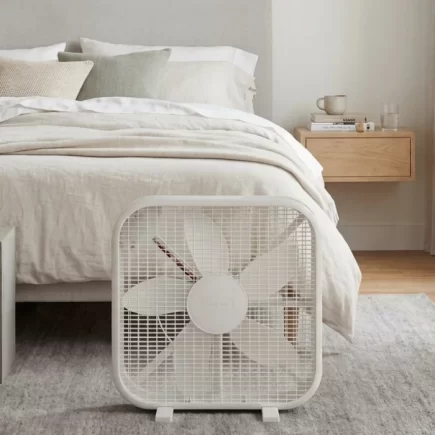



























The best place for a box fan depends on what you want it to do. A fan can remove hot air through a window, bring cooler air inside, move air between rooms, or provide direct cooling beside a bed or desk. Outdoors, it can make covered patios, porches, and shaded seating areas more comfortable.
Quick Answer: Best Places to Put a Box Fan
| Location | Best Fan Direction | Main Purpose |
| Window | Facing out. | Remove hot indoor air. |
| Window | Facing in. | Bring cooler outdoor air inside. |
| Two opposite windows | One in, one out. | Create cross-ventilation. |
| Beside a bed or desk | Facing you. | Provide personal cooling. |
| Doorway | Toward the warmer room. | Move air between rooms. |
| Staircase | Facing upward. | Move cooler air to upper floors. |
| Kitchen or bathroom window | Facing out. | Remove odours and moisture. |
| Floor | Across the wet surface. | Help dry carpets and laundry. |
| Covered patio | Facing the seating area. | Improve outdoor airflow. |
| Porch or canopy | Across the seating area. | Create a steady breeze. |
Best Places to Put a Box Fan Indoors
1. In a Window Facing Out
A box fan facing out of a window can push warm indoor air outside. This setup is useful when the room has become hot or stuffy, particularly when outdoor temperatures are lower than the indoor temperature.
- Place the fan securely in the window opening.
- Open another window or door to provide a path for replacement air.
- Close nearby gaps around the fan to reduce unwanted air movement.
- Keep curtains and other loose materials away from the fan grille.
2. In a Window Facing In
Turn the fan towards the room when the outdoor air is cooler than the air indoors. The fan pulls cooler air inside, making it useful during the evening, early morning, or other cooler periods.
Choose a shaded window where possible. Keep sun-facing windows covered to reduce heat entering the room while the fan brings in cooler air.
3. At Two Opposite Windows
Two fans can create a stronger airflow by working together. Place one fan facing in at one window and another facing out at the opposite window.
This arrangement creates a clear path for air to enter and leave the room. If you only have one fan, use it in one window and leave the opposite window open.
- Keep furniture away from the airflow path.
- Avoid blocking either fan with curtains or other items.
- Use the setup when outdoor air is suitable for ventilation.
4. Beside Your Bed or Desk
A box fan placed near a bed or desk can provide direct airflow without needing to cool the entire room. This can make personal spaces feel more comfortable during warm weather.
Place the fan on a stable surface or on the floor, then angle it towards you. Keep it far enough away to provide a comfortable breeze without creating excessive noise or discomfort.
- Use a lower speed when sleeping.
- Keep the cord away from walkways.
- Do not place the fan where it can easily be knocked over.
5. In a Doorway
A box fan in a doorway can move air from one room to another. This is useful when one room feels warmer or more stuffy than the surrounding areas.
Position the fan so that air moves towards the room that needs more circulation. Make sure the fan does not create a trip hazard or prevent people from using the doorway safely.
6. Near a Staircase
Air can feel warmer on upper floors, so a fan positioned near a staircase can help move air between levels. Place it on a stable landing or another safe area rather than directly on a step.
A fan facing upward can help move cooler air towards an upper floor. Keep the staircase clear so people can use it without hitting or stepping over the fan.
7. In a Kitchen or Bathroom Window
A box fan facing out of a kitchen or bathroom window can help remove unwanted smells, steam, and humid air. It works best when there is another opening that allows fresh air to enter.
Run the fan while cooking or after a shower when extra ventilation is needed. Keep it well away from sinks, baths, showers, splashing water, and other wet areas.
8. On the Floor for Drying
A box fan can help move air across damp carpets, laundry, or other wet surfaces. Better airflow can speed up evaporation when the surrounding conditions allow moisture to escape.
Place the fan a few feet away and aim the airflow across the wet surface. Improve ventilation by opening a window or using a dehumidifier when appropriate.
- Lift wet carpet edges where possible.
- Keep damp items spread out rather than piled together.
- Avoid placing the fan where it could come into contact with water.
Best Places to Put a Box Fan Outdoors
1. On a Covered Patio
A covered patio can provide a suitable location for a box fan because the roof helps protect it from direct rain and sunlight. Place the fan several feet from the seating area and aim the airflow towards people.
Use an appropriate outdoor-rated power source and keep the fan away from wet areas. Bring the fan indoors when it is no longer needed or when weather conditions become unsuitable.
2. On a Covered Porch
A box fan can improve airflow on a porch when natural air movement is limited. Position it so the breeze travels across the seating area rather than directly into one person’s face.
Keep the fan on a level, stable surface and protect it from rain. Secure the power cord along a safe route where it cannot become a tripping hazard.
When Should a Box Fan Face In or Out?
| Situation | Fan Direction | Why |
| Indoor air is hotter than outdoor air | Facing out. | Removes warm indoor air. |
| Outdoor air is cooler | Facing in. | Brings cooler air inside. |
| Room feels stuffy | Facing out. | Helps remove stale air |
| Kitchen has strong cooking smells | Facing out. | Moves unwanted air outside. |
| Bathroom has excess steam | Facing out. | Helps remove humid air. |
| Two opposite windows are available | One in, one out. | Creates cross-ventilation. |
How Far Should a Box Fan Be From You?
For personal cooling, start by placing the fan around 3 to 6 feet away and adjust it according to the airflow and room size. The ideal distance depends on the fan speed, its position, and how strong you want the breeze to feel.
Keep the fan at a comfortable height and angle it towards your body rather than directly at your face. If you are using it while sleeping, a lower speed can provide airflow with less noise.
How to Position a Box Fan for Different Purposes
1. To Cool a Room
Place the fan in a window when outdoor conditions are suitable for ventilation. Use an outward-facing fan to remove warmer indoor air or an inward-facing fan to bring cooler outdoor air inside.
For better airflow, open another window on the opposite side of the room. Close blinds or curtains on windows receiving strong sunlight to reduce additional heat entering the space.
2. To Improve Air Circulation
Place the fan in a doorway or hallway and aim it towards the room that feels warm or stuffy. A low or medium speed can provide steady airflow without creating excessive noise.
Keep the route between rooms clear so air can move freely. Avoid positioning the fan where people need to step over the power cord.
3. To Remove Odours and Moisture
Use a box fan facing out in a kitchen or bathroom window. The outward airflow can help move unwanted smells, steam, and humid air outside.
Provide another opening for fresh air to enter. Keep the fan away from sinks, showers, baths, and other sources of water.
4. To Dry Wet Surfaces
Position the fan a few feet from the damp area and direct the airflow across the surface. This helps move air over wet carpet, laundry, or other damp materials.
Increase ventilation where possible so moisture can escape. A dehumidifier can also help when the room has high humidity.
Where Not to Place a Box Fan
Choosing the right location is important for both airflow and safe operation. Avoid places where the fan could become wet, unstable, blocked, or damaged.
- Near water: Keep the fan away from sinks, baths, showers, pools, rain, and other wet areas.
- Near loose curtains: Fabric can move into the grille and restrict airflow.
- On unstable surfaces: Avoid chairs, uneven tables, stacked boxes, or other surfaces where the fan could fall.
- Under rugs or carpets: Do not run the power cord under a rug where it could become damaged or create a heat hazard.
- In an unsecured window: Make sure the fan is firmly positioned so it cannot fall or be knocked out.
- In busy walkways: Place the fan and its cord where people can move around safely.
- Against blocked surfaces: Leave enough space around the fan for air to move freely.
From cooling a bedroom to improving airflow between rooms, removing moisture, or creating a breeze on a covered patio, the right placement depends on your needs. When choosing a Box Fan, explore Aosom for practical options that suit different spaces and everyday cooling needs. Select the right fan and position it safely to enjoy better airflow where you need it most.
FAQs
Most box fans use relatively little electricity compared with larger cooling appliances. Energy use depends on the fan’s wattage and how many hours it runs. Using a lower speed can also help reduce electricity consumption.
A box fan can improve air circulation in a room without a window, but it cannot remove heat as effectively as when positioned near an opening. Use it to move air between rooms or circulate cooler air from another area.
Keep the fan’s front and rear sides clear of furniture, curtains and other obstructions. Position it to encourage air movement through the room rather than simply blowing against a wall. Combining it with open windows can improve ventilation.