


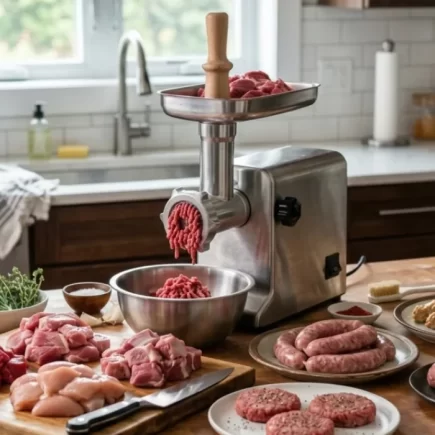
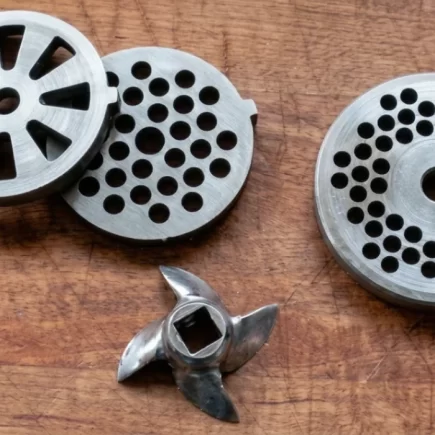

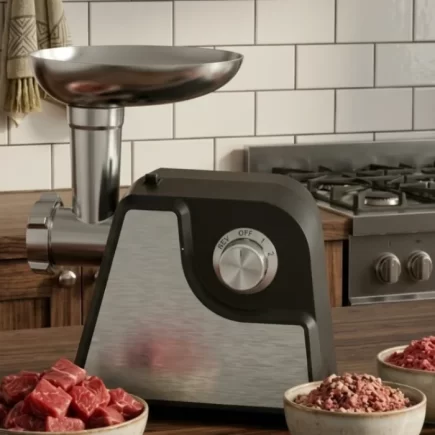


























A meat grinder’s main job is to turn larger pieces of meat into a consistent ground texture. Changing the grinding plate lets you produce a coarser or finer result depending on the recipe.
Common uses include:
- Mincing beef for burgers, chilli and tacos.
- Processing pork for sausage, meatballs and meatloaf.
- Mincing chicken or turkey for burgers and fillings.
- Preparing lamb for kebabs and koftas.
- Mincing suitable fish for fish cakes and patties.
- Blending different cuts to create custom meat mixtures.
- Preparing meat mixtures for homemade sausage.
- Creating fillings for stuffed vegetables and other dishes.
- Processing selected non-meat ingredients with compatible attachments.
The exact ingredients and attachments a grinder can handle depend on the model, so always check the manufacturer’s instructions before using it for anything other than the recommended foods.
What Types of Meat Can You Grind?
- Beef: Chuck and suitable brisket trim can be ground for burgers, meatballs, meatloaf, chilli and tacos. Grinding your own beef also lets you control the texture and fat level.
- Pork: Pork shoulder is a popular choice for homemade sausage because it provides a useful balance of lean meat and fat. Ground pork also works well in meatballs and meatloaf.
- Chicken and Turkey: Chicken and turkey can be ground for burgers, meatballs, meatloaf, fillings and other recipes. Thigh meat offers a different texture and flavour from lean breast meat.
- Lamb: Ground lamb is commonly used for kebabs, koftas, meatballs, stuffed vegetables and other seasoned ground-meat dishes.
- Fish: Some suitable grinders can process fish for fish cakes, patties and similar recipes. As fish is softer than most meats, make sure the grinder and attachment are designed for this type of food.
What Can You Make With a Meat Grinder?
A meat grinder can be used to prepare a wide range of meals. The best grind size depends on the recipe and the texture you want.
| Food | Common Meat | Typical Grind | Common Use |
| Burgers | Beef | Coarse to medium. | Burger patties. |
| Meatballs | Beef and pork. | Medium | Pasta, soups and sauces. |
| Meatloaf | Beef, pork or a blend. | Medium | Family meals. |
| Sausage | Pork, beef or a blend. | Fine to medium. | Links and patties. |
| Kebabs | Lamb or beef. | Fine to medium. | Kebabs and koftas. |
| Chili | Beef | Coarse | Chili and tacos. |
| Stuffed vegetables | Beef, pork or lamb. | Medium | Peppers and cabbage. |
1. Make Homemade Burgers
Grinding your own beef gives you more control over the cuts used in the mixture. You can choose a coarser grind for a more noticeable texture or use a finer plate for a more compact mixture.
You can also combine different cuts to create a burger blend suited to your preferred texture and richness.
2. Make Meatballs
A grinder makes it easy to combine beef, pork or other meats into a consistent mixture. After grinding, add ingredients such as breadcrumbs, eggs, herbs and seasonings according to the recipe.
3. Make Meatloaf
Ground beef, pork or a combination of meats can form the base of homemade meatloaf. Grinding the meat yourself gives you control over the cuts and texture before adding the remaining ingredients.
4. Make Homemade Sausage
A grinder equipped with a sausage-stuffing attachment can help prepare and fill sausage casings. You can choose your meat, seasonings and preferred grind rather than relying on a ready-made sausage mixture.
5. Make Kebabs and Koftas
Finely or moderately ground lamb or beef can be seasoned and shaped into kebabs, koftas and similar dishes. The appropriate grind depends on the recipe and desired texture.
6. Prepare Stuffed Foods
Ground meat works well as a filling for stuffed peppers, stuffed cabbage, dumplings and other dishes. A medium or fine grind can help produce a cohesive filling.
Can You Use a Meat Grinder for More Than Meat?
A meat grinder can be useful for more than preparing minced meat, depending on its design and available attachments. Some models can handle other food ingredients, making them useful for everyday kitchen preparation. However, different ingredients require different levels of power, texture and attachment support, so the grinder’s instructions should always be checked first.
- Vegetables: Compatible attachments can process selected vegetables for relishes, sauces, fillings and other preparations.
- Cheese: Some grinder systems can process hard cheeses with a suitable plate or attachment for pasta, sauces and casseroles.
- Breadcrumbs: A suitable grinder can turn bread into breadcrumbs for meatballs, meatloaf, coatings and other recipes.
- Fruit: Dedicated fruit and vegetable attachments can process certain fruits into sauces, purées and similar preparations.
- Nuts and Other Ingredients: Some specialised attachments can process selected nuts, dried fruits and other ingredients when recommended by the manufacturer.
What Meat Grinder Attachments Are Actually Useful?
The most useful attachment depends on what you plan to prepare. For many home cooks, interchangeable grinding plates and a sausage-stuffing attachment provide the most practical benefits.
| Attachment | Function | Useful For |
| Coarse grinding plate | Produces larger pieces. | Burgers and chili. |
| Fine grinding plate | Produces a smoother mixture. | Sausage and fine mince. |
| Sausage stuffer | Fills sausage casings. | Homemade sausage. |
| Kubbe attachment | Forms hollow meat shells. | Kubbe and stuffed preparations. |
| Vegetable attachment | Processes selected vegetables. | Relishes and vegetable mixtures. |
| Fruit/vegetable strainer | Processes selected produce. | Sauces and purées. |
You do not necessarily need every attachment. Choose accessories based on the foods you regularly prepare.
Can You Grind Wild Game With a Meat Grinder?
Yes. A suitable meat grinder can process properly prepared venison, elk and other game meat into ground meat for burgers, sausage, meatballs and other recipes.
Wild game can be considerably leaner than many store-bought meats, so recipes may require additional fat or another ingredient to improve moisture and texture.
How to Prepare Venison for Grinding
Before grinding wild game:
- Trim away unwanted connective tissue and silver skin.
- Remove damaged portions before grinding.
- Cut the meat into pieces that fit comfortably into the grinder.
- Keep the meat properly chilled during preparation.
- Grind in manageable batches.
- Refrigerate or freeze the finished ground meat promptly.
Proper temperature control is particularly important when handling raw meat. USDA recommends refrigerating perishable foods promptly and keeping a refrigerator at 40°F or below. [1]
Should You Add Fat to Venison?
Venison is naturally lean, so some recipes combine it with pork fat or another suitable fatty meat to create a juicier burger or sausage.
There is no single fat ratio that works for every venison recipe. The amount depends on what you are making and the texture you want.
Should You Grind Meat Twice?
You can grind meat twice when a finer, more uniform texture is required.
A coarse first pass creates larger pieces, while a second pass through a finer plate produces a smoother mixture. This can be useful for certain sausages, meatloaf and pâté-style preparations.
For recipes where you want a more pronounced meat texture, a single pass through a coarse or medium plate may be sufficient.
Common Meat Grinder Problems and How to Fix Them
| Problem | Possible Cause | What to Do |
| Meat smears | Meat or fat is too warm. | Chill the meat and components. |
| Uneven grind | Dull blade or unsuitable plate. | Check the blade and plate. |
| Grinder clogs | Excessive connective tissue. | Trim the meat before grinding. |
| Motor struggles | Hopper overloaded. | Process smaller batches. |
| Mixture is too fine | Fine plate or multiple passes. | Use a coarser plate. |
| Mixture is too coarse | Coarse plate. | Use a finer plate or second pass. |
If a grinder repeatedly overheats, jams or performs poorly despite proper preparation, stop using it and check the manufacturer’s troubleshooting instructions.
How to Clean a Meat Grinder Safely
- Disconnect the Grinder: Switch off and unplug the appliance before removing the tray, pusher, auger, blade and grinding plate.
- Remove Food Residue: Clear leftover meat from removable components before washing and follow the manufacturer’s disassembly instructions.
- Wash Food-Contact Parts: Clean the blade, plate, auger and other food-contact parts according to the manufacturer’s instructions.
- Clean the Housing: Wipe the main appliance housing as directed and never immerse electrical components unless approved by the manufacturer.
- Dry Components Thoroughly: Dry all washable parts completely before storage to help prevent moisture-related corrosion.
- Prevent Cross-Contamination: Wash your hands, utensils and food-contact surfaces after handling raw meat, and keep raw meat separate from ready-to-eat foods. [2]
What Can You Not Put in a Meat Grinder?
A meat grinder is not automatically an all-purpose food processor. Avoid using ingredients that your specific model or attachment is not designed to handle.
Unless the manufacturer specifically approves them, be cautious with:
- Very hard or frozen ingredients.
- Large bones.
- Excessively tough connective tissue.
- Hot ingredients.
- Very soft or watery foods.
- Ingredients that exceed the recommended capacity.
- Foods that require blending, juicing or another type of processing.
Always check the product manual before using an unfamiliar ingredient or attachment.
A Meat Grinder can make it easier to prepare burgers, sausages, meatballs, game meat and other homemade recipes with greater control over texture and ingredients. When choosing one, consider the grinding plates, attachments, capacity and the types of food you plan to prepare. Aosom offers practical options for home cooks looking for a convenient way to prepare fresh mince and homemade recipes.
FAQs
Grinding meat at home gives you more control over the cuts, texture and fat content. It can also be useful when preparing specific recipes that require a particular grind. The choice depends on convenience, freshness and how much control you want over the ingredients.
Cuts with a suitable balance of lean meat and fat generally work well in a meat grinder. Beef chuck, pork shoulder and certain poultry cuts are commonly used. The best choice depends on the recipe and the texture you want to achieve.
Meat can become stuck when it is too soft, warm or contains excessive connective tissue. Cutting the meat into smaller pieces and chilling it before grinding can help. A dull blade or incorrect assembly can also affect how smoothly the grinder operates.
References
[1] U.S. Department of Agriculture, Food Safety and Inspection Service (USDA FSIS), Keep Food Safe! Food Safety Basics.
https://www.fsis.usda.gov/food-safety/safe-food-handling-and-preparation/food-safety-basics/steps-keep-food-safe
[2] U.S. Department of Agriculture, Food Safety and Inspection Service (USDA FSIS), Safe Minimum Internal Temperature Chart.
https://www.fsis.usda.gov/food-safety/safe-food-handling-and-preparation/food-safety-basics/safe-temperature-chart