
























Choosing between an exercise bike and a treadmill comes down to your joints, your goals, and your available space. Both machines burn serious calories and build cardiovascular fitness, but they get there in very different ways. This guide breaks down the real differences so you can pick the machine that fits your body and your home.
Quick Comparison: Exercise Bike vs Treadmill
| Factor | Exercise Bike | Treadmill |
| Avg. calories burned (30 min, moderate) | 210–311 | 240–355 |
| Joint impact | Low | Moderate to high |
| Beginner safety | Higher | Lower |
| Cost | Generally lower | Generally higher |
| Footprint | Compact | Large |
| Noise level | Quiet | Moderate to loud |
Calories Burned Compared
Treadmills generally edge out exercise bikes for calorie burn because running and walking recruit more muscle groups and involve full-body weight bearing. A 155-pound person burns roughly 298 calories walking briskly for 30 minutes on a treadmill, compared to around 260 calories on a stationary bike at a moderate pace.
That gap narrows or even reverses at higher intensities. A hard spin session with heavy resistance can outpace a light jog. Your actual results depend more on effort level than on which machine you choose.
Impact on Your Joints
This is where the Exercise Bike pulls ahead for most users. Cycling is a low-impact, seated movement that keeps stress off your knees, hips, and lower back.
Treadmill running sends repeated impact forces through your joints with every stride. Walking on a treadmill is gentler than running, but it still involves more joint loading than pedaling. If you have arthritis, old injuries, or joint pain, an exercise bike is typically the safer long-term choice.
Safety for Beginners
New exercisers tend to find exercise bikes easier and less intimidating to start with. There’s no risk of tripping, and you control your pace simply by pedaling slower.
Treadmills carry a higher fall risk, especially at faster speeds or steep inclines. Beginners should:
- Start with the belt stopped before stepping on.
- Use the safety clip at all times.
- Begin at a slow, comfortable speed before increasing intensity.
- Keep water and a towel within reach to avoid awkward reaching mid-workout.
Price Ranges Compared
Exercise bikes tend to be the more budget-friendly option overall, with simpler mechanics and fewer components than a motorized machine. Treadmills usually cost more because of their motors, larger frames, and belt systems.
If budget is a major factor in your decision, a bike typically delivers more cardio value for the money. That said, prices vary widely within each category depending on build quality, features, and brand, so it’s worth comparing specific models rather than assuming one type is always cheaper.
Space and Footprint Needs
Exercise bikes are compact and easy to tuck into a corner, apartment, or shared room. Most models weigh less and take up a fraction of the floor space a treadmill needs.
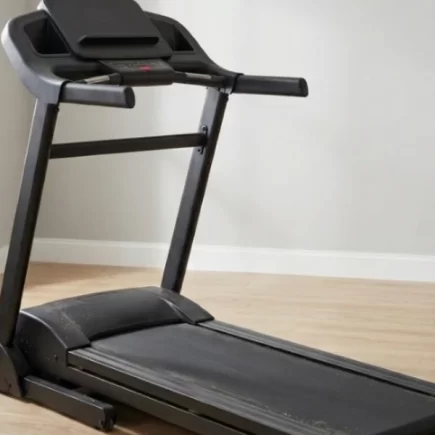
Treadmills require a longer, dedicated footprint for the running belt, plus clearance space behind and around the machine for safety. Folding treadmills help, but they still demand more storage room than a bike.
Noise Levels at Home
Exercise bikes run quietly, with most noise coming from resistance mechanisms or occasional belt friction. This makes them a solid choice for early morning workouts or shared living spaces.
Treadmills are noticeably louder due to the motor and the repeated impact of footsteps on the belt. If you live in an apartment or work out while others are sleeping nearby, a bike is the more considerate option.
Durability and Upkeep Costs
Exercise bikes have fewer moving parts prone to wear, which generally means lower long-term maintenance. Occasional lubrication and pedal checks are usually all they need.
Treadmills require more upkeep, including belt lubrication, alignment checks, and eventual motor or belt replacement. Tips to extend treadmill life include:
- Lubricate the belt every three to six months.
- Keep the machine away from moisture and direct sunlight.
- Clean dust from the motor housing regularly.
- Avoid running in the exact same belt spot every session.
Staying Motivated Long Term
Boredom is the top reason people abandon home cardio equipment, regardless of which machine they own. Exercise bikes pair well with entertainment, since your upper body stays free to read, watch shows, or join virtual cycling classes.
Treadmills offer natural variety through incline changes and interval training, which can keep workouts feeling fresh. Whichever you choose, tracking progress and setting weekly goals makes a bigger difference than the equipment itself.
Combining Both for Intervals
Owning both machines, or alternating access to them, opens the door to effective interval training. Try:
- Two minutes of steady treadmill walking followed by one minute of fast bike sprints.
- Bike warm-ups to protect joints before a treadmill run.
- Treadmill days for leg and calorie focus, bike days for active recovery.
This combination reduces overuse injuries while keeping workouts varied and challenging.
Common Mistakes to Avoid
Many beginners set resistance or incline too high right away, leading to early burnout or joint strain. Others skip warm-ups entirely, which increases injury risk on both machines.
Avoid these common errors:
- Slouching on the bike seat instead of maintaining an upright posture.
- Holding the Treadmill handrails constantly, which reduces calorie burn and throws off your gait.
- Ignoring seat or console height adjustments that affect comfort and form.
- Skipping cooldown periods after high-intensity sessions.
When to Choose an Exercise Bike vs. a Treadmill
Your body, your living situation, and your fitness goals should drive this decision more than personal preference alone. Use the guide below to match the machine to your specific needs.
Choose an exercise bike if you:
- Have joint pain, arthritis, or an injury history that makes high-impact movement risky.
- Live in an apartment or share thin walls with neighbors.
- Want a compact machine that fits in a small room or corner.
- Prefer low-maintenance equipment with minimal upkeep.
Choose a treadmill if you:
- Are training for a run, race, or sport that requires running-specific conditioning.
- Want the highest calorie burn per session at similar effort levels.
- Have a dedicated space that can fit a larger machine safely.
- Enjoy the variety of incline changes and outdoor-style walking or running.
Choosing the right home cardio equipment is about finding an option that fits naturally into your routine and keeps you motivated. Consider your available space, comfort, workout preferences, and long-term goals before making a decision. Aosom offers practical fitness options to help make building a consistent home workout routine simpler.
FAQs
Neither machine specifically targets belly fat, as overall fat loss comes from creating a calorie deficit. Both can support weight loss when used consistently alongside a balanced diet. The better choice is the one you can use regularly at a suitable intensity.
Both can strengthen the legs, but they emphasise the muscles differently. An exercise bike places greater focus on the quadriceps, hamstrings and glutes, particularly when using higher resistance. Treadmill walking or running also works these muscles while adding weight-bearing activity.
An exercise bike can be used frequently because cycling is relatively low impact. However, daily workouts should vary in intensity to give your muscles enough time to recover. Easier cycling sessions can be useful between more demanding workouts.