




















A hand blender should make quick work of soups, sauces, and smoothies without cluttering your counter. Picking the right one comes down to matching motor power, attachments, and build quality to how you actually cook. This guide breaks down every factor so you buy once and use it for years.
Choosing by Use Case
Not every hand blender is built for the same job. A light user blending the occasional smoothie needs far less machine than someone pureeing soups weekly.
- Occasional use: 200 to 300 watts is plenty for smoothies and baby food.
- Regular cooking: 300 to 500 watts handles soups, sauces, and light dough mixing.
- Heavy or frequent use: 500 watts and above powers through ice, frozen fruit, and dense vegetables.
| Use Case | Recommended Wattage | Best For |
| Light/occasional | 200-300W | Smoothies, baby food, dressings |
| Everyday cooking | 300-500W | Soups, sauces, batters |
| Heavy-duty | 500W+ | Ice, frozen fruit, thick purees |
Motor Power and Speed Settings
Wattage tells you raw power, but speed settings determine control. A single-speed blender is fine for basic tasks, but variable speed gives you finer texture control for delicate ingredients like whipped cream or emulsified sauces.
Look for at least 5 speed settings if you cook a variety of dishes. A pulse function is also worth prioritizing, since it prevents overprocessing when you want a chunkier texture. Higher wattage does not always mean better performance if the blade design is poor, so treat power and blade geometry as a package deal.
Attachments and Versatility
The blending shaft is only part of the story. Attachments turn a basic hand blender into a multi-tool that can replace a food processor for smaller jobs.
- Whisk attachment: For whipping cream, eggs, and light batters.
- Chopper bowl: For onions, garlic, nuts, and herbs.
- Beaker or measuring cup: For single-serving smoothies and sauces.
- Masher attachment: For mashed potatoes and root vegetables.
More attachments generally mean more value, but only if you will actually use them. Buying a set with six add-ons you never touch is a waste of storage space and money.
Splash Control and Design
Splashing is one of the most common complaints with hand blenders, especially when blending hot soup directly in the pot. A well-designed blending guard or bell-shaped head reduces splatter significantly.
Look for a wide base on the blending head, which keeps ingredients contained better than a narrow shaft. Anti-splash guards are a small feature that make a noticeable difference during daily use. Ergonomic grip design also matters here, since a comfortable handle reduces fatigue during longer blending sessions.
Build Quality and Safety
Materials directly affect both durability and safety. A hand blender with a stainless steel shaft will resist staining and hold up to hot liquids better than one with a plastic shaft.
| Material | Durability | Heat Resistance | Best For |
| Stainless steel shaft | High | Excellent | Hot soups, daily use. |
| Plastic shaft | Moderate | Limited | Cold blending, light use. |
| BPA-free plastic body | Moderate | N/A | Overall housing, grip areas. |
Safety features to prioritize include a locking mechanism that prevents accidental activation and a non-slip base for any accompanying stand or beaker. Overheat protection is another feature worth checking, since it shuts the motor off automatically if it runs too long or too hot.
Comfort and Convenience
You will be holding this device with one hand, often over a hot pot, so ergonomics matter more than they might seem. A blender that is too heavy or has a bulky grip becomes tiring fast during extended use.
- Look for a grip diameter that fits your hand comfortably.
- Prioritize lightweight models if you cook frequently.
- Check cord length if you plan to use it near a stove.
- Cordless models add convenience but require battery charging.
Button placement also affects usability. Controls positioned under your thumb are easier to operate one-handed than buttons requiring a second hand to press.
Cleaning and Maintenance
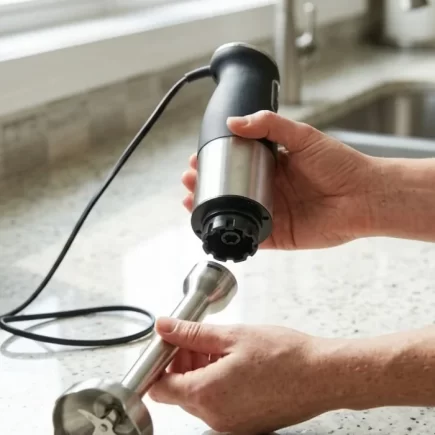
Cleanup difficulty is a major factor in how often a kitchen tool actually gets used. Detachable blending shafts that are dishwasher-safe save significant time compared to models that require hand washing around a fixed blade.
Avoid submerging the motor housing in water regardless of the shaft’s dishwasher compatibility. Wiping the housing with a damp cloth after each use prevents buildup without risking electrical damage. Attachments like chopper bowls and whisks are almost always easier to clean than the main blending shaft.
Blade Material and Sharpness
Blade quality determines both blending performance and longevity. Stainless steel blades resist corrosion and stay sharper longer than blades made from lower-grade metals.
| Blade Type | Sharpness Retention | Corrosion Resistance |
| Stainless steel | High | Excellent |
| Titanium-coated | Very High | Excellent |
| Standard alloy | Moderate | Fair |
Multi-blade designs, typically 2 to 4 blades set at different angles, process ingredients more evenly than a single straight blade. This reduces the need for repeated passes and delivers smoother purees with less effort.
Final Buying Checklist
Before finalizing your purchase, run through this checklist to confirm the blender matches your kitchen habits.
- Wattage matches your typical use case.
- At least 5 variable speed settings plus a pulse function.
- Stainless steel shaft and blades.
- Attachments you will realistically use.
- Anti-splash guard or wide blending head.
- Comfortable grip and manageable weight.
- Dishwasher-safe detachable parts.
- Warranty of at least 2 years.
Common Mistakes to Avoid
- Focusing solely on wattage while ignoring blade design, which has just as much impact on blending quality.
- Buying large attachment sets without checking whether those attachments fit your actual cooking routine.
- Ignoring cord length or battery life until after purchase, leading to awkward use near the stove.
- Skipping the warranty details, since coverage terms vary widely between brands even at similar price points.
- Choosing based on price alone instead of matching wattage and features to actual cooking habits.
Choosing the right Hand Blender comes down to how you actually cook and the tasks you need it to handle. By balancing motor power, speed control, useful attachments, build quality, and comfort, you can find a model that makes everyday blending easier. Find the options available at Aosom to find a reliable, easy-to-clean hand blender that suits your routine and serves your kitchen for years to come.
FAQs
Not every hand blender is built to crush ice, it depends on the model and attachments included. Always check the manufacturer’s instructions before attempting to blend hard or frozen ingredients, since forcing it can damage the motor or blades.
Yes, many hand blenders are designed for direct use in hot soups and sauces. That said, always check the manufacturer’s guidance first, and be careful of splashing, as hot liquids can cause burns during blending.
A hand blender is best for quick blending, puréeing, and mixing directly in pots or containers. A food processor usually offers more capacity and handles chopping, slicing, and larger quantities more efficiently.