


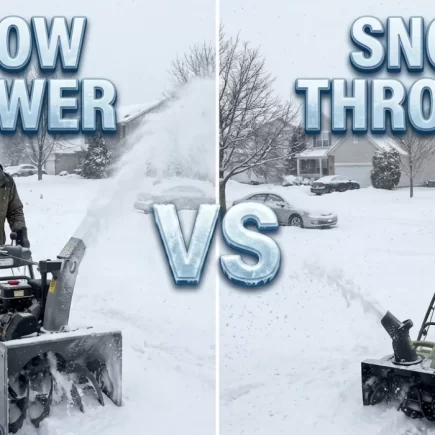
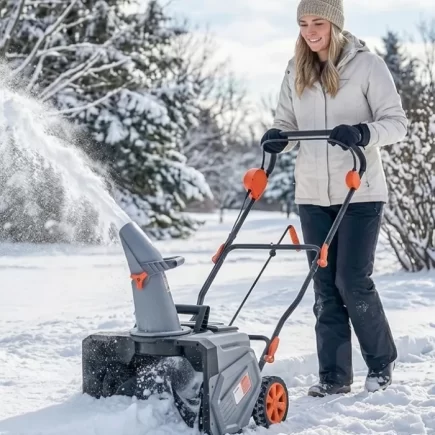















Choosing between a snow blower and a snow thrower depends on your driveway size, snow depth, and surface type. A snow thrower is ideal for light to moderate snowfall and small paved areas, while a snow blower handles deep, wet, and heavy snow more effectively. Understanding their differences in power, clearing width, and maneuverability can help you choose the right machine for your winter needs.
Quick-Glance Comparison
| Feature | Snow Thrower | Snow Blower |
| Snow movement | Auger only | Auger plus impeller |
| Best snow depth | Up to 8 to 10 inches | 12 to 24 inches or more |
| Clearing width | 18 to 22 inches | 24 to 30+ inches |
| Throwing distance | 15 to 25 feet | 30 to 50 feet |
| Weight | 25 to 100 lbs | 150 to 300+ lbs |
| Best surface | Paved | Paved, gravel, uneven |
How the Machine Moves Snow
A snow thrower uses a rubber-edged auger that scrapes the ground, gathers snow, and flings it out of the chute in one motion. The auger does all the work. This leaves a clean, near-bare surface.
A snow blower uses a metal auger to break up snow and feed it into a fast-spinning impeller. The impeller then fires the snow out of the chute. The auger stays slightly above the ground, so the machine rides on skid shoes or wheels.
1. Snow Depth Capacity
A snow thrower works best on light to moderate snowfall. Once the pile gets too deep, the intake clogs and the machine starts pushing snow instead of throwing it.
A snow blower is built for deep storms, drifts, and the heavy ridge a plow leaves at the end of a driveway. Its stronger engine keeps the auger turning even when the intake is packed full.
Tip: During a long storm, clear the driveway in stages instead of waiting for the final total. Shallower passes are faster and easier on any machine.
2. Snow Type Performance
Light, fluffy powder is easy for both machines. Wet, heavy snow is where the gap shows. A snow thrower’s auger can bog down and clog, while a snow blower’s impeller keeps wet snow moving.
Packed or icy snow calls for a snow blower. Its metal auger bites into hard snow and breaks it apart. A snow thrower’s rubber auger may simply bounce off.
| Snow Type | Snow Thrower | Snow Blower |
| Light powder | Excellent | Excellent |
| Wet and heavy | Fair | Very good |
| Packed or icy | Poor | Good to excellent |
3. Surface Suitability
A snow thrower suits asphalt and concrete. Its auger touches the ground, so it clears snow almost down to the pavement. On gravel, though, the auger can pick up stones and fire them out of the chute.
A snow blower rides on adjustable skid shoes, which makes it the safer choice for gravel and uneven driveways. Raising the shoes keeps the auger clear of loose stones.
Tip: On gravel, set the skid shoes about an inch higher than usual. A thin layer of snow stays behind, and your stones stay in place.
4. Clearing Width and Intake Height
Clearing width is how much snow you remove per pass. Intake height is how tall a snowfall the machine can swallow. Both affect how long you spend outside.
- Snow thrower intake: About 8 to 12 inches.
- Snow blower intake: About 17 to 23 inches.
A 30-inch snow blower can clear a wide driveway in roughly half the passes of a 20-inch snow thrower. On a short walkway, the extra width makes little difference.
5. Throwing Distance and Chute Control
A snow thrower’s shorter reach is fine when you can toss snow onto the lawn beside the driveway. The chute usually adjusts by hand or with a simple lever.
A snow blower sends snow far past the driveway edge, which helps when space is tight. Many models offer remote chute control, so you can change direction without leaving the handles.
Tip: Check the wind direction before you start. Throwing snow into a headwind sends it back onto the path you just cleared.
6. Power Source: Gas, Corded Electric, and Battery
Power source affects runtime, strength, and convenience. Snow blowers lean on gas for deep, heavy snow, while snow throwers lean on electric power for lighter jobs.
- Gas: The most powerful and fully portable choice, with engines from about 200 to 420 cc. It is the usual match for snow blowers and needs fuel, oil, and regular tune-ups.
- Corded electric: Lightweight and low cost, and most common on snow throwers. The cord limits your reach, usually to 100 feet or less.
- Battery: Cordless and quiet, with many 40V to 80V models running about 30 to 60 minutes per charge. Larger packs are needed for snow blower performance.
Battery technology has improved quickly. For very heavy storms, though, gas still leads in raw power.
7. Weight and Maneuverability
A snow thrower is easy to turn, push, and carry up steps. Most people can lift one into a shed or car trunk without help.
A snow blower is heavy, but that weight adds traction. Many models are self-propelled, with wheels or tracks and multiple speeds. Tracked versions grip best on slopes and ice. Plan for open space to turn around, and a ramp or wide door for storage.
8. Noise and Emissions
Gas snow blowers have larger engines, so they are the loudest option at about 85 to 95 decibels, similar to a lawn mower. Gas snow throwers are smaller but still noisy. Wear hearing protection with either, and never run one in a closed garage.
Electric and battery machines, whether thrower or blower, are much quieter and produce no exhaust at the point of use. They suit early morning clearing and noise-sensitive neighborhoods. They also start with a button or key, with no pull cord.
9. Maintenance and Storage Needs
A snow thrower has fewer moving parts. The main wear item is the auger edge, which thins with use and should be checked each season. Electric models only need a wipe-down and a quick look at the scraper bar.
A snow blower has more to inspect. Each season, plan for shear pin checks, skid shoe wear, belt condition, and, on gas models, oil changes, spark plugs, and fresh fuel. Before storage, add fuel stabilizer or drain the tank. Store any battery in a cool, dry place at about half charge.
Tip: Spray the chute and auger with silicone lubricant before each storm. Snow slides out more easily, and clogs are less common.
Choosing the Right Machine
Match the machine to your winter, not to the biggest model on the shelf. Start with three questions: how big is the area, what surface is it, and how deep and heavy is your typical snow?
| Your Situation | Better Fit |
| Small to medium paved driveway, light to moderate snow | Snow thrower |
| Decks, walkways, and short paved areas | Snow thrower |
| Long driveway, gravel, or uneven ground | Snow blower |
| Frequent deep, wet, or icy snow | Snow blower |
Choosing a Snow Blower is a practical option for homeowners who regularly deal with deep, heavy snowfall or have large driveways to clear. While a snow thrower works well for light snow and smaller paved areas, a snow blower offers greater power and clearing capacity for demanding winter conditions. Consider your driveway size, snow depth, and surface type when choosing the right machine for your winter needs.
FAQs
Yes, a snow blower can clear the dense ridge of snow left at the end of a driveway after a plow passes. A two-stage model is generally better for this task because it can break up and discharge compacted snow. Clear the ridge in smaller passes if it is particularly deep.
Clearing snow during a long storm can prevent deep accumulation and reduce the effort required later. For lighter snowfall, you may prefer to wait until the storm ends. During heavy snowfall, several shorter clearing sessions can be easier than removing the entire accumulation at once.
A two-stage snow blower uses an auger to collect snow and an impeller to discharge it. A three-stage model adds an accelerator to move snow through the machine more quickly. Three-stage models may suit demanding snow-clearing jobs, but actual performance depends on the machine’s design and conditions.