

Last Updated: 04/27/2026
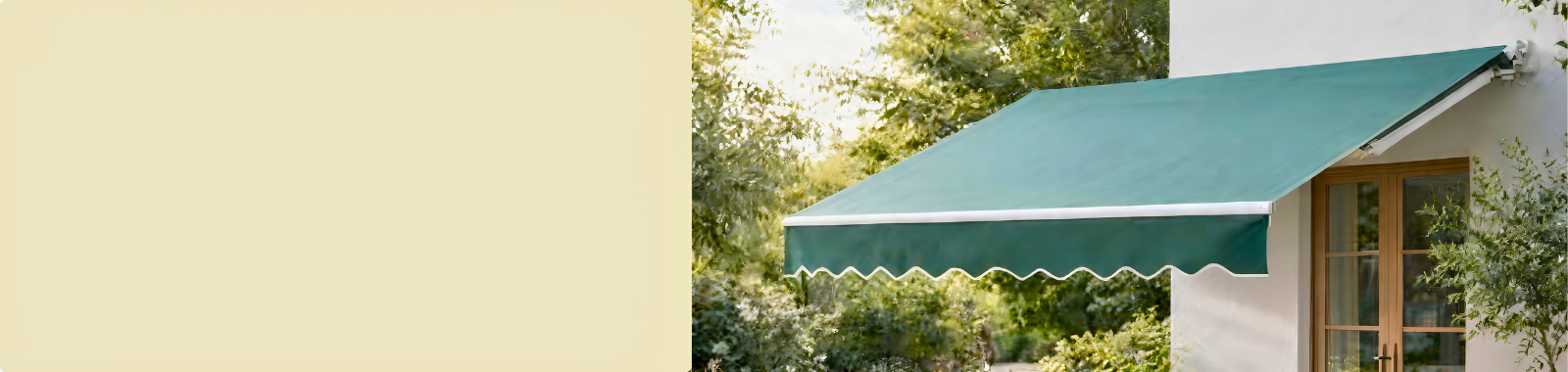
What Really Affects Your Awning

🧱 Wall & Installation
An awning relies on your wall and proper installation to stay stable and secure.
... See More

🌬️Wind & Structure
Wind puts the most pressure on your awning, especially when extended.
... See More

📐Size & Coverage
The actual shade depends on how and where it’s installed — not just the size.
... See More

⏳Use & Lifespan
How you use and maintain it makes the biggest difference in how long it lasts.
... See More
Keywords
Awning, Structural Stability, Cantilever Structure, Wind Load, Wall Mounting, Outdoor Shade, Installation Safety, Durability
1. Introduction
With the growth of outdoor living, awnings have become a common addition to patios, balconies, and commercial spaces. However, many users still treat them as simple furniture rather than external structural installations that rely on proper wall support and load distribution.
Common issues in real-world use include:
- Instability after installation
- Structural misalignment affecting operation
- Sagging or resistance after repeated use
These issues are often mistaken for product defects, but are typically caused by improper installation and usage.
Common issues in real-world use include:
- Instability after installation
- Structural misalignment affecting operation
- Sagging or resistance after repeated use
These issues are often mistaken for product defects, but are typically caused by improper installation and usage.
2. Failure Mechanism Under Wind Load
2.1 Wind Load Behaviour
An awning is a typical cantilever system, with its loads primarily coming from:
1. Self-weight (fabric and frame)
2. Wind load (the main risk factor)
Wind forces are amplified through the fabric and transferred to the brackets and wall fixing points, leading to stress concentration in the structure.
2.2 Typical Failure Pathways
Structural issues in awnings usually develop along the following sequence:
1. Loosening of wall fixing points
2. Bracket deformation
3. Imbalance in load distribution
4. Overall structural failure or detachment
👉 Core Issue: The problem is not product quality, but load behaviour
2.3 Structural Risks of Double-Sided Awnings
Double-sided awnings function as independent structural systems, with key challenges including:
1. Wind load acting from both sides
2. Lack of wall support
3. Increased weight → reduced stability
👉 Requirements:
Ground fixing or high-weight ballast is essential
Not suitable for long-term extended use
An awning is a typical cantilever system, with its loads primarily coming from:
1. Self-weight (fabric and frame)
2. Wind load (the main risk factor)
Wind forces are amplified through the fabric and transferred to the brackets and wall fixing points, leading to stress concentration in the structure.
2.2 Typical Failure Pathways
Structural issues in awnings usually develop along the following sequence:
1. Loosening of wall fixing points
2. Bracket deformation
3. Imbalance in load distribution
4. Overall structural failure or detachment
👉 Core Issue: The problem is not product quality, but load behaviour
2.3 Structural Risks of Double-Sided Awnings
Double-sided awnings function as independent structural systems, with key challenges including:
1. Wind load acting from both sides
2. Lack of wall support
3. Increased weight → reduced stability
👉 Requirements:
Ground fixing or high-weight ballast is essential
Not suitable for long-term extended use
3. Structural Determinants
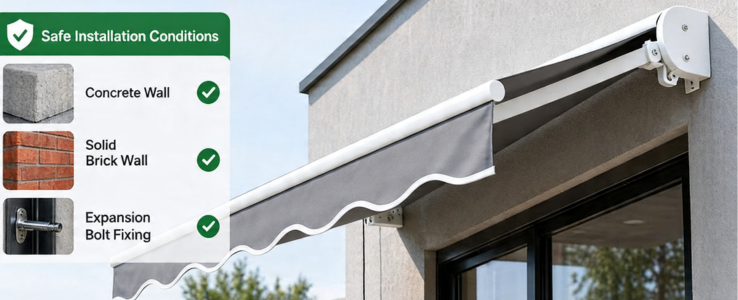
3.1 Installation Environment (Wall Compatibility)
An awning is not a typical piece of furniture, but a system that relies on the structural integrity of the wall.
Safe installation conditions:
Concrete wall ✔
Solid brick wall ✔
Expansion bolts / anchor fixings ✔
High-risk environments:
Hollow brick wall ✘
Timber-framed wall ✘
👉 Key Insight: Incorrect installation ≠ minor inconvenience It is a direct safety risk
Safe installation conditions:
Concrete wall ✔
Solid brick wall ✔
Expansion bolts / anchor fixings ✔
High-risk environments:
Hollow brick wall ✘
Timber-framed wall ✘
👉 Key Insight: Incorrect installation ≠ minor inconvenience It is a direct safety risk
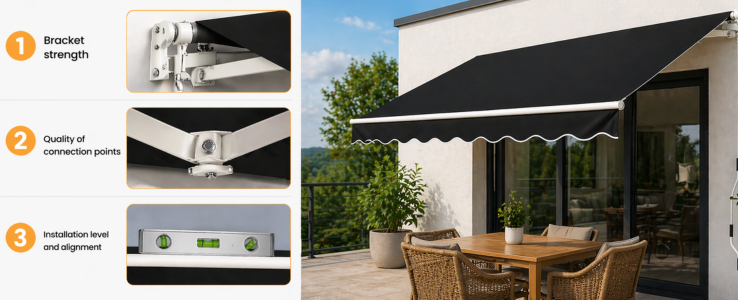
3.2 Structural Connections & Load Distribution (Joints & Load Distribution)
Structural stability depends on:
1. Bracket strength
2. Quality of connection points
3. Installation level and alignment
👉 Poor alignment will lead to:
1. Uneven load distribution
2. Jerky or difficult operation
3. Premature structural fatigue
1. Bracket strength
2. Quality of connection points
3. Installation level and alignment
👉 Poor alignment will lead to:
1. Uneven load distribution
2. Jerky or difficult operation
3. Premature structural fatigue
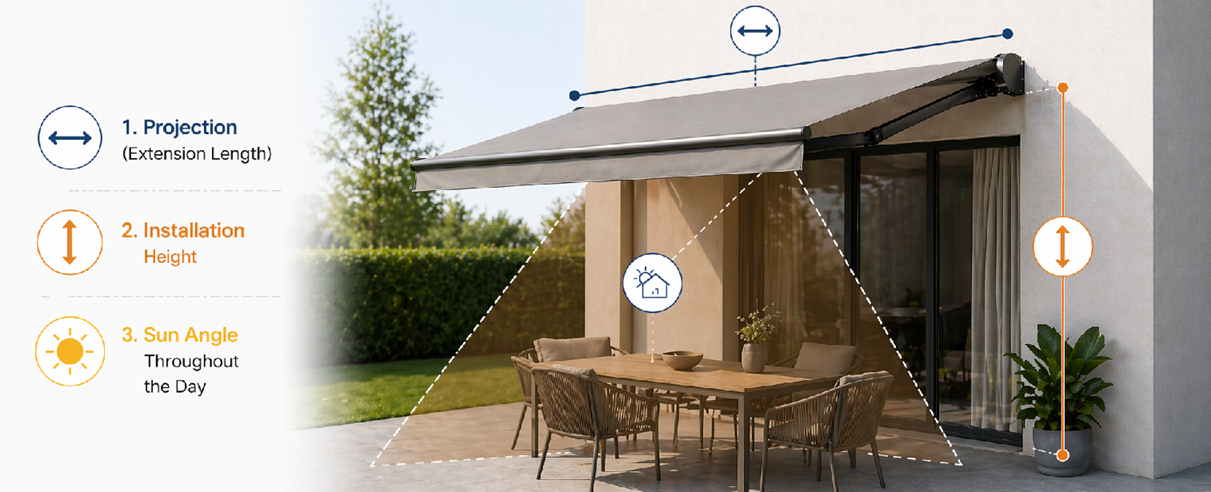
3.3 Geometry & Coverage (Geometry & Coverage)
A common misconception:
Stated size = usable coverage
In reality, coverage depends on:
1. Projection (extension length)
2. Installation height
3. Sun angle throughout the day
👉 Conclusion: Shading performance is a dynamic spatial result, not a fixed measurement
Stated size = usable coverage
In reality, coverage depends on:
1. Projection (extension length)
2. Installation height
3. Sun angle throughout the day
👉 Conclusion: Shading performance is a dynamic spatial result, not a fixed measurement
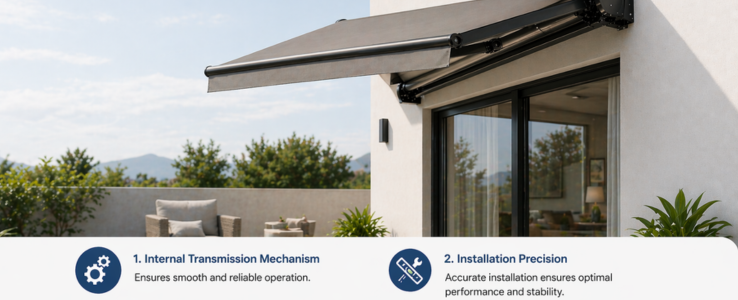
3.4 Operational System & User Experience (Operational Stability)
Ease of operation depends on:
1. Internal transmission mechanism
2. Installation precision
Common issues:
1. Difficult manual operation
2. Motorised systems jamming or stuttering
👉 Root Cause: These are not “feature issues”, but structural precision issues
1. Internal transmission mechanism
2. Installation precision
Common issues:
1. Difficult manual operation
2. Motorised systems jamming or stuttering
👉 Root Cause: These are not “feature issues”, but structural precision issues
4. Environmental Conditions and Their Impact on Performance
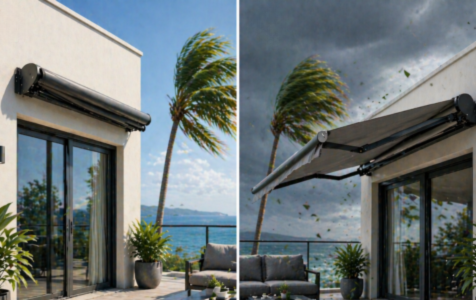
4.1 Wind Conditions
1. The awning must be retracted during strong winds
2. Prolonged extension accelerates structural fatigue
2. Prolonged extension accelerates structural fatigue
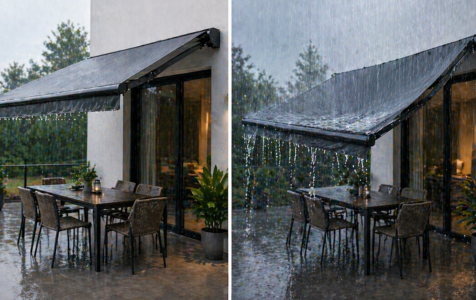
4.2 Rain Exposure
The water resistance of an awning has clear limitations:
1. Light rain: manageable
2. Heavy rain: water accumulation may cause sagging
1. Light rain: manageable
2. Heavy rain: water accumulation may cause sagging
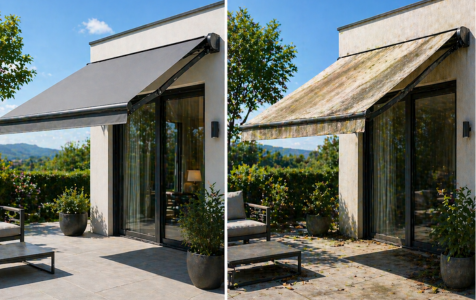
4.3 Sun Exposure and Aging
Durability is not determined solely by material, but by how the awning is used. Key influencing factors:
1. Continuous exposure to outdoor conditions
2. Whether the awning is retracted in time
3. Exposure to extreme weather
1. Continuous exposure to outdoor conditions
2. Whether the awning is retracted in time
3. Exposure to extreme weather
Conclusion
When choosing an awning, what truly matters is not which one looks better, but whether it suits your specific environment.
The safety, usability, and durability of an awning depend on three key factors: 1. Whether your wall is suitable for installation (this determines stability)
2. Whether weather conditions—especially wind—are properly considered during use
3. Whether the awning is correctly retracted and maintained in daily use (this directly affects lifespan)
If these conditions are met, even a basic model can perform reliably for years. On the other hand, even a high-end product may become loose, deformed, or damaged in a short time if used incorrectly.
👉 Simply put: Choosing right + installing right + using right matters more than buying expensive
The safety, usability, and durability of an awning depend on three key factors: 1. Whether your wall is suitable for installation (this determines stability)
2. Whether weather conditions—especially wind—are properly considered during use
3. Whether the awning is correctly retracted and maintained in daily use (this directly affects lifespan)
If these conditions are met, even a basic model can perform reliably for years. On the other hand, even a high-end product may become loose, deformed, or damaged in a short time if used incorrectly.
👉 Simply put: Choosing right + installing right + using right matters more than buying expensive
References
1. International Code Council. (2021). 2021 International Residential Code (IRC). Brea, CA: ICC.
2. American Society of Civil Engineers. (2022). ASCE/SEI 7-22: Minimum Design Loads and Associated Criteria for Buildings and Other Structures. Reston, VA: ASCE.
3. Professional Awning Manufacturers Association (PAMA). (2020).Residential Awning Installation Guidelines & Safety Manual. Roseville, MN: Advanced Textiles Association.
4. Federal Emergency Management Agency (FEMA). (2018).FEMA P-499: Home Builder's Guide to Coastal Construction. Washington, D.C.: FEMA.
2. American Society of Civil Engineers. (2022). ASCE/SEI 7-22: Minimum Design Loads and Associated Criteria for Buildings and Other Structures. Reston, VA: ASCE.
3. Professional Awning Manufacturers Association (PAMA). (2020).Residential Awning Installation Guidelines & Safety Manual. Roseville, MN: Advanced Textiles Association.
4. Federal Emergency Management Agency (FEMA). (2018).FEMA P-499: Home Builder's Guide to Coastal Construction. Washington, D.C.: FEMA.
About the Author
Jessica Vance
David Arbour is a senior structural consultant specialising in residential outdoor temporary structures and sun-shading systems within the Canadian climate. With over two decades of experience in structural integrity assessments, his work emphasizes the critical balance between product design and local environmental stressors, such as high wind loads and heavy precipitation. David has collaborated extensively with Canadian home improvement associations to develop safety guidelines for domestic awning and marquee installations. He is widely recognised for his expertise in fastener performance across diverse cladding types and providing practical, engineering-led advice for homeowners across Ontario and the Atlantic provinces.Jessica Vance is a seasoned infrastructure specialist focusing on the durability and safety of residential shading systems across the United States. With extensive experience in structural resilience, she has dedicated her career to analyzing the impact of diverse American climates—from high UV exposure to erratic wind patterns—on the longevity of outdoor awnings and tents. Jessica has worked alongside industry regulatory bodies to promote "real-world" safety standards that align with national building codes. Her expertise lies in helping homeowners understand structural maintenance, risk mitigation, and the practical performance limits of outdoor materials in challenging weather conditions.
David Arbour is a senior structural consultant specialising in residential outdoor temporary structures and sun-shading systems within the Canadian climate. With over two decades of experience in structural integrity assessments, his work emphasizes the critical balance between product design and local environmental stressors, such as high wind loads and heavy precipitation. David has collaborated extensively with Canadian home improvement associations to develop safety guidelines for domestic awning and marquee installations. He is widely recognised for his expertise in fastener performance across diverse cladding types and providing practical, engineering-led advice for homeowners across Ontario and the Atlantic provinces.Jessica Vance is a seasoned infrastructure specialist focusing on the durability and safety of residential shading systems across the United States. With extensive experience in structural resilience, she has dedicated her career to analyzing the impact of diverse American climates—from high UV exposure to erratic wind patterns—on the longevity of outdoor awnings and tents. Jessica has worked alongside industry regulatory bodies to promote "real-world" safety standards that align with national building codes. Her expertise lies in helping homeowners understand structural maintenance, risk mitigation, and the practical performance limits of outdoor materials in challenging weather conditions.