




































Kitchen Islands – Versatile Storage and Workspace Solutions
A kitchen island is one of the most practical additions you can make to your cooking space. Whether you need extra counter space for meal prep, additional storage for cookware and utensils, or a mobile serving station for entertaining, a well-chosen kitchen island delivers all of these benefits and more. From compact rolling carts to spacious islands with stainless steel tops, our selection of 94 models offers something for every kitchen layout and style. This guide will help you understand the different types of kitchen islands available and what features to consider when making your choice.
1. Why Choose a Portable or Rolling Kitchen Island?
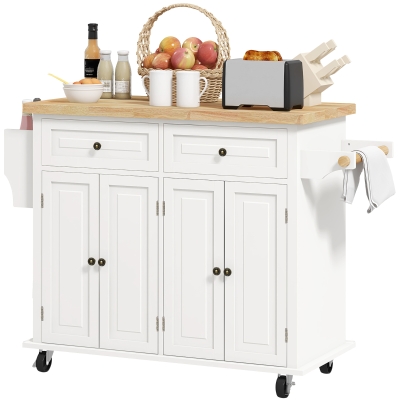
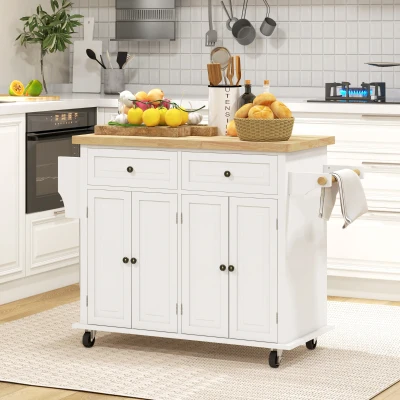
One of the greatest advantages of a portable kitchen island is its mobility. Unlike fixed cabinetry, a rolling kitchen island on wheels can be moved wherever you need it most—next to the stove for food preparation, near the dining area for serving, or tucked away against a wall when not in use. This flexibility makes it an excellent choice for small kitchens that lack built-in counter space, as well as for larger kitchens where an extra work surface would be beneficial. Models with lockable wheels provide stability when you need it, while still allowing you to reposition the island as your needs change. A mobile kitchen island effectively adds a new dimension of functionality to your kitchen without requiring a renovation.
2. Stainless Steel Tops – A Practical Choice for Serious Cooks
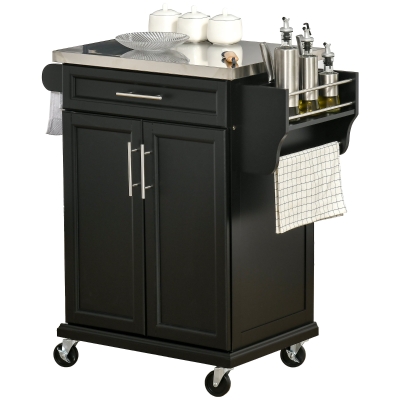
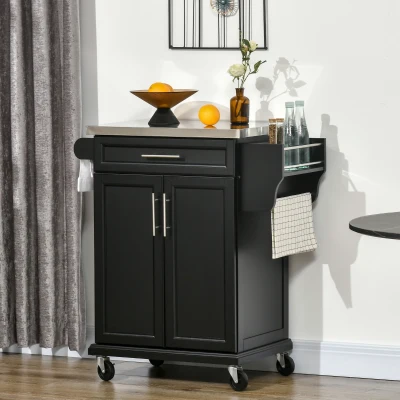
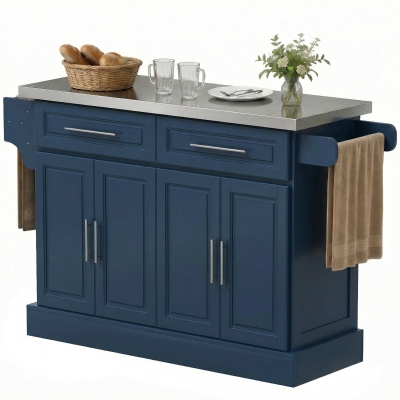
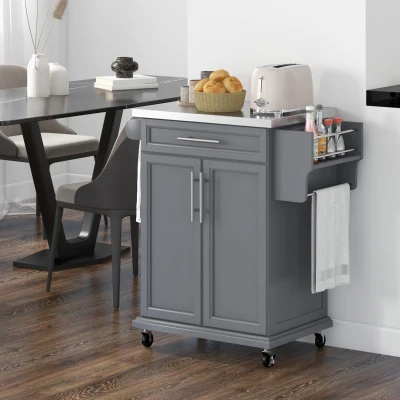
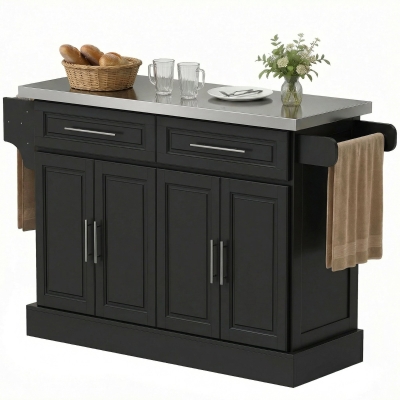
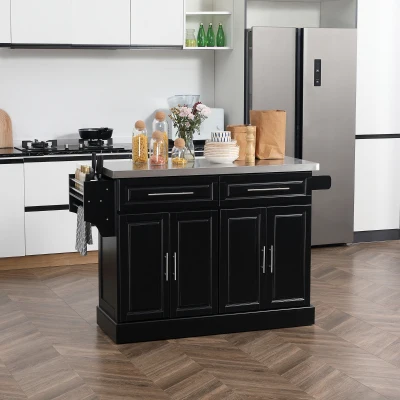
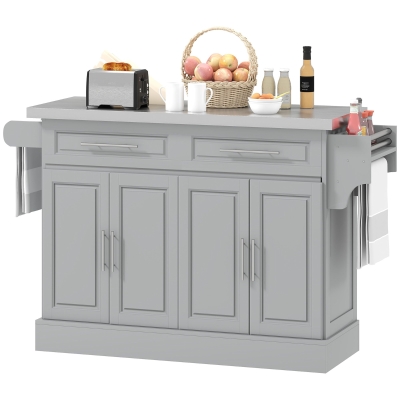
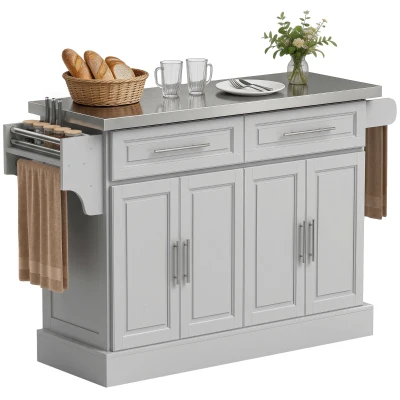
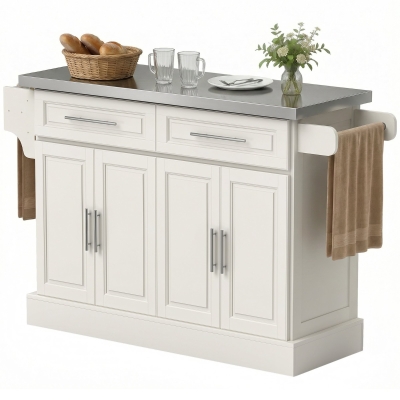
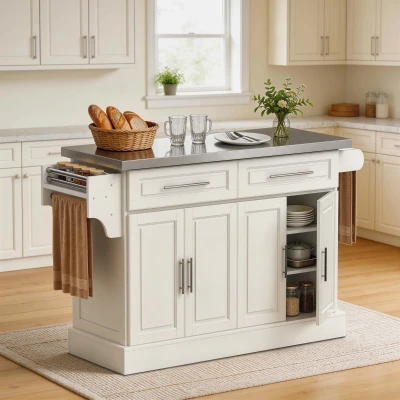
For those who spend a lot of time cooking, a kitchen island with a stainless steel top offers significant practical advantages. Stainless steel is heat-resistant, easy to clean, and provides a durable surface for rolling dough, placing hot pots, or preparing ingredients. It doesn't absorb stains or odors, making it more hygienic than many other materials. Many of our stainless steel top models also feature built-in towel racks, spice racks, and additional storage drawers, creating a highly functional workspace. A stainless steel top rolling kitchen island combines professional-grade durability with the convenience of mobility, making it a favorite among home cooks who value both performance and practicality.
3. Storage Features That Maximize Organization
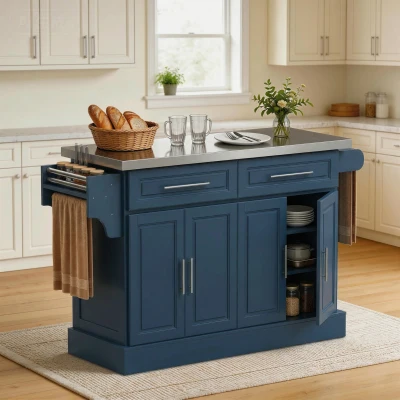
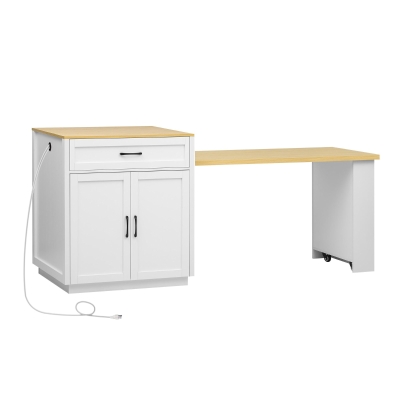
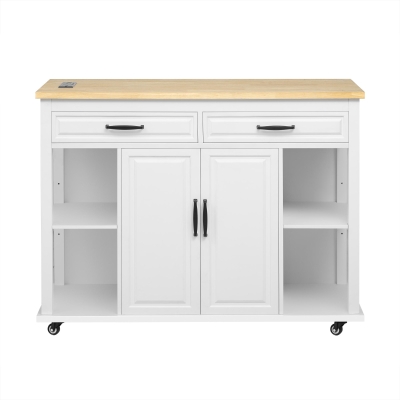
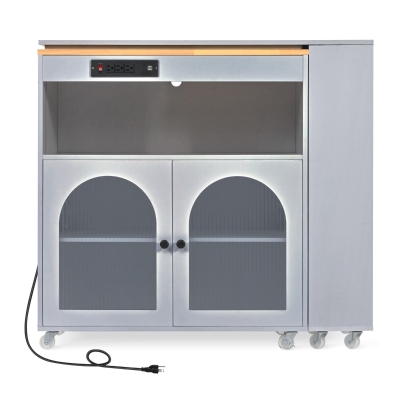
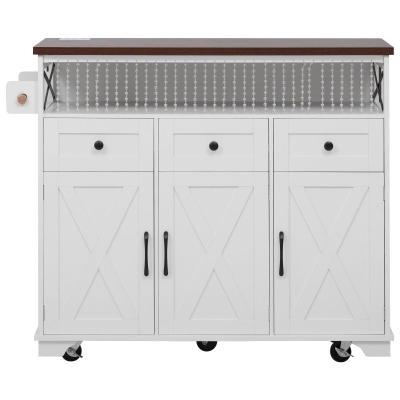
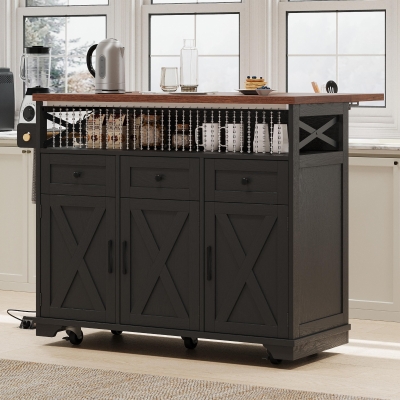
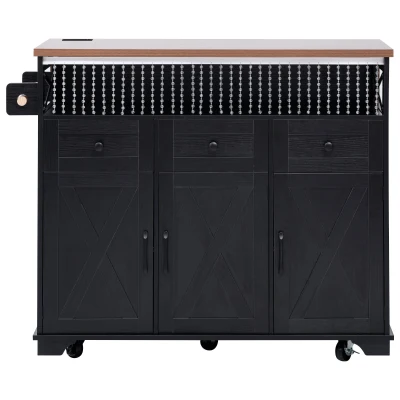
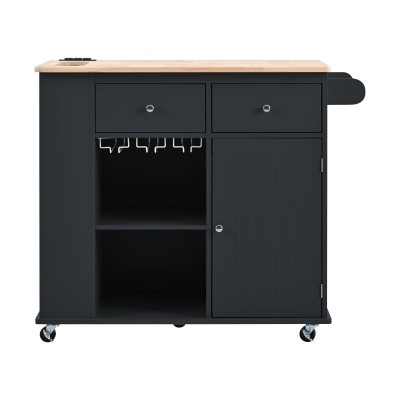
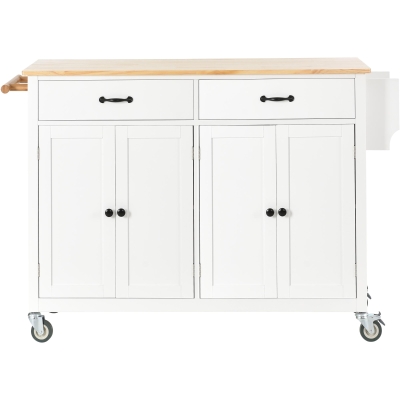
The storage capacity of a kitchen island is just as important as its work surface. When comparing models, consider what you need to store. Drawers are ideal for utensils, cutlery, and small kitchen tools, keeping them organized and within easy reach. Cabinets with doors provide enclosed storage for larger items like pots, pans, and small appliances, keeping them dust-free. Open shelves offer quick access to frequently used items and can also display decorative pieces. Some islands feature specialized storage such as wine racks, towel racks, or spice racks, which add extra functionality without taking up additional floor space. Models with drop-leaf extensions provide additional work surface or dining space when needed and can be folded down to save space. For even more convenience, the kitchen island carts collection offers a variety of storage configurations to suit different needs.
4. Comparing Kitchen Island Configurations
To help you understand the key differences between popular kitchen island types, here is a comparison of common configurations available in our selection.
| Configuration | Countertop Material | Storage Features | Best For |
|---|---|---|---|
| Rolling Cart with Stainless Steel Top | Stainless steel | Drawers, cabinets, spice rack, towel rack | Food prep, heat-resistant workspace |
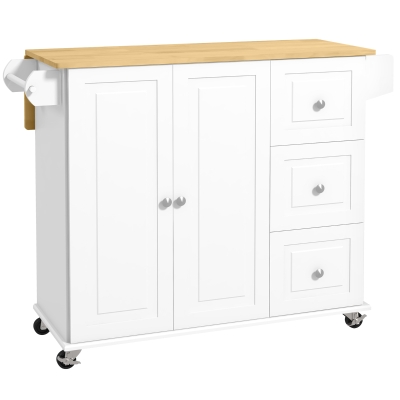
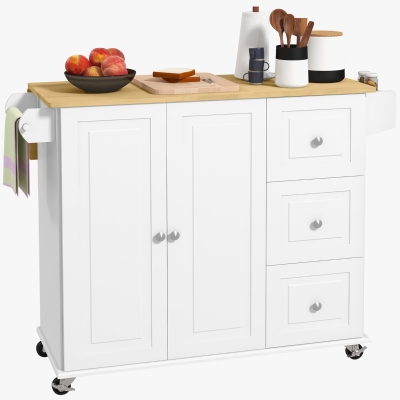
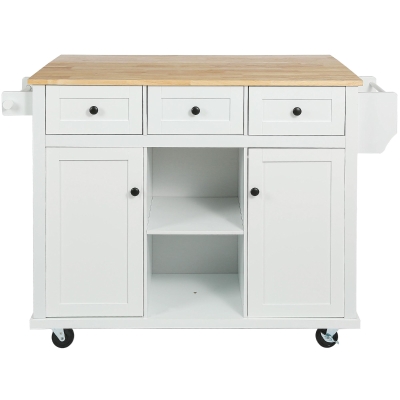
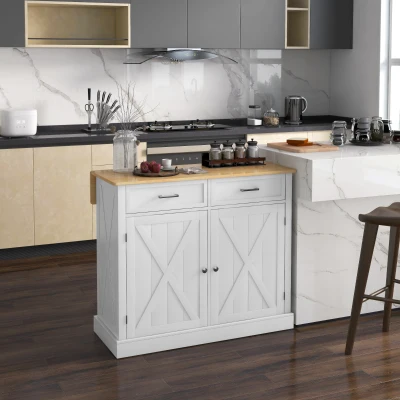
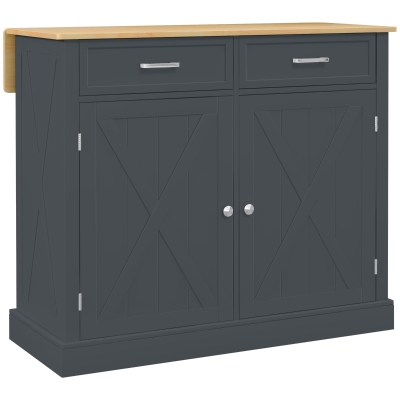
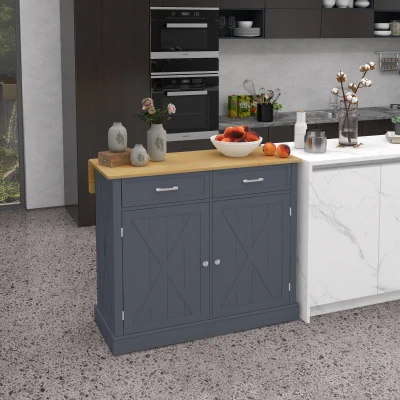
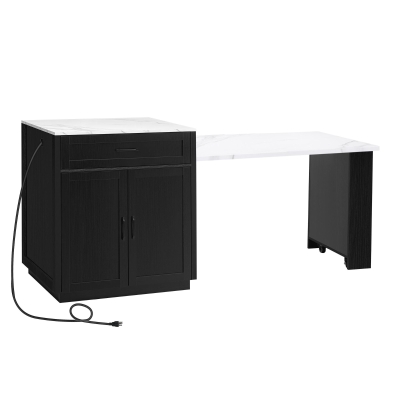
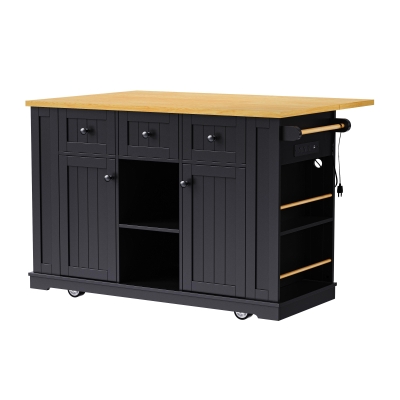
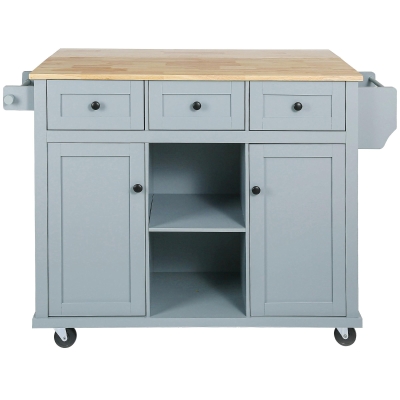
| Rolling Island with Drop-Leaf Bar | Rubberwood or MDF | Drawers, adjustable shelves, drop-leaf extension | Extra dining space, breakfast bar |
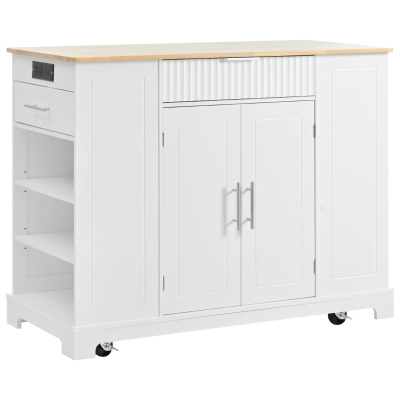
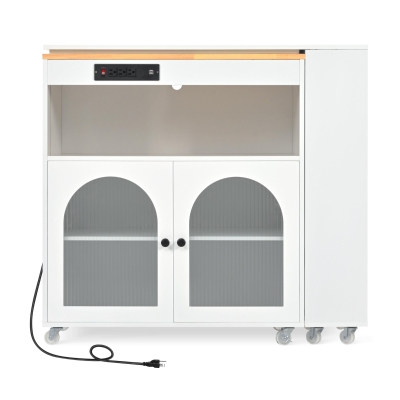
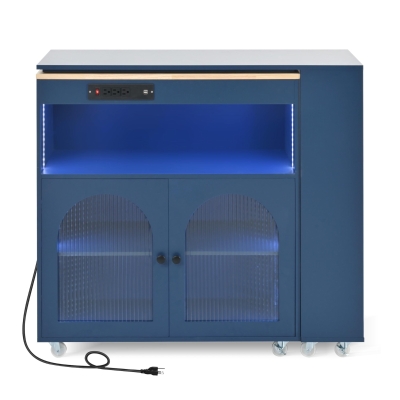
| LED Kitchen Island | MDF with fluted glass doors | Power outlets, adjustable shelves, LED lighting | Modern kitchens, enhanced ambiance |
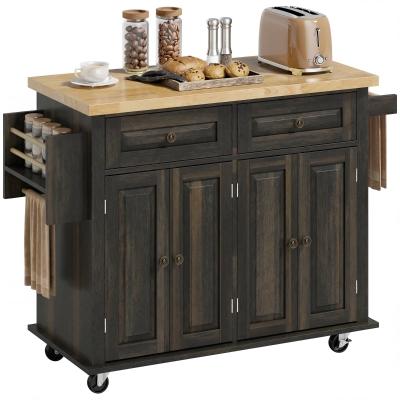
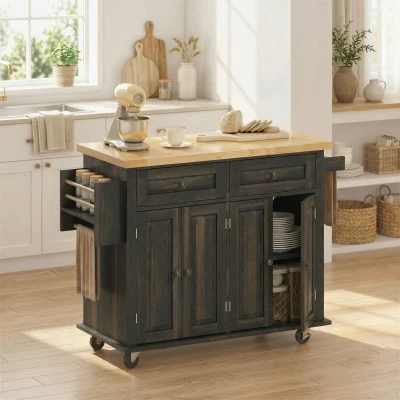
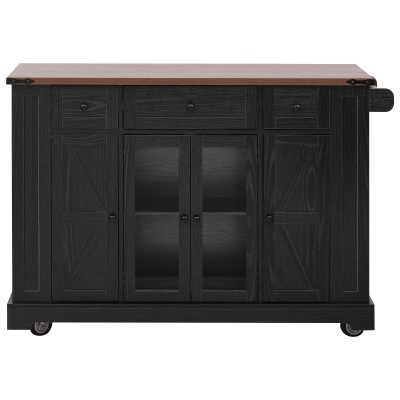
| Farmhouse Style Island | Tempered glass or wood | Drawers, racks, cabinets with glass doors | Rustic or traditional décor |
5. Design and Material Considerations
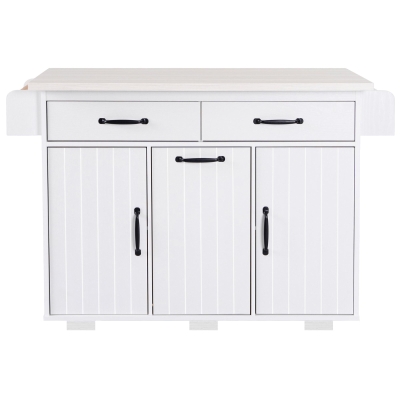
The material and finish of your kitchen island should complement your existing kitchen décor. White and black are versatile options that work well with most color schemes, while gray, navy blue, and turquoise can add a pop of color. Wood and MDF are the most common materials for the body of the island, offering durability and a clean finish. Rubberwood tops provide a warm, natural look and are particularly popular for islands with drop-leaf extensions. Stainless steel tops are ideal for modern kitchens and offer superior heat resistance. For a cohesive look, consider how the island will pair with your existing kitchen and dining furniture.
6. Popular Models to Consider
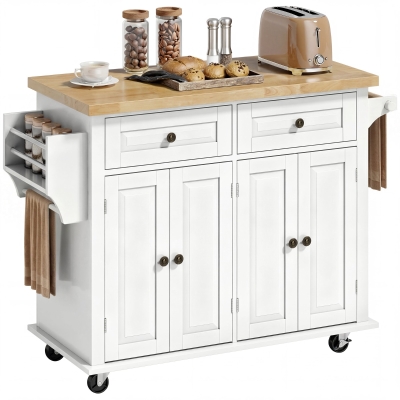
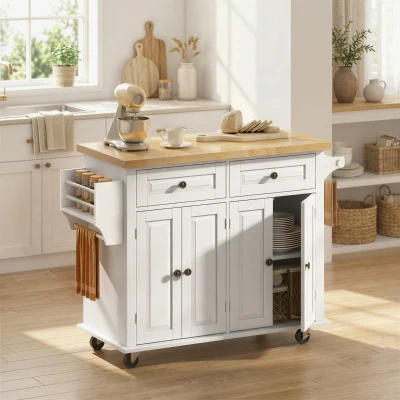
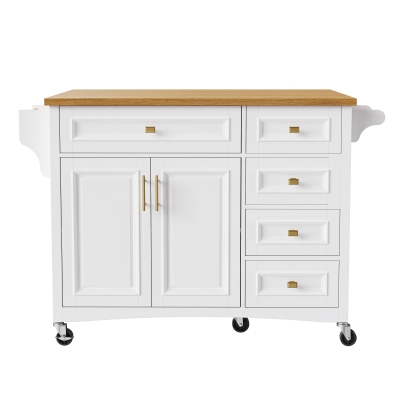
Our range includes a variety of highly-rated models. The HOMCOM Rolling Kitchen Cart with Stainless Steel Top is a compact and versatile option ideal for small kitchens. For those needing more storage, the HOMCOM Rolling Kitchen Cart with Storage offers drawers, cabinets, and a stainless steel top. The HOMCOM Rolling Kitchen Island in Black provides the same functionality in a sleek, contemporary color. For a more traditional look, the HOMCOM Rolling Kitchen Island Cart with Rubberwood Top offers a warm wood surface and ample storage.
7. Making the Most of Your Kitchen Island
Once you've chosen your kitchen island, consider how to integrate it effectively into your daily routine. Position it near your primary work area to minimize movement during food preparation. Use the top surface for chopping, mixing, or plating, and keep your most-used utensils in the drawers for easy access. When entertaining, roll the island to the dining area to use as a serving station for drinks, appetizers, or desserts. The versatility of a portable kitchen island makes it a valuable addition to any home, adapting to your needs whether you're cooking, hosting, or simply organizing your kitchen space.
Frequently Asked Questions (FAQ)
1. What is the difference between a kitchen island and a kitchen cart?
A kitchen island is typically larger and may or may not be mobile, while a kitchen cart is specifically designed to be portable with wheels. Kitchen carts are generally more compact and easier to move around, making them ideal for small kitchens or for use as an extra work surface that can be stored away when not needed.
2. Are stainless steel tops better than wood for kitchen islands?
Stainless steel tops are more heat-resistant, easier to clean, and more hygienic than wood, making them ideal for food preparation. Wood tops offer a warmer, more traditional look and can be used for chopping if properly sealed. The choice depends on your cooking habits and aesthetic preferences.
3. Can a rolling kitchen island be used as a dining table?
Yes, many rolling kitchen islands feature drop-leaf extensions that can be raised to create additional dining space. These models can comfortably seat 2-4 people, making them perfect for small apartments or as an extra dining surface when entertaining.