
















Kids Outdoor Playhouses & Wooden Playhouses: A Space-First Buying Guide
Most parents start by browsing photos, but the smarter first step is measuring the yard, patio, or playroom corner where the playhouse will actually live. This guide walks through space, age, material, features, safety, and budget so you can narrow 25 current options down to the one that fits your family. Whether you are comparing kids outdoor playhouses for a backyard lawn or wooden playhouses for an indoor playroom, the same practical filters apply.
Measure Your Space Before You Choose a kids outdoor playhouse
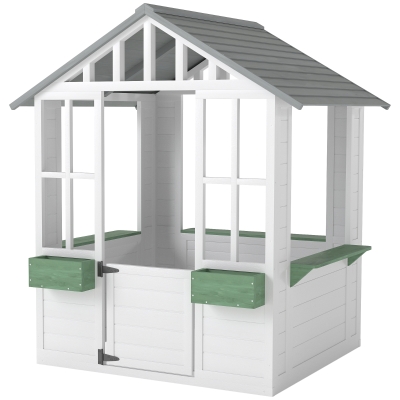
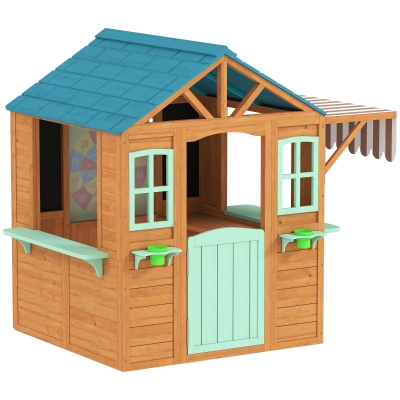
Footprint matters more than height. A compact single-story unit around 44.5"W x 37"D x 53"H fits a small patio or fenced corner, while a 48" x 42.5" x 53" model needs a little more breathing room for the door swing and for kids to move around the front. If you are placing it on grass, leave at least 2 feet of clearance on all sides for air circulation and lawn maintenance. For indoor use, check ceiling height and whether the playhouse must pass through a doorway during assembly. Parents shopping within the broader Outdoor Toys range often find that measuring first prevents the most common return reason: it looked smaller online.
Match the Playhouse to Your Child’s Age and Play Style
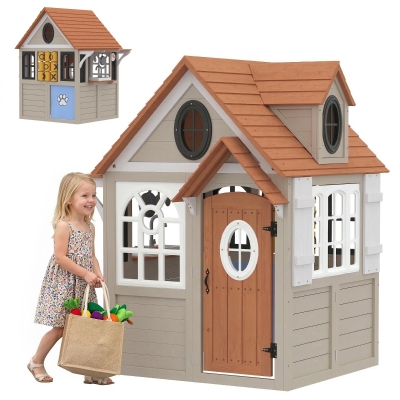
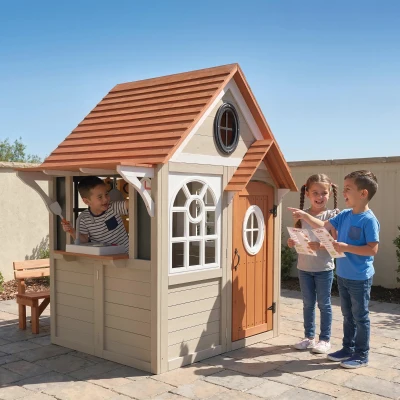
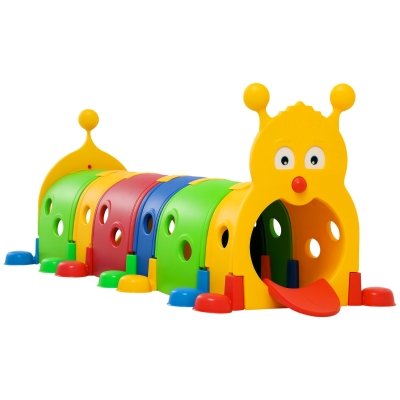
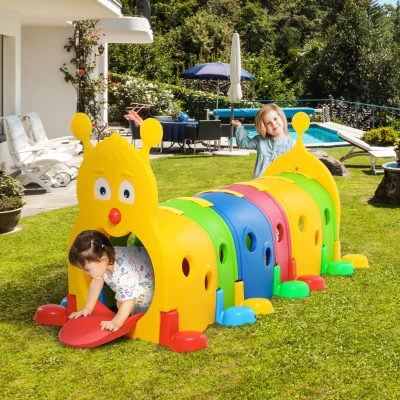
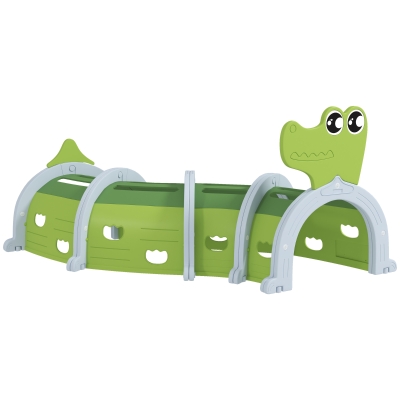
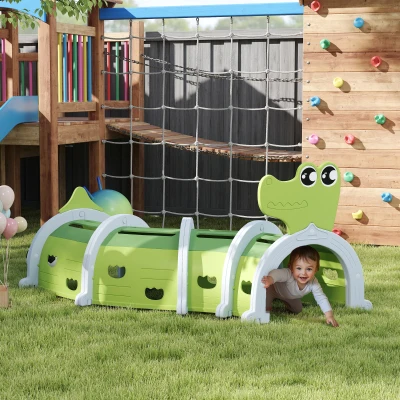
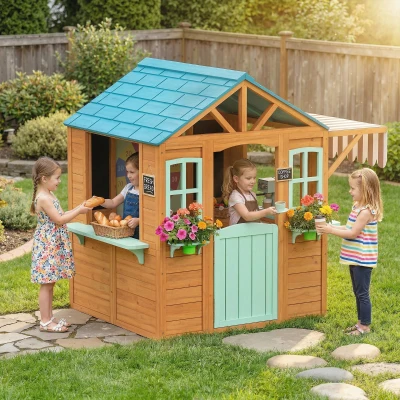
Age ratings in this category cluster around 2+, 3–6, 3–7, and 3–8. Younger toddlers do best with a single-room cottage, a half door, and a low bench they can climb onto safely. Older kids gravitate toward play kitchens, picnic benches, snack bars, chalkboards, and two-story layouts with slides. Crawl tunnels are a separate but related pick for 3–6 year olds who need movement more than pretend play. A good rule: if your child is still learning to navigate steps, choose a single-story wooden playhouse first and upgrade later. Browsing Playsets alongside playhouses helps you compare both formats in one place.
Wood, Fir Wood, or HDPE: Material and Weather Considerations
The material filter shows Wood (10 models), Fir Wood (5), HDPE (2), and Other Material (8). Wood and fir wood give the classic cottage look and can be painted or stained, but they need periodic sealing, especially in humid or rainy climates. HDPE is the low-maintenance option: it resists moisture, does not splinter, and wipes clean, which matters if the playhouse stays outside year-round. Fir wood is lighter than denser hardwoods, so it is easier to move during assembly but should be inspected for loose screws after storms. If you want to see only timber options, start with the Wood kids playhouses filter, or narrow further to Fir Wood kids playhouses. For a plastic alternative, the HDPE kids playhouses filter is the fastest shortcut.
| Material | Models | Weather Resistance | Maintenance | Best For |
|---|---|---|---|---|
| Wood | 10 | Moderate; needs sealing | Stain or seal annually | Classic look, long-term backyard use |
| Fir Wood | 5 | Lightweight; protect from moisture | Inspect screws, repaint as needed | Budget-friendly painted finishes |
| HDPE | 2 | High; moisture and rot resistant | Wipe clean, minimal upkeep | Humid or wet climates |
| Other Material | 8 | Varies by type | Follow manufacturer guidance | Specialty designs and tunnels |
Must-Have Features: Kitchens, Picnic Benches, Slides, and Pet Doors
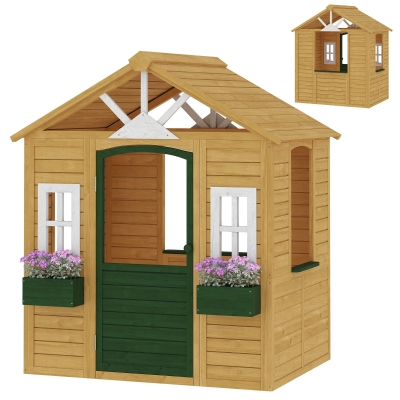
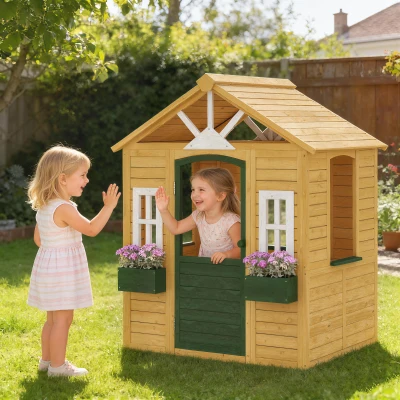
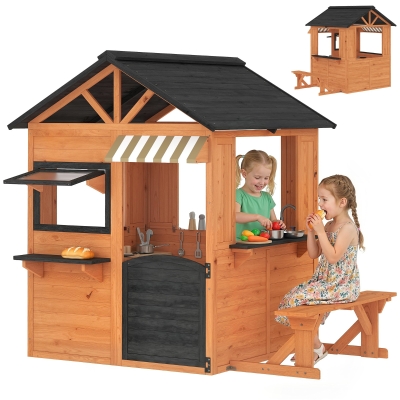
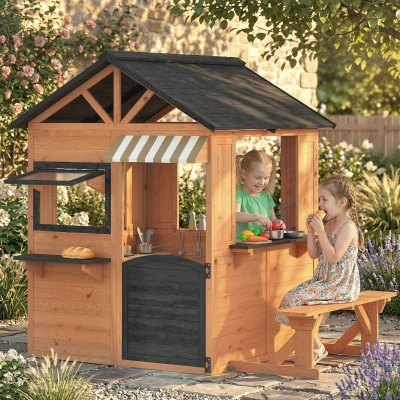
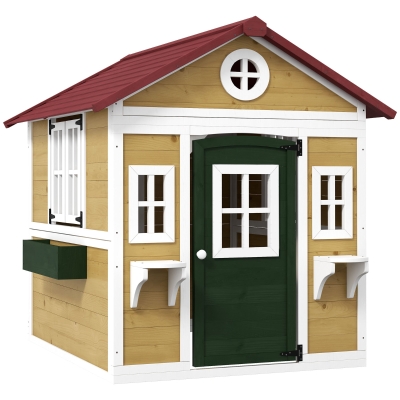
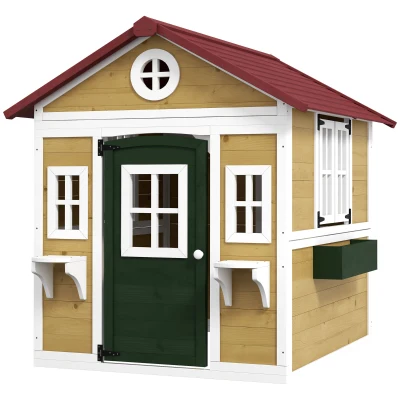
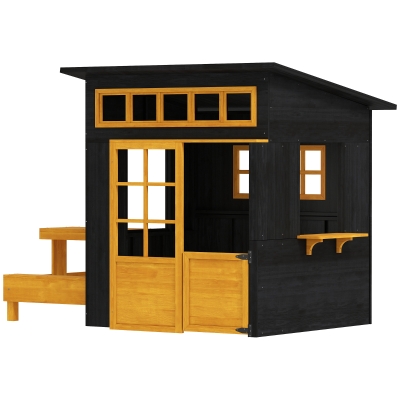
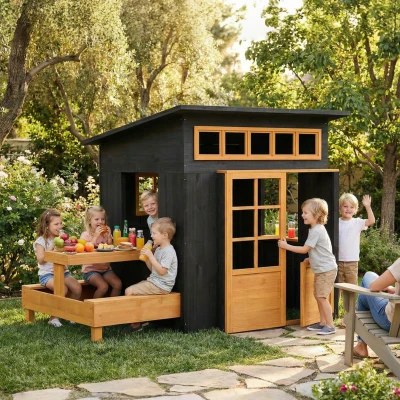
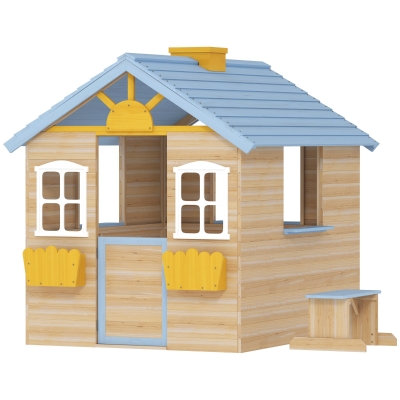
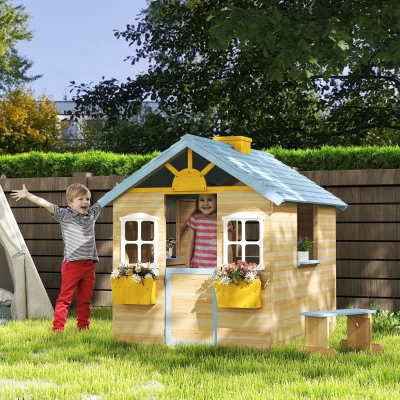
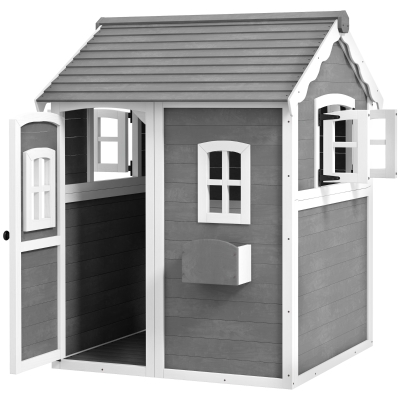
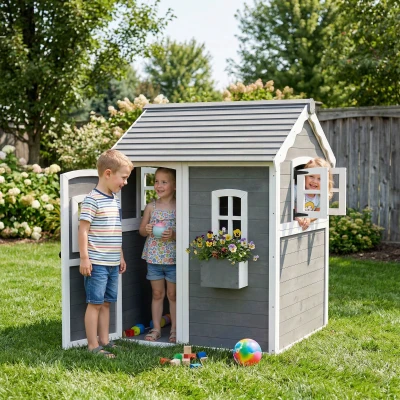
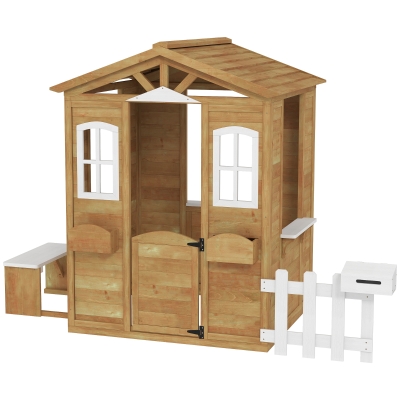
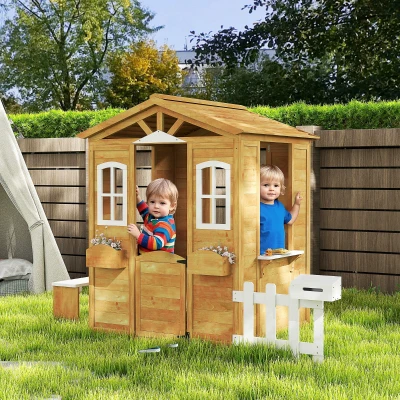
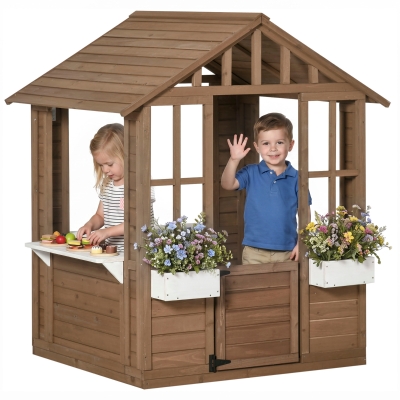
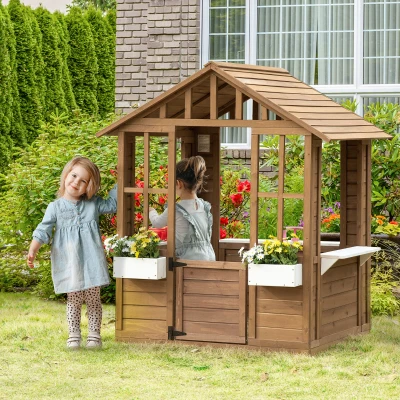
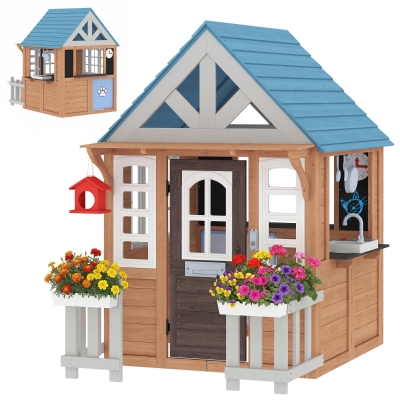
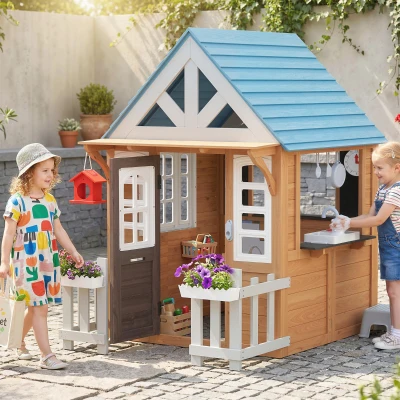
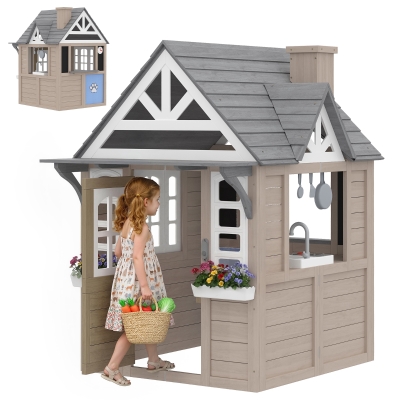
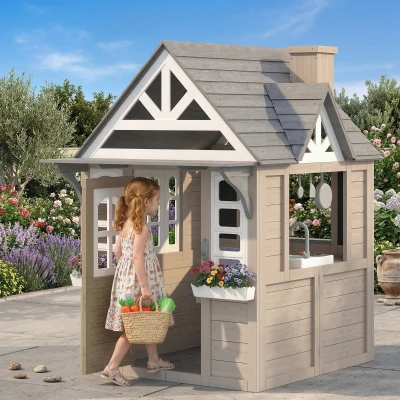
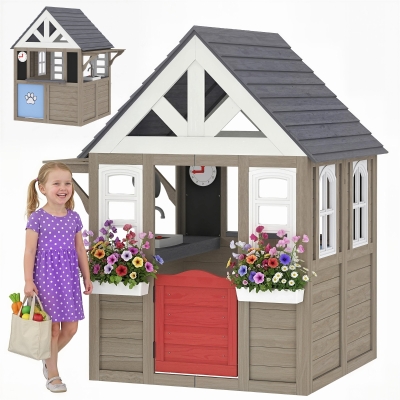
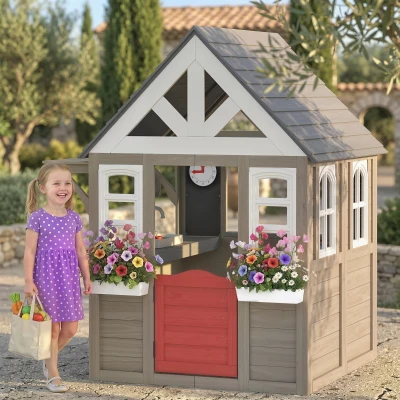
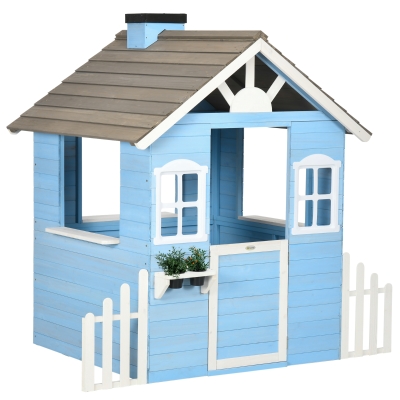
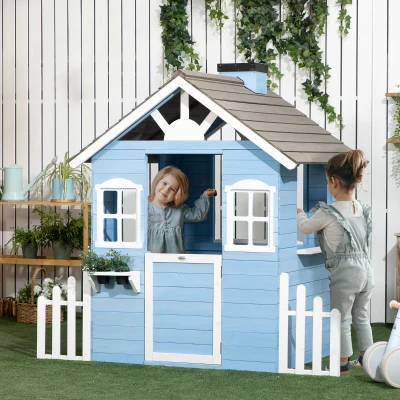
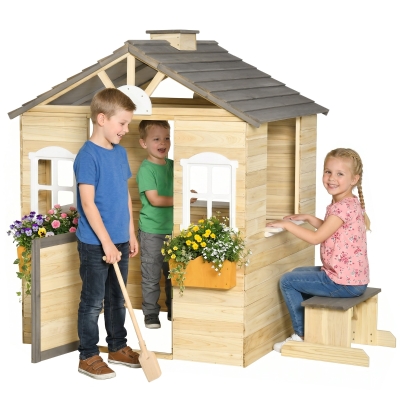
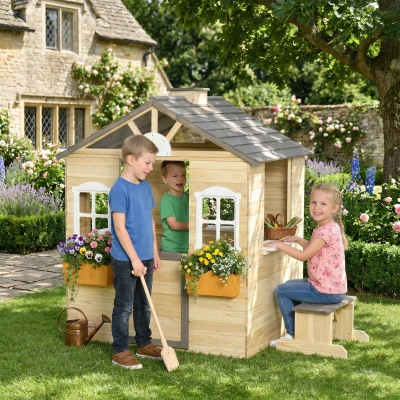
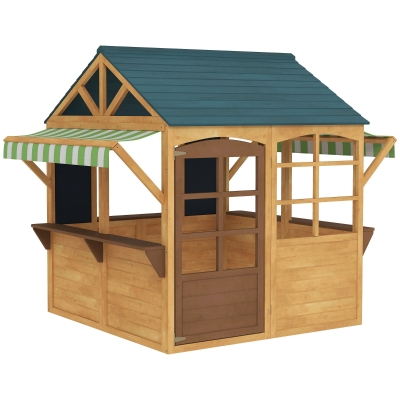
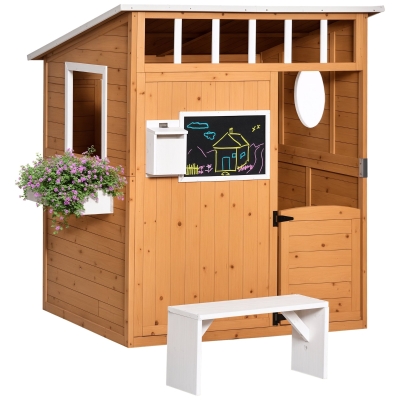
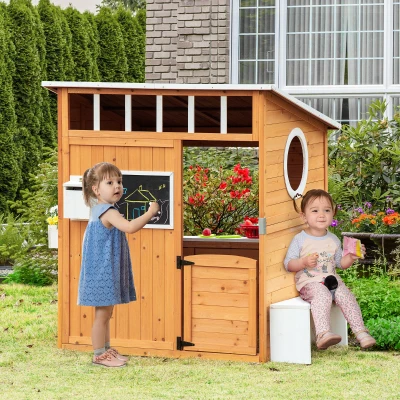
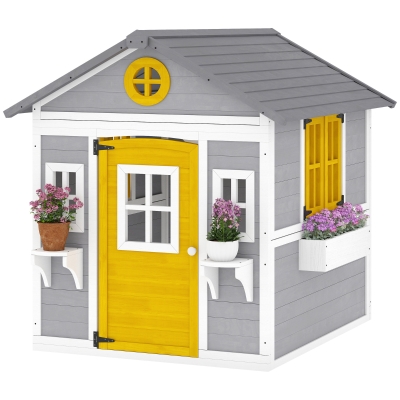
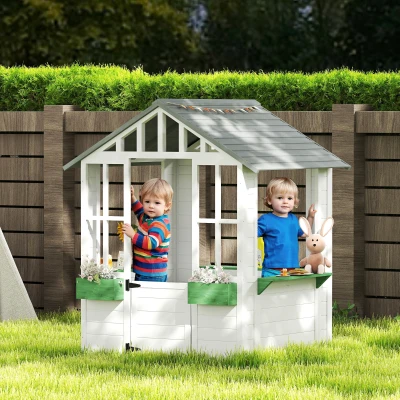
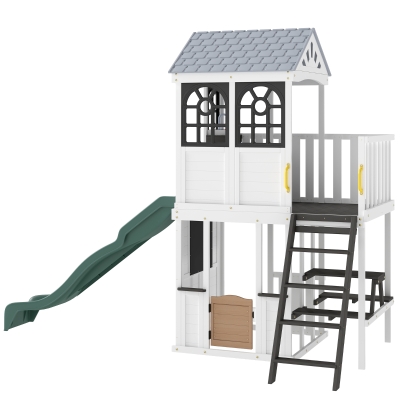
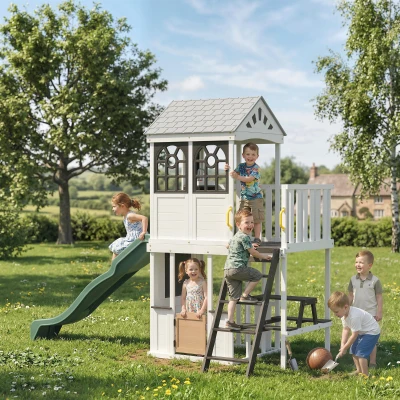
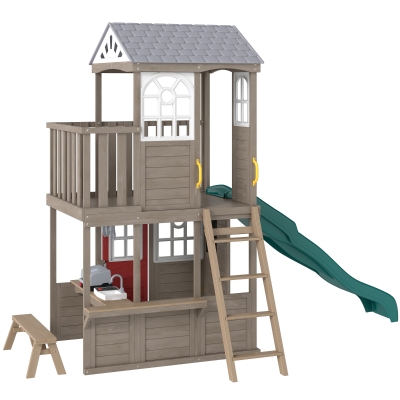
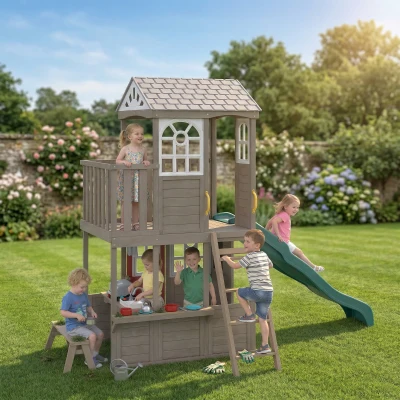
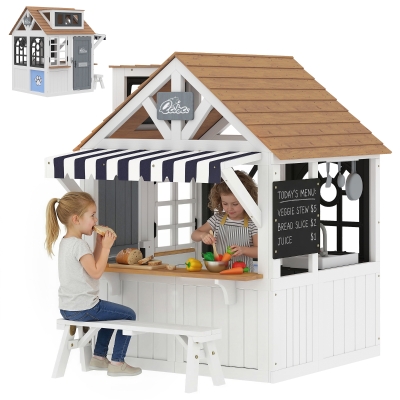
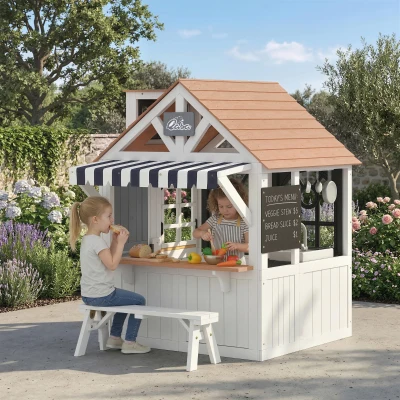
Features decide how often the playhouse actually gets used. A play kitchen and serving station turn it into a pretend restaurant. A picnic bench or snack bar creates a hangout spot for siblings and friends. A slide or ladder adds physical play for older kids, while a dog door or pet door keeps the family pet involved. Flower boxes, mailboxes, doorbells, and chalkboards are small details that extend pretend-play sessions. For a well-rounded starter unit, the Qaba Wooden Kids Playhouse with Door & Flower Boxes balances a working door, three windows, and planter details without taking over the yard. If you want more built-in activities, the Outsunny Wooden Playhouse for Kids adds planter pots and boxes for garden-themed play. For the biggest footprint and the most features, the Qaba Two-Story Wooden Kids Playhouse with Slide, Table & Bench combines a slide, kitchen, ladder, and blackboard in one structure.
Safety, Assembly, and Seasonal Maintenance for wooden playhouses
Anchor the playhouse to the ground if it sits on grass or in an exposed area. Most units ship with pre-drilled panels, but assembly still takes two adults and a few hours; sort hardware by step before starting. Check that all edges are sanded and that windows use safe, shatter-resistant material. Re-tighten screws after the first month and again before winter. For wooden playhouses, a yearly coat of exterior sealant prevents cracking and graying. In snowy regions, remove snow from the roof to avoid warping. Clean HDPE surfaces with mild soap and water; avoid abrasive pads that dull the finish. If your child is still in the crawling stage, pair the playhouse with Soft Play pieces for safer indoor transitions.
Budget and Brand: Qaba vs Outsunny
Current pricing runs from about $159.99 for a compact single-story cottage to $768.99 for a two-story structure with a slide and kitchen. The two main brands split the category: Qaba covers 14 models with more playful themes like dog doors, pet doors, snack bars, and tunnels, while Outsunny covers 11 models with a stronger focus on classic cottage styling and planter details. If you already know you want Qaba, the Qaba kids playhouses filter saves browsing time. For budget-conscious shoppers, the $200–$300 range offers the widest mix of features without jumping to two-story pricing. Keep an eye on stock status, since several popular configurations sell out during spring and early summer.
Frequently Asked Questions
Q: What age are kids outdoor playhouses suitable for?
A: Most models in this category are rated for ages 2+ or 3–8. Toddlers do best with single-story cottages and half doors, while kids 5–8 can handle two-story layouts with slides and ladders.
Q: Are wooden playhouses weatherproof?
A: Wood and fir wood playhouses are not fully weatherproof out of the box. They need annual sealing or staining to resist moisture, cracking, and graying. HDPE models are naturally moisture-resistant and need only occasional wiping.
Q: How do I choose between a wooden playhouse and an HDPE playhouse?
A: Choose wood or fir wood for a classic look and paintability, and HDPE for humid climates or low-maintenance ownership. Wood costs less upfront but requires yearly upkeep; HDPE costs more initially but needs almost no maintenance.
Q: Do kids playhouses need to be anchored?
A: Yes, if the playhouse sits on grass, artificial turf, or an exposed patio. Anchoring prevents tipping in wind and keeps the structure stable when kids climb or push against the walls. Indoor units on a flat, level floor generally do not need anchoring.